

The Secret To Texas-Style Brisket Comes Down To This Simple Technique
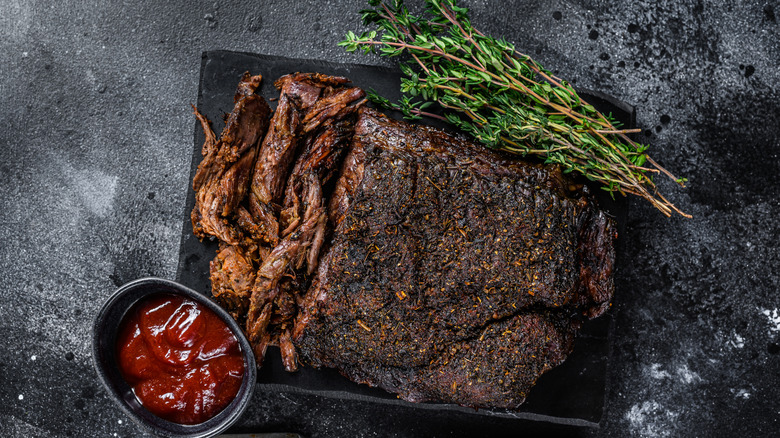
You probably wouldn't be able to tell just from tasting it, but a Texas-style brisket's greatest secret is actually simplicity in seasoning. This cut of meat doesn't need to be smothered underneath a mountain of spice rub or drowned in rivers of marinades; all it really needs is kosher salt and freshly-cracked black pepper.
More than anything, your Texas-style brisket should highlight the flavor of the meat itself, which is enhanced by the grill's smokiness. Since salt and pepper do quite an adequate job at accentuating the brisket's natural taste, you risk masking the robust meaty flavor when you use other seasonings and spices.
Moreover, the salt acts as a dry brine, drawing out the brisket's inner moisture. As the salt dissolves into the meat's juices, it forms a brining liquid that diffuses back into the meat. This process tenderizes the meat while simultaneously seasoning it perfectly. Black pepper, on top of lending the meat its sharp aroma, also gives your brisket that delectable bark that we've come to associate with Texas-style brisket. Working in tandem, these two simple ingredients are what define one of the most quintessential meats of the many styles of Texas barbecue.
How to get the seasonings just right for your Texas brisket
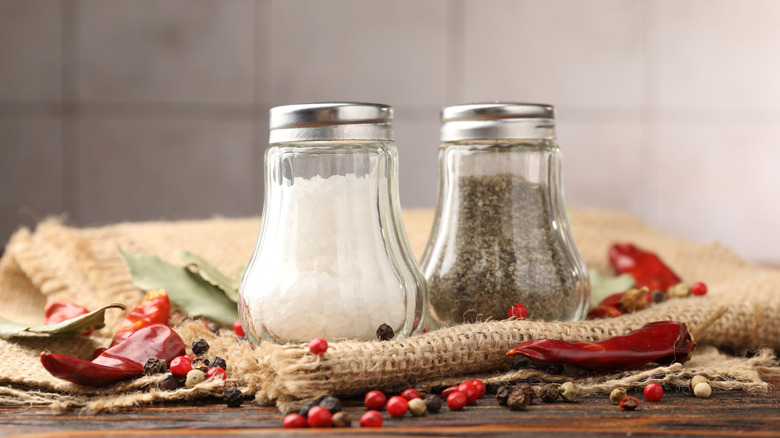
An equal amount of salt and pepper will usually do the trick when you're making Texas-style brisket. For a 12-pound full packet brisket, ¼ cup of each should be sufficient. If you'd prefer a thicker crust and less sodium in your grilled brisket, use one part salt to two parts pepper. Once you have mixed the two in a bowl, evenly rub them all over the brisket, and give them at least one to two hours to adhere.
Before all of that, however, you do have the option to spread a layer of mustard over the meat. Much like how Dijon mustard gives prime rib a crispy, flavorful crust, it also acts as a binder to help the seasonings stick to the exterior of the brisket better. When used in just a thin layer, very little mustard flavor will come through in the final product, so you don't have to worry about overpowering the meat. That said, the meat's surface area still needs to be patted dry as a first step. Any bit of excess moisture will impede the crust's formation.
Note that coarse kosher salt, specifically, works better for this recipe. One of the best types of salt for both dry and wet brining, it clings to the surface area better than fine-grained varieties. The same goes for using coarse black pepper, especially if you want a slightly crispy bark. If you'd really like to add something else to the recipe, stick with garlic powder. A slight aroma is all we're after here, so use only a small amount.