

What That Wavy Line Symbol Stands For On Plastic Food Containers
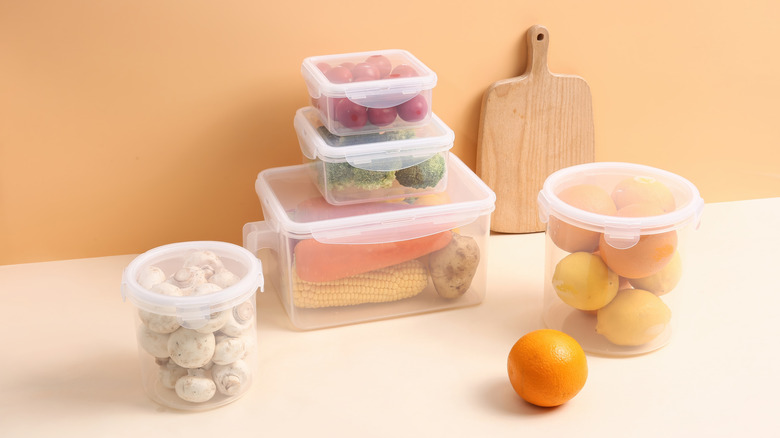
There are a few important things you need to know about plastic containers used for food, including if they are recyclable to whether a specific container will keep food safe from contamination. Plastic containers are often stamped with symbols that convey the information we need, but these symbols can be unclear if you don't know their meanings. A fork and plate symbol means a plastic container is food storage-safe, for example. But what about those wavy lines you frequently see? They let you know the container is microwave-safe.
Plastic isn't one of the things you can never put into the microwave, but it is definitely something you have to exercise caution with. There are different kinds of plastic, and some are more heat-resistant than others; plus some contain BPAs and some don't. BPA is bisphenol A, a chemical that poses serious health risks. If a container is made from a type of plastic that has BPAs, especially if that plastic is also not particularly heat-resistant, BPAs and other chemicals can leak into your food as that plastic melts in the microwave. Even without dangerous chemicals, certain plastics will melt or feel scalding to the touch when you remove the container from the microwave. Wavy lines indicate a container can be microwaved without releasing chemicals or getting too hot.
Wavy lines indicate microwave safety -- but caution is still necessary
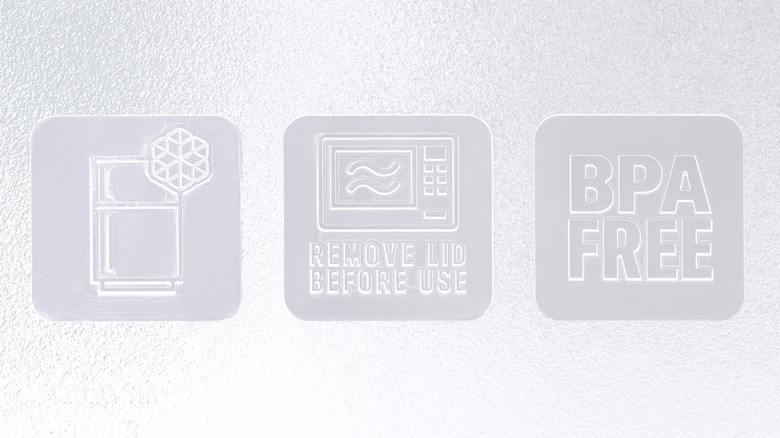
Polypropylene is one of the most commonly used plastics in food containers. It's often BPA-free, and is also more heat-resistant. You may see "PP" stamped on a container to indicate this material, or the number 5 within a container's stamped recycling symbol. If you spot this or the BPA-free low-density polyethylene LDPE (number 4) and the wavy lines symbol, you can assume a container is microwave-safe. However, it's best not to let that be the extent of your diligence.
You always want to second-guess microwave safety labels. There are no universally agreed upon standards for meeting this requirement — one brand's "microwave safe" may not be another's. Even if you see the wavy lines, you should also confirm the plastic is BPA-free to be safe. You can test to make sure the plastic won't melt by using it to heat water before putting any food into it.
Some manufacturers include the temperature or wattage maximums a plastic container can withstand, but when they don't, it's a tricky matter because a vessel may be microwave-safe, but only to a degree. To be on the safe side, don't use even wavy line-stamped containers to heat or reheat anything at too high of a wattage for too long of a time. Avoid using them at all for oily or fatty foods, as they can break plastic down faster. And when in doubt, transfer food to a safer glass container for microwaving.