

Why So Many New Restaurants Fail So Fast

We may receive a commission on purchases made from links.
According to a 2025 research paper published by The Research Archive of Rising Scholars, restaurants in the U.S. face a nearly 60% closure rate within the first five years of operating. That's a daunting statistic for new businesses, so to discover the reasons why restaurants don't make it, we've asked two hospitality management experts to identify key stumbling blocks. Frankie Weinberg is the professor of management at Loyola University New Orleans, co-owner of Pomelo and Good Catch restaurants in New Orleans, and author of "Mentorship," and alongside the input of Izzy Kharasch, president of Hospitality Works, Inc., it emerges that walking a profit-margin tightrope, owners and operators being stretched thin, lack of preparation, and high staff turnover all drive new restaurants to closure.
Weinberg highlights that the economic pressures that most people experience with their groceries are intensified in the hospitality industry, where profit margins can already be as thin as 5%. Significant price increases for ingredients don't translate seamlessly to menu prices, where, as Weinberg explains, "consumers have a relatively fixed sense of what a dish should reasonably cost, and as a restaurant pushes beyond that range, customers become more price-sensitive." Weinberg provides an example, stating, "Even if the price of high-quality coconut milk rises astronomically, diners are only willing to pay up to a certain amount for a bowl of curry." Financial pressure is a reason why even established restaurants go bankrupt, while hospitality moguls like Bobby Flay are able to survive through licensing, leveraging brand equity, and diversifying businesses.
Elbow grease isn't always enough
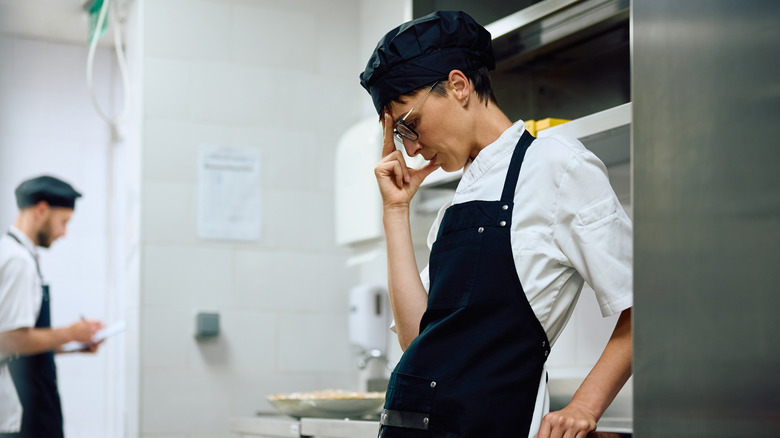
Weinberg identifies another business killer: owners and operators being excessively time-poor in the early years by stretching their ability to manage business while running a kitchen. "It takes on a new meaning in restaurants, where the primary owner is also on their feet, toiling intensely over hot pans through double shifts for days on end." Weinberg describes that in the initial years of operating their first restaurant Pomelo, his wife Aom spent a lot of time prepping, cooking, serving, and cleaning. "This leaves no time or energy for the delicate yet crucial strategic planning that could elevate a restaurant from struggling to manage daily operations to becoming a well-oiled and intentionally directed machine," he explains.
Another operational stumbling block that affects inexperienced restaurants that Kharasch lists is ensuring that the kitchen is always ready to execute a successful day of service. "A big challenge is making sure that the restaurant is ready for opening every day. Very often, the restaurant runs out of food early and then the guest can't try the items that they were looking for," he explains. Kharasch also points to high staff turnover as a challenge that new restaurants face. He notes that this is often caused by a "lack of training," or "not being given enough tables to make the tips that they thought they would make." So just remember, if you want to keep your favorite new restaurant alive, tipping the right amount makes a difference.