

Bone-In Vs Boneless Ribeye: Which Is The Better Buy?
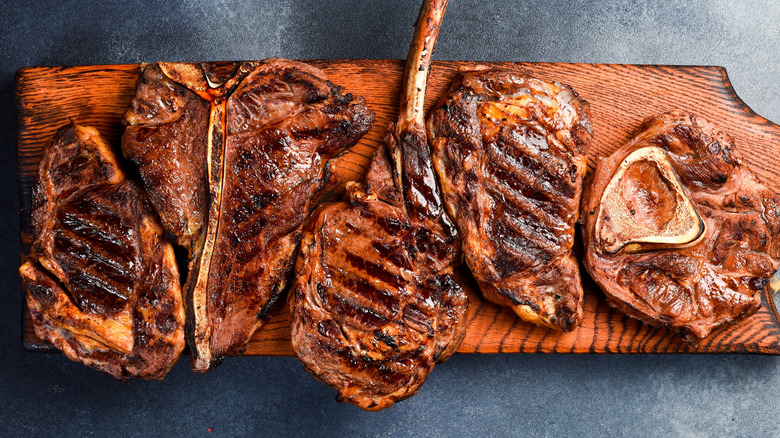
Shopping for a good steak has never been an inexpensive endeavor, but these days it is positively pricey. Picking up a ribeye is always a solid choice — it's a tender, flavorful, nicely marbled cut of meat that is well worth the price tag — but the question of whether to buy it with or without the bone is not quite as easy to answer. When we reached out to a couple of beef experts for help with this bone-or-no-bone question, both Dagan Lynn, executive chef for Beef. It's What's For Dinner, and Scott Thomas, owner of The Grillin' Fools, agreed that, well, it depends.
"I typically prefer a bone-in ribeye for grilling and special occasions," Lynn reveals, "because it offers an impressive presentation and delivers the classic steakhouse experience." The cut of meat is essentially the same with or without the bone but buying it bone-in does offer a few benefits. "The bone also helps the steak retain its shape during cooking," Lynn adds, and it is generally credited with ensuring a juicy final product as well. The biggest benefit, though, may be appearance.
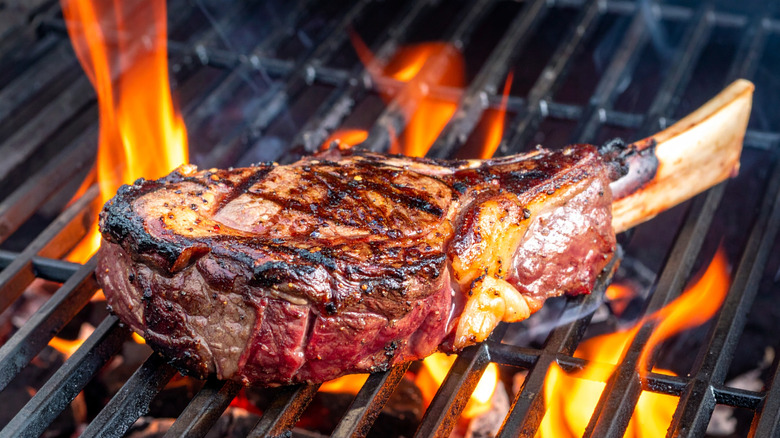
"I choose bone in, particularly tomahawk ribeyes with that massive rib bone, simply because it gets a lot of engagement on social media," Thomas states, "I never cook them when the cameras aren't rolling." The trouble with bone-in cuts is that you are still most likely paying for that cut of steak by weight. When you add a bone — especially the huge handle of a tomahawk steak — that can really increase the price. "$20+/pound for a bone I'm not eating," Thomas says. "That's a very expensive bone."
The right occasions and preparations for boneless and bone-in ribeyes
For situations in which spectacle is not high on the list of priorities, choosing the best ribeye at the grocery store probably means picking a boneless cut. "Boneless ribeye is incredibly versatile, easier to season, and simpler to slice and serve," Lynn says, "making it a great option for everyday cooking." These cuts are generally easier to find as well. Stop by your local supermarket and, whether it's behind the butcher's counter or shrink-wrapped on a Styrofoam tray, there will be boneless ribeyes available. Finding a bone-in cut — especially one of a more show-stopping variety — might necessitate a trip to a specialty store.
As for preparation, boneless ribeyes are a versatile workhorse of a steak. If you plan to sear your steak in a pan — like this red wine-marinated ribeye — Lynn suggests going boneless. If you're planning to slice the steak and share it between a couple of plates, again, he maintains that boneless is the answer. "Without the bone, the steak is easier to portion, cooks more evenly across the surface and is more convenient for recipes that require slicing or carving," he notes.
If, on the other hand, you're planning to reverse sear or grill the steaks — or you're looking for an exciting meaty centerpiece — then a bone-in ribeye may just be the move. "If I'm going for the wow factor, that big tomahawk is the absolute best way to go," Thomas says. "The raw, caveman-like emotion it evokes is amazing." As far as he's concerned, leaving the bone in your grilled tomahawk steak doesn't make any appreciable difference in flavor, though it does run up the grocery bill. You know what they say: you eat with your eyes first.