

Airport Food Used To Be Affordable — Why Did Prices Soar?
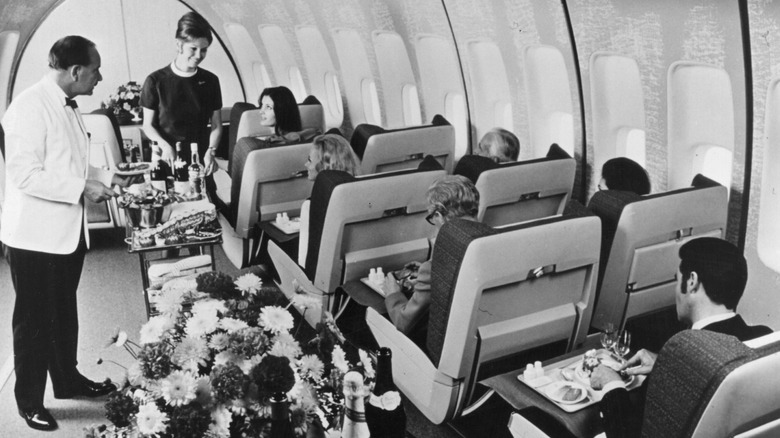
The main objective of airports is to get people where they are going efficiently and safely. But over the last few decades, terminals have undergone a fairly dramatic transformation — and so has the business of feeding travelers. Airport meals cost more not simply because of inflation, but because airports have become shopping meccas, restaurants face high operating costs, and hungry passengers have few alternatives once they're through security.
Anyone who has traveled regularly over the past 25 years has watched it happen. Back in the day, airports felt like straightforward, utilitarian liminal spaces: hallways lined with molded-plastic chairs and moving sidewalks you had to pass through to get to where you were actually going. The amenities were sparse: a shoe-shine station, an uninspiring newsstand stocked with paperback thrillers and standard-issue glossy magazines, racks of travel-sized aspirin and packages of generic trail mix, maybe a forlorn pot of coffee sitting on a hot plate. In today's glitzier airports, after browsing luxury retail shops, you can drop serious dollars at airport outposts of high-end establishments, ordering oysters and $20-plus hamburgers washed down with top-shelf craft cocktails at unique airport restaurants. Even the fast-food chains often charge a premium, with some travelers reporting spending over $25 for a single margarita at an airport Chili's.
Large terminal redevelopment projects throughout the 1990s and 2000s increasingly reimagined concourses as commercial opportunities, where retailers and restaurants compete for coveted real estate. Once a traveler clears security, they become a valuable customer: maybe hungry, maybe tired, perhaps in need of some retail therapy before boarding. Marketing and development teams realized that the hours between security and departure could generate substantial revenue because stressed, bored people who are effectively confined to the concourse are often willing to splurge. There's also a "fun money" budgeting psychology at work for many travelers. Under the duress — or dullness — of a travel day, treat yourself, right?
From weary traveler to captive consumer
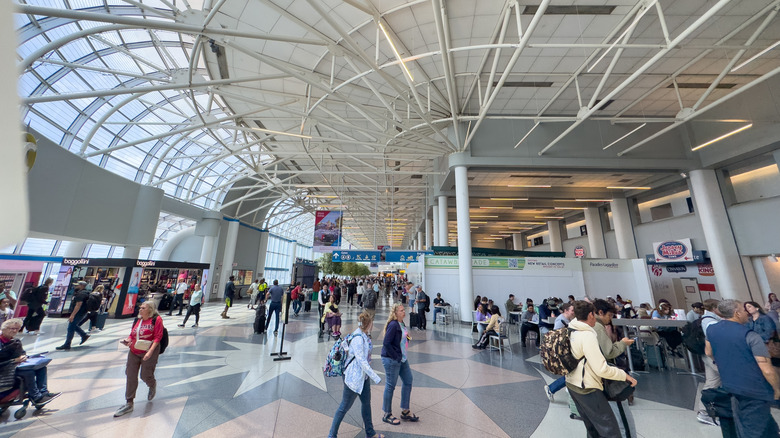
The food options best illustrate the airport terminal's transformation from a place of transit into a place of trade. Hunger eventually catches up with every traveler. Whether you arrived absurdly early to avoid missing your flight or found yourself stranded by an hours-long delay, airport menu prices often reflect what the travel-weary market will bear.
Airport restaurants also operate under a slightly different business model from those outside the terminal. Ingredients and labor are only part of the equation. These businesses often pay expensive concession fees and percentage rent to the airport, helping maintain the complex airport infrastructure and operations. They also have to build their spaces under unusually strict design and security requirements, while hiring employees who need airport badges and background checks. Deliveries of food and supplies must pass through secure checkpoints, adding time and cost. Even kitchen equipment is specialized, with sharp objects like knives being tied to their stations and carefully accounted for. Those layers of overhead eventually make their way onto the menu, which is why a cafeteria tray of fast food before a flight can approach special-occasion-purchase levels.
Nobody deliberately goes to the airport for anything other than air travel — you can't even access most of these places without a ticket — and very few people relish the purgatory between security and takeoff. But flight delays, layovers, and early arrivals create an economy of waiting — and a particular kind of consumer: someone with time to kill and relatively few alternatives. Airport restaurants, bars, and retailers have seized the opportunity by monetizing those idle hours. Time that was once begrudgingly endured has become another opportunity to spend money.