

Does Soy Sauce Ever Expire? Here's What To Know
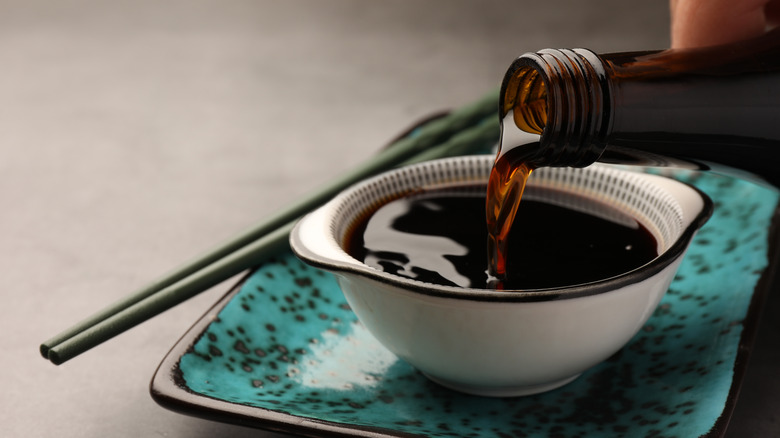
Anytime a dish is in dire need of an umami depth or a salty edge that will take it to the next level, soy sauce is the trusty companion we reach for. There in the pantry it sits, for what feels like an indefinite amount of time, so much so that we wonder if it ever expires. As it turns out, it does, just not as easily as other condiments you may use in the kitchen.
First, let's consider how soy sauce is made. Soybeans, wheat, water, and salt are combined and fermented with an active mold culture. The high salt content acts as a natural preservative, and along with the fermentation process, bacterial growth within each bottle is safely limited. This is why, in ideal conditions, most soy sauce bottles have quite a long shelf life. Most often, they are only rendered unusable due to oxidation, which results in a gradual loss of flavors and aromas over time.
That is one of the main reasons you should still consider using soy sauce within a recommended time frame. Unopened, this fermented condiment remains good for up to three years. However, once the cap has been taken off, soy sauce will slowly lose its prominence. It's best enjoyed within the first six months, although you can still preserve the quality for a bit longer with proper storage.
The best ways to store your soy sauce
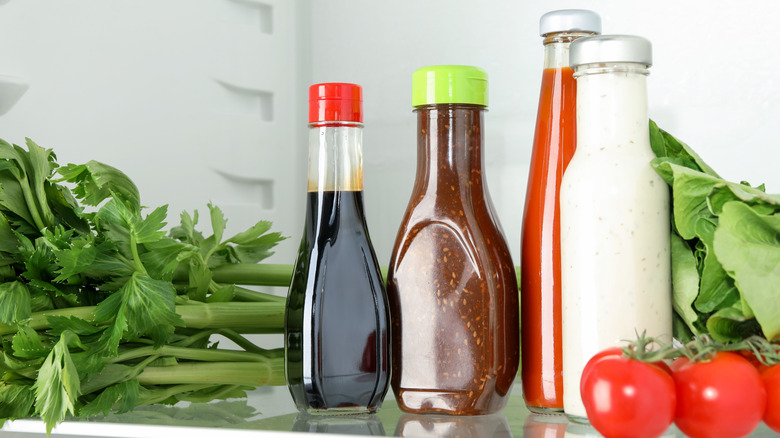
When you take home a bottle of soy sauce from the store, you can leave it in a cool, dark pantry for years on end as long as it remains unopened. However, at room temperature, an open bottle of soy sauce will inevitably lose its flavor and aroma as the months go by.
Refrigeration will keep oxidation at bay and prevent this, so you can enjoy it at peak quality for at least another year. This is especially essential for artisanal varieties, which may sometimes lack additional preservatives that typically help to maintain shelf stability and delicate flavor nuances. That said, if you've got a whole repertoire of ways to use soy sauce and go through a bottle every few months or so, feel free to leave it out. No matter where you put it, don't forget to properly close the cap to limit as much oxidation as possible.
It's also important to note that while rare, soy sauce can still actually spoil in certain cases. Not seasoning soy sauce is a total waste of delicious opportunity, but always make sure you do it with this condiment already poured into a dipping bowl. If there are external elements entering the bottle, such as water or additional flavorings, your soy sauce might be at risk of spoilage. As always, the general signs to look out for still apply to this condiment. Discard the bottle right away if it has an off-putting odor, tastes unpleasantly sour, or develops visible mold and other floating particles.