

What's The Average Lifespan Of Zucchini Plants?
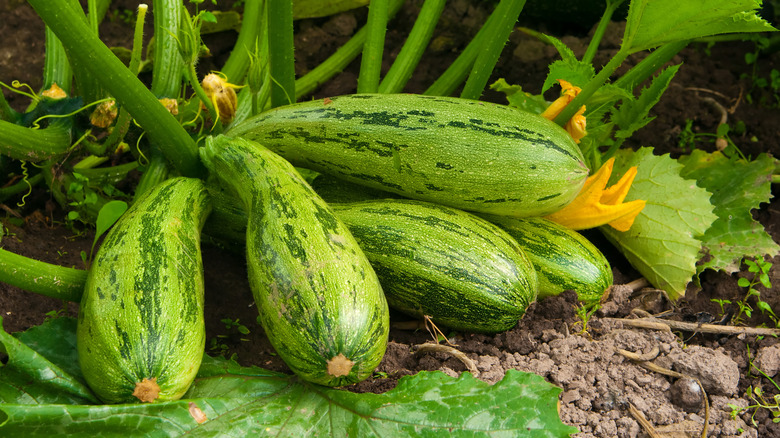
Zucchini is one of the easiest and most rewarding edible plants you can grow. With ample water and sun, they grow extremely fast; a single zucchini plant can produce between 20 to 40 pounds of fruit per season. If you're considering adding it to your fruit and veggie patch, you might wonder how long your plants will be producing zucchini for. While this can vary based on region, care, and variety, zucchini is an annual, meaning its average lifespan is the length of a single season.
If you're planting zucchini from seed, it will start blooming between 45 and 50 days after planting. After that, you'll notice that the zucchini will grow very quickly; the fruit can grow 2 inches per day, so you should be able to harvest it between four and seven days after it's begun to flower. Once your zucchini plant reaches the mature stage of its growth, you might find yourself harvesting new zucchini every few days. But what happens after that?
While you'll likely be harvesting zucchini all summer, once the weather begins to cool off in the fall, you may notice that your harvests get smaller and smaller. Zucchini is a hearty plant, but it thrives in warm weather, so once the temperature drops and the days get shorter, it'll stop producing so much, and eventually, the plant will die completely.
Factors that may shorten your zucchini plant's lifespan
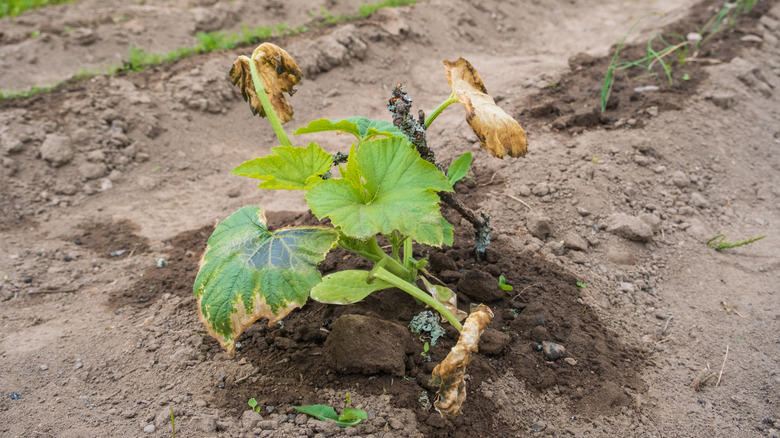
As long as a zucchini plant gets six to eight hours of daily sun and lots of water, harvests should be plentiful, lasting throughout the summer and even into the fall. However, even though zucchini is the perfect plant for beginner vegetable gardeners, there are a few factors that may lead to a shorter-than-usual lifespan.
Zucchini plants want to grow fast, but if you don't give them enough space in your garden, they're unable to do so. When you plant the seeds or place your plant starters into the ground, ensure that they are at least two or three feet apart. Zucchini leaves can get really big, and for a proper harvest, those leaves need proper air circulation. Otherwise you might notice white powdering mildew spots on the leaves, which can be detrimental to the plant if not addressed.
Beyond space, the soil can also affect a zucchini plant's success rate. Use soil that's high in organic matter, with a pH between 6.0 and 7.5. Additionally, if it's too high in nitrogen, you'll be left with bigger leaves and fewer zucchini. Soil that's too high in nitrogen can also lead to nitrogen toxicity, which can ultimately kill your plant. Avoid these veggie gardening mistakes, and your zucchini plant should stay fruitful all season long.