

The Whiskey Aging Myth Too Many People Believe
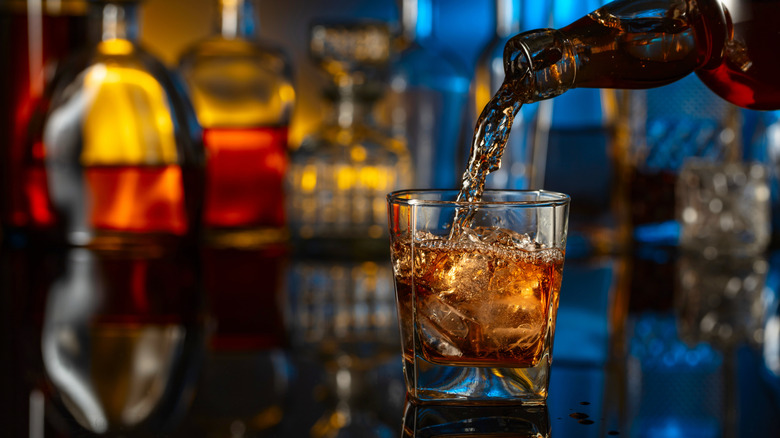
If you think a bottle of whiskey, like a fine wine, only gets better with age, think again. Many people believe holding onto a bottle of the spirit will produce a more mature taste, but with whiskey this is a myth. Unlike wine, which does tend to continue aging after the bottling process, whiskey stops aging when it's removed from the barrel. Whiskeys are aged for years in their casks to develop their flavor profiles, from smokey to sweet to notes of spice. But the moment it's removed from the cask and bottled, a whiskey's aging process ends.
The reason why wine continues to age past the bottling process, but whiskey doesn't, is due to alcohol content and non-reactivity and preservation of the spirit within its glass bottles. The lower alcohol percentage contained in wine (often around 11 to 15% ABV) is said to facilitate a continued fermentation process after bottling, whereas whiskey's relatively high alcohol content (often around 40 to 50% ABV) prevents the spirit from further aging after it is distilled and bottled.
All-in-all, this may actually be a good thing. Aging a whiskey like bourbon in the barrel for too long can have an opposite effect than you expect, including a potentially lessened flavor.
A whiskey's age is all about its time in the cask
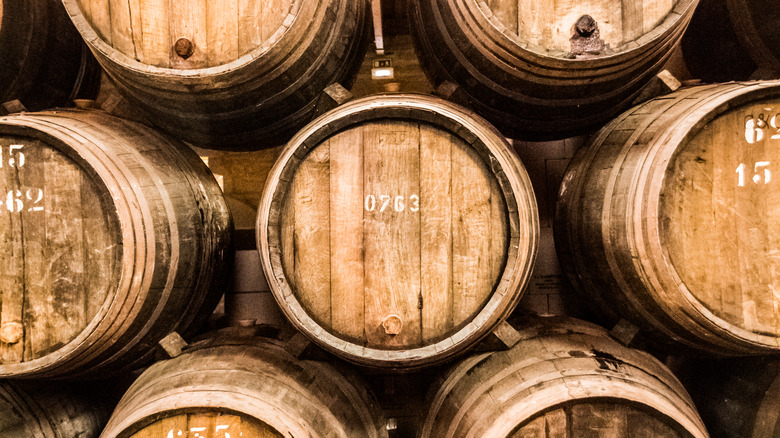
Whiskey's maturation process (and the spirit's associated age) is all about the time the spirit spent in the barrel — not the bottle. As whiskey ages, its taste becomes more complex, well-balanced, and nuanced. The process is largely about whiskey's chemical development with and within the barrel, influenced by factors such as the barrel's material and regional distinctions. Bourbon whiskey, known for flavor notes like deep smoke and spice, must be aged in new oak barrels; Scotch is aged in Scottish oak; Irish whiskey is aged in Irish oak.
In the barrel, specific flavor compounds develop, such as tannins and hints of vanilla. Furthermore, certain types of whiskey also age in barrels that were used in the production of other fermented beverages, like rum or sherry. This imparts flavors like sweetness and richness to whiskey as it ages. Then there are other aspects that impact a whiskey's taste while it ages in the barrel, including the types of grains and climate factors like temperature and season.
While whiskey aging is a complex and coveted craft, it's important to remember that it happens in the cask. After removing it from the barrel and distilling, whiskey's taste pretty much remains the same as it sits in the bottle. Unless you open it, then some oxidation of the spirit could come into play.