

Stuffed Pizza Has Never Been Easier To Make Using This Sheet Pan Trick
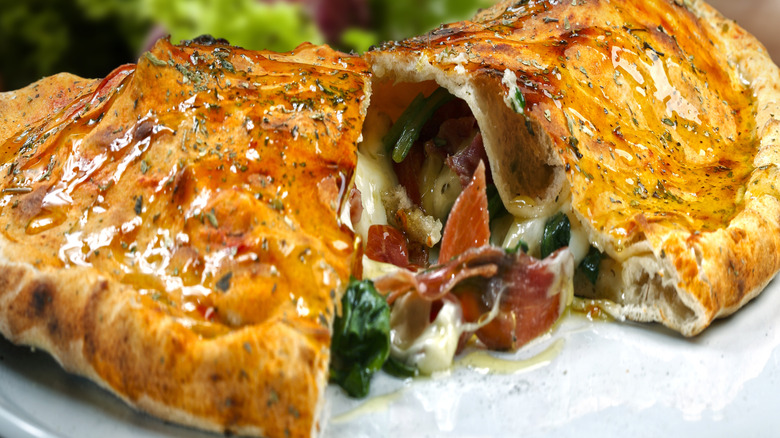
From the way stuffed pizza looks, with unctuous layers of cheese, meat, dough, and sauces melting into each other, you probably wouldn't expect anything less than an arduous time in the kitchen. But there are always shortcuts you can take to simplify the process. It only requires a sheet pan, some pre-made pizza dough, a few fillings, and a hot oven.
A sheet pan version of stuffed pizza is really more like making a calzone — it's thinner than a traditional Chicago style deep-pan stuffed pizza, but still has a second layer of dough to make a delicious cheesy pizza pie type affair. You can start with some store-bought dough being spread across the greased sheet pan, its edges crimped inward — perhaps with cheese sticks stuffed underneath if it's the crust you like stuffed. Once you have brushed it with some oil or butter, loaded it up with a jarred tomato sauce, grated cheese, and all your favorite pizza toppings, simply layer another piece of dough on top, seal the sides and bake it for around 20-30 minutes.
In between the two layers, you're going to want to sprinkle a generous amount of cheese (and any other toppings as desired), so you get that melty pull and hefty mouthfeel later on. You could also spread the sauce at the very top of the pizza for more of the Chicago-style stuffed pizza feel, but this could get messy with a sheet pan rather than a deep dish. Bake at 450 degrees Fahrenheit until the crust has sufficiently browned, and the cheese is fully melted.
The pros and cons of sheet pan stuffed pizza
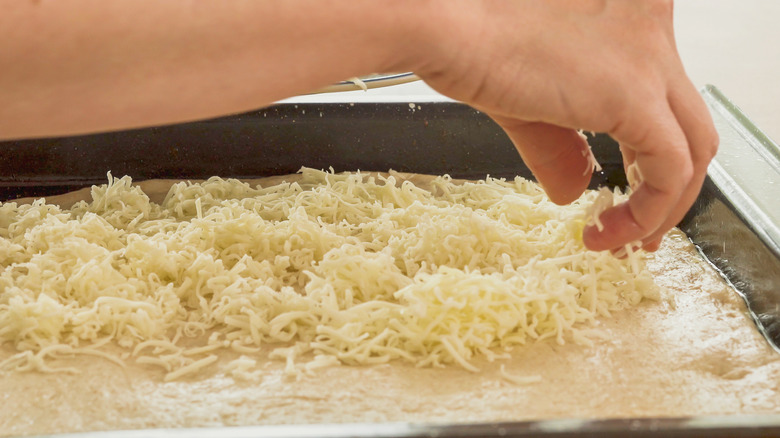
Along with this breezy convenience comes a small textural compromise. Your store-bought pizza crust won't have the same level of flaky thickness as a made-from-scratch Chicago pizza dough. Instead, it leans more towards a crumbly crisp, with browned edges that lightly contrast with the tender dough. What's more, the dough might not stretch to the desired extent. Not to worry, the fix is simple. Just bring it up to room temperature for at least 30 minutes first to ensure maximum flexibility.
The stuffings, however, are full of potential. In true Chicago style, Italian sausages imbued with meaty richness and an herbaceous edge are a fantastic option. Branch beyond that, and you've got veggies like onion, sun-dried tomatoes, mushrooms, bell peppers, and olives to fill in those umami flavor gaps. Fresh herbs, such as basil, and oregano, are no less essential. If you're using them inside the pizza, that's fine, but if you want to sprinkle them on top, remember the key tip when adding fresh herbs to pizza is to add them after you have finished baking, so the delicate fragrance doesn't get burned away.
Once you're ready to get more experimental, swap out the sauce. Rather than a tomato sauce's tanginess, try a bright and herby pesto spread. Match it with other earthy veggies, such as arugula and artichokes, and maybe even swap out heavy meats for smoky slices of prosciutto. And instead of Parmesan and mozzarella, how about a feta-stuffed crust or filling to introduce a milky tang to the dish? For those who like a bit of heat, arrabbiata sauce is just the stuff. Roasted chili peppers should fit right into this flavor base, provided you don't mind the vibrant spice.