

Why Potato Peels Are Much Better Off In Your Garden Than In The Trash
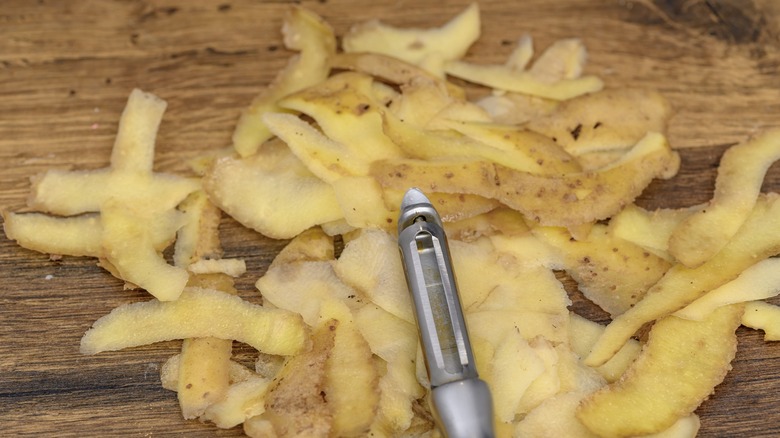
The next time you whip up a batch of extra creamy mashed potatoes, think twice before tossing those leftover potato peels in the garbage can. Rich in nutrients such as potassium, magnesium, iron, and phosphorus, these scraps can be used in a variety of ways to help a garden grow. Benefitting everything from the roots to the shoots, the flowers and the fruits, these a-peel-ing techniques are so easy you'll be repurposing your potato peels in backyard botanicals from here on out.
Got an empty jar? Perhaps the simplest method for using potato peels in the garden is to ferment them into a liquid fertilizer — think super-charged energy drink for your plants (and no, we're NOT talking Brawndo, this is more of a tater peel tea). All you have to do is stick some peels in a jar, fill it with water, and let it sit from a few days up to a week, giving it a daily stir. This incubational soak allows all those lovely minerals and nutrients time to leach out into the water. Then, simply remove the peels, dilute the water (times two), and pour, spray, or sprinkle the resultant elixir over your garden.
In this case though, too much of a good thing can be harmful. Stick with a maximum potato-peel watering of twice a month to avoid overloading your soil with too many nutrients and offsetting its balance. Maxed out already? You still don't have to toss those peels. Instead of brewing up a tea for your plants, save them for a crispy soup topper for you.
More ways to use potato peels in the garden
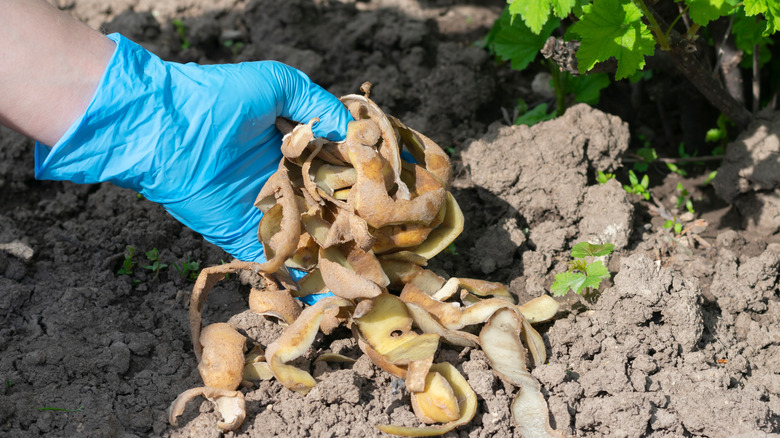
Perhaps the next best method for repurposing potato peels in your garden is also the most obvious — using them as compost. Whereas the freshly brewed fertilizer tea technique provides an instant boost for your plants, the compost approach bolsters and fortifies your soil over the long term. To use this technique, cut the peels from healthy, non-green, disease-free potatoes into small pieces and bury them a minimum of six inches deep in the compost pile to avoid sprouting and attracting pests. Never leave peels on the surface of the garden, as this can obviously attract rodents.
Be sure to include dry components in your compost heap like straw, leaves, and cardboard to counterbalance the wetness of those peels. That's known as mixing your greens and browns, which is just one tip in the ultimate guide to composting at home. Another pro tip? Use raw peels for a slower breakdown and cooked ones, rinsed (and sans butter, oil, or seasonings) for a faster turnaround.
Circling back to pests, one final way to use potato peels to help your garden flourish is as bait for pests such as slugs. Just place the potato peels inside a shallow container away from your prized plants where it will act as an attractant. Empty and clean the trap and replace the potato peel as needed. Of course, potato peels aren't the solution in every case. A few instances where they are not appreciated include potted plants, succulents, young plants, and herbs. Whatever you use them for, your spud's outer wrapper contains a bevy of nutrition, beneficial to both you and your plants.