

More Butter, Less Milk: Here's How To Make Mashed Potatoes Extra Creamy
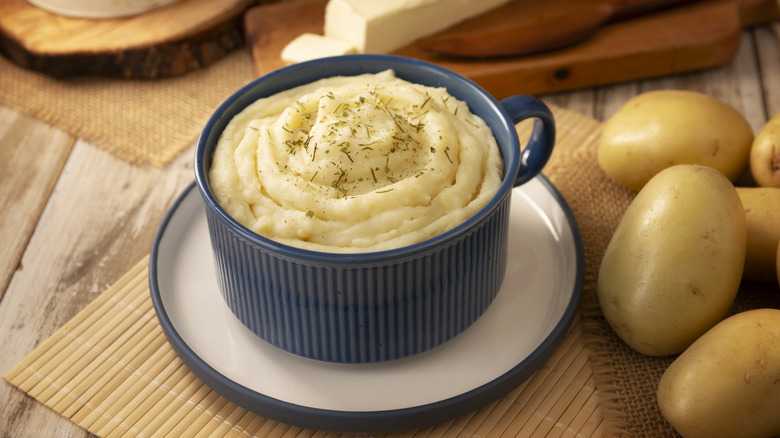
Mashed potatoes are a comforting, hearty side dish that you can never really go wrong with. They're a must-have on the Thanksgiving table, but even the most humble and non-fussy weeknight meals can also be upgraded by them — especially if the plate is extra tasty and creamy.
Dry or gluey mashed potatoes are not it. The reason your mashed potatoes may be coming out like this isn't because of how you mash them (though, we all know ricing is the best method); it's because of what you add to them. Many folks pour in a splash of milk, heavy cream, or half-and-half but neglect the butter. While these dairy-based additions are what will make your mash rich, the butter is what makes it silky smooth and creamy, meaning it does more than just add flavor. Therefore, you should be focusing your attention on the butter (or vegan butter alternative, if you're making a plant-based mash). You should also add butter to the potatoes before you add milk, as the fat will help form a protective coating that will prevent the potatoes from getting overly gluey.
Butter (and milk or cream) should be warm when you add it to the potatoes to prevent the starch from binding. The amount of butter that you should use varies based on who you ask; ratios for potatoes to butter vary from between 2:1 (more butter-tasting) and 4:1 (more potatoey).
Other techniques to prevent your potatoes from becoming gluey
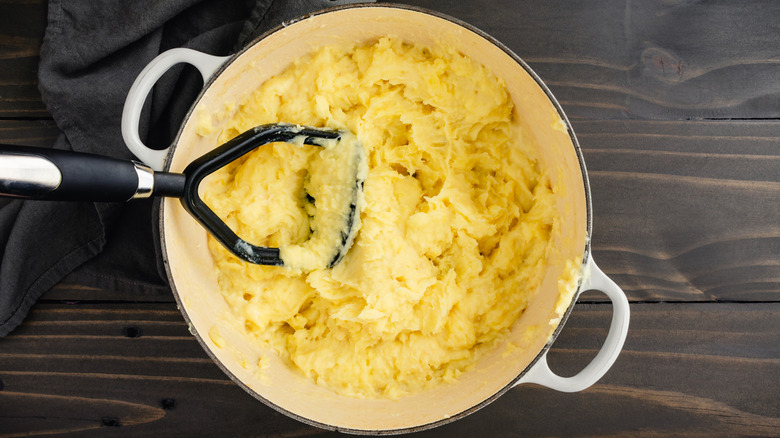
It would be great if we could tell you that just adding more butter to your spuds will make any fears of gluey mashed potatoes go away, but unfortunately, the best way to prevent gluey mashed potatoes is to not overwork them. When you overhandle or overmix potatoes, you are releasing starch and giving it an opportunity to gum up your potatoes. Leave the food processor, stand mixer, or blender out of the equation, as these will make your mashed potatoes too starchy — which is a problem not even a hearty glug of gravy can fix.
The type of potato you select for your mashed potatoes also matters. The best type of potato for this dish is Yukon Gold, which is a creamy and rich variety, with a more balanced ratio of starch and moisture than its commonly used Russet cousin — which is still tasty, but may crumble more readily than the former.