

A Better Way To Fertilize Tomato Plants Is Hiding In Your Fridge, Not Your Coffee Maker
We may receive a commission on purchases made from links.
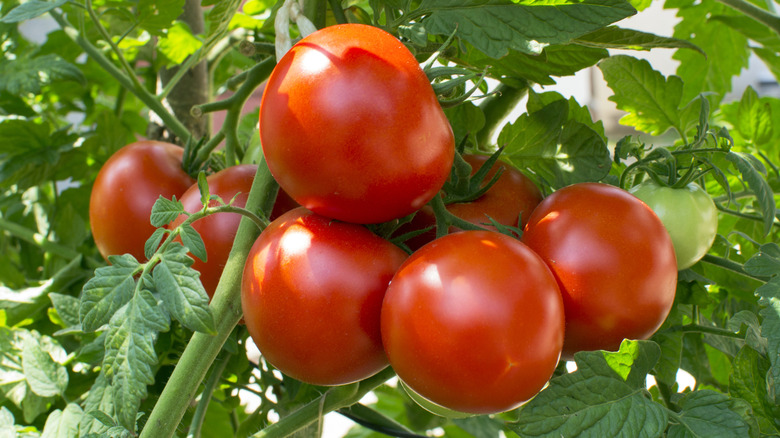
Those in possession of a green thumb have likely heard that coffee grounds make great fertilizer. This can be true depending on the plant — blueberries, in particular, thrive with this natural fertilizer's help — but if you're hoping for a bountiful tomato harvest, the popular gardening hack might not be for you. Tomatoes, alongside other produce staples like broccoli, are among the plants that hate coffee ground fertilizer. Not only can your brew's leftovers inhibit growth by weighing down the soil, but their caffeine content and acidity may throw off the earth's pH balance or even lead to root burn. Fortunately, another food (which might already be in your fridge) can give your tomato vines a gentler nutrient boost: yogurt.
To fertilize your tomatoes with this dairy delight, just mix it with some water (1 tablespoon per cup of H2O should do the trick) and pour the concoction over the plant's base. The yogurt provides essential fertilizing components like calcium for structural integrity, magnesium and phosphorus for higher yield, and lactic acid bacteria. The latter not only aids growth but also shields the plant from fungal diseases like root rot and powdery mildew.
Just remember to keep it simple: Plain yogurt without sugar, artificial flavoring, or other additives is the way to go. Live (or probiotic) yogurt, as opposed to pasteurized, makes for especially great fertilizer, as its microbial diversity combats harmful bacteria.
Get to know your tomato plant's soil before fertilizing with yogurt

Before you start pouring yogurt all over your tomato plants willy-nilly, consider analyzing your garden's soil with a pH testing kit. You can find these at your local garden store or online, like this four-in-one Yamron digital soil meter on Amazon, and they'll tell you everything you need to know about the dirt's nutrient composition.
Tomato plants flourish in loose soil (a big reason why coffee grounds may do more harm than good), especially if that soil is acidic, well-drained, and rich in minerals like phosphorus. Yogurt does contain some phosphorus, so if your garden's levels are already high, applying this homemade fertilizer too liberally may result in discolored leaves — a sign that your plant can't absorb other essential minerals like calcium. Yogurt contains plenty of this, too, but in excess, it may create a nutrient imbalance.
If you want your tomato plants to thrive, follow the right fertilizing schedule by reapplying the yogurt mixture once or twice a month. Keep in mind, though, that tomatoes grow best in dirt with a pH between 6.2 and 6.8, and as federal regulations dictate, yogurt's pH caps out at 4.6. Depending on your garden's chemical makeup, an overabundance of yogurt-based fertilizer may drag the soil's pH level below that optimal range, which could limit your plant's nutrient absorption.