

The Hands-Down Best Microwaves Will Always Have This Feature
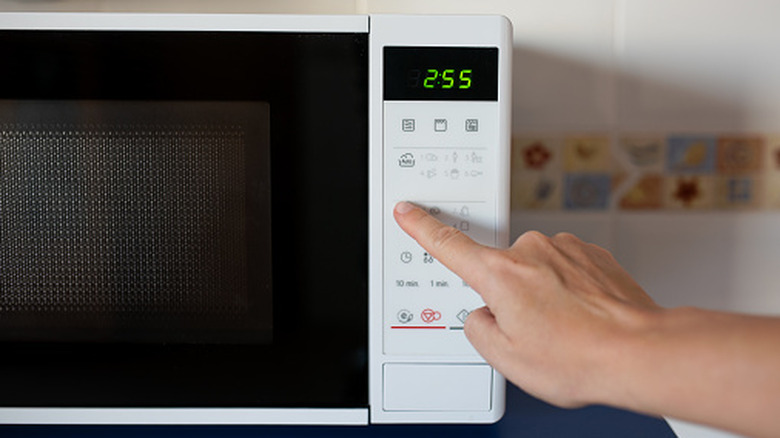
Since being introduced in the late 1960s and revolutionizing how we cook, microwave ovens have been an indispensable appliance in the kitchen, saving millions of people cooking time for quick meals. However, not every microwave is the same. When shopping for a new microwave, you'll quickly learn that there are a slew of different features, including one that we consider to be essential — an inverter. An inverter assists in the way food is heated.
No matter what brand of microwave you use, they all basically do the same core task: Heat up food quickly. The magic is in the science. Electromagnetic waves are emitted, which are absorbed by the fats, sugar, and moisture in food, causing them to vibrate. This vibration generates heat which warms up all the molecules in food, cooking them. However, when you nuke your meal with a conventional microwave oven, the flow of micro electromagnetic waves is either on or off, resulting in inconsistent heating. You may have experienced this if the edges of your TV dinner are hot, but the middle is still cold or even frozen.
An inverter fixes this problem of inconsistent heat. Rather than be at full blast or zero emissions as in conventional microwave ovens, a unit with an inverter allows for the electromagnetic waves to come in at a decreased level. If you set power at 50%, it is explicitly set to 50% — not an alternating cycle of 100% and 0%. Compare this to a pot on a stovetop. It's as if an inverter allows you to heat food on medium heat, instead of at either high heat or no heat at all.
Perfect power
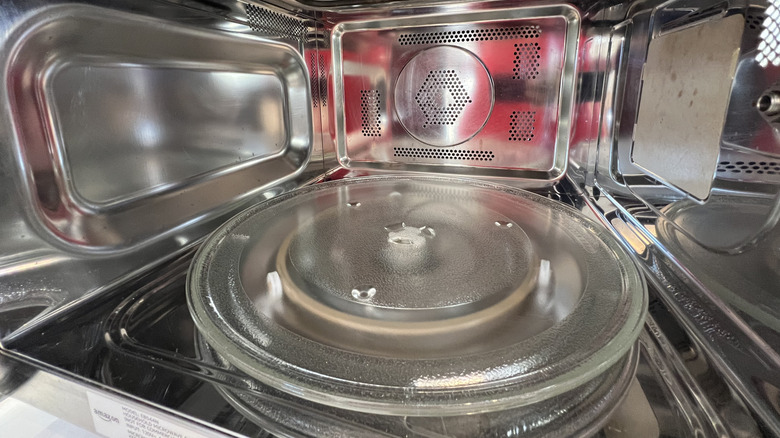
Having consistent medium heat by way of an inverter means food cooks more evenly. This can reduce cooking time since there's less of a need to stop the microwave to stir the hot and frozen parts together to physically combine them. An inverter can also allow you to set power to a low flow of microwaves, which is ideal for melting butter or chocolate without having it splatter. Furthermore, the inverter's ability to set microwaves at varied levels lower than 100% inherently reduces power consumption — and electrical costs.
While an inverter microwave oven may cost about $50 more than a conventional one, you may save in the long run. Many brands of microwaves include this feature, so if you're shopping for a new one, make sure "inverter technology" is on your checklist — it's almost as important as finding a microwave size that suits available kitchen space.