

There's A Good Reason Eating Utensils Are Silver (It's Not Just Durability And Aesthetics)
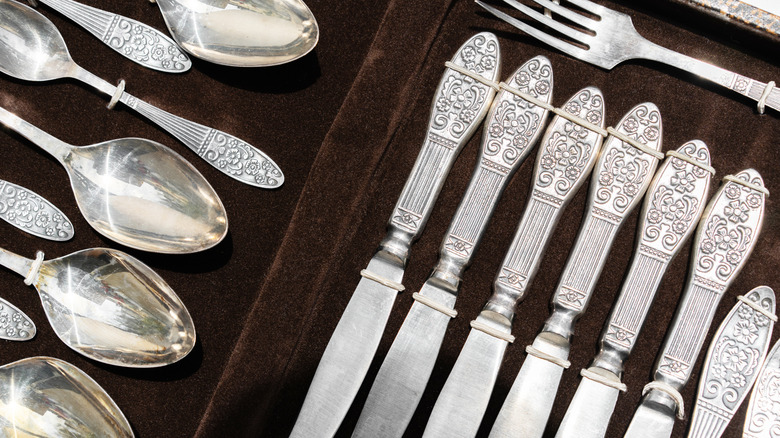
If you've ever heard the expression "born with a silver spoon in your mouth," we usually connect it with someone who was born into privilege. In truth, it's actually rooted in health. Centuries ago, silver spoons were given as christening gifts because silver has anti-microbial, hypoallergenic, and non-toxic, making it the safest option for utensils in times before modern-day sanitation. But just what makes sterling silver flatware so special? Here's what you should know.
Folks have known about the anti-bacterial properties of silver for millennia. In ancient times, the Persians and Greeks used silver containers to store water. Hippocrates described silver's antimicrobial properties in 400 B.C., and some even have postulated that Europeans who could afford to use silver cutlery and tableware during the Middle Ages hoped to avoid the plague. However, there is, admittedly, little historical evidence of this.
Recent research has revealed that when exposed to silver, some bacteria become like "zombies." According to a 2015 article from Science, an applied silver nitrate solution destroys the bacteria from the inside, killing them. Even afterward, when living bacteria are exposed to these dead, silver-treated bacteria, they die too. While your average fork won't have that effect, it's clear that there's more to silver than meets the eye.
How your flatware's silver content benefits you with healthier dining
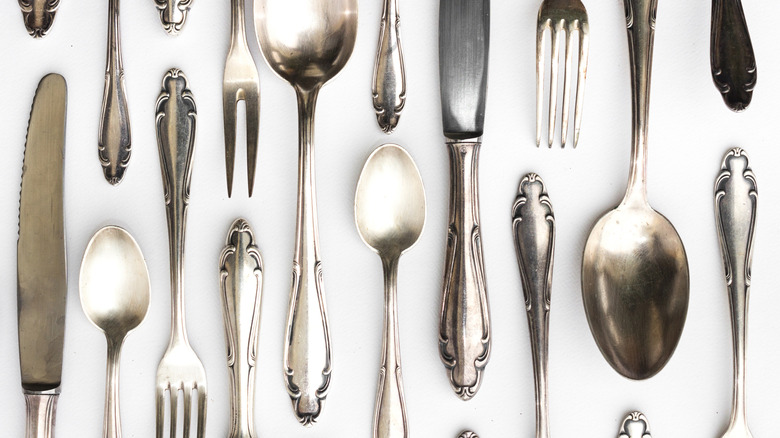
Although eating off silver cutlery accompanies other habits like getting exercise and good sleep, silverware is an added boon that has been proven to help prevent inflammation, boost immunity, and speed up metabolism. Silver is non-toxic and, unlike other materials used to make cutlery (such as plastic or metals like aluminum and lead), doesn't cause cancer or neurological diseases.
Additionally, silver flatware doesn't contain phthalates or BPAs, harmful byproducts that leech into food and can cause cancer. Silver flatware is the healthiest option — it is naturally anti-bacterial, helping prevent bacteria from entering the body. Some materials could be altering how your food tastes, too, while silverware doesn't.
Of course, sterling silver silverware is not only the best option you can buy, but also the most expensive. One sign that your silverware is valuable (and made with sterling silver) is the .925 stamp or makers hallmark you'll find on the back of each utensil. However, silver-plated flatware is a much more affordable option and offers the same health benefits of sterling silver utensils.
While prices for a single place setting — which inludes a salad fork, dinner fork, knife, spoon, and soup spoon — from leading silver flatware makers like Wallace, Towle, and Robbe & Berking will cost at least $300, vintage silverplate flatware can be found on Facebook marketplace for under $100. Either way, you get the health benefits of using silver utensils.