

The 5 Best Types Of Wood For Irresistible Smoked Pork Belly
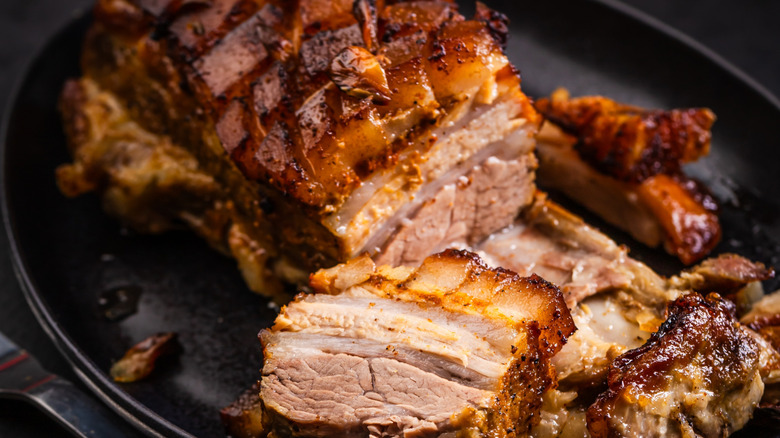
Grilling pork is a great way to build a rich, savory crust layered with the flavors of your favorite seasonings. Smoking takes things a step further. Beyond that delicious, caramelized bark from your spice rub or the sweet and savory glaze of a well-balanced sauce, the smoke itself becomes part of the meat, slowly penetrating and enhancing every bite, so it carries a deeper, more developed taste. In other words, smoking can elevate good pork to amazing pork, and choosing the right wood is a key part of that.
Although smoking pork belly is the optimum way to prepare meat, you never want to use wood from conifer trees such as pine or spruce for smoking meat. These types of trees contain chemical compounds that are unpleasant and potentially even toxic. Fortunately, there are plenty of other kinds of woods to avoid when smoking meat, and some are not as obvious as you may think. When it comes to pork belly, with its rich, fatty texture and subtly sweet, savory flavor, look for a balanced wood that complements the meat without being too mild or overpowering.
Alder, for instance, falls into that first camp. The richness of the pork belly can overwhelm mild offerings, leaving very little smoky flavor behind. On the other hand, mesquite will likely be too powerful, and the taste of the pork will get mired by the smoke. You don't want to lose that pork belly taste. Instead, you want to complement it and bring out its best qualities. With that in mind, there are a handful of woods that are well-suited for smoking pork belly.
Pecan
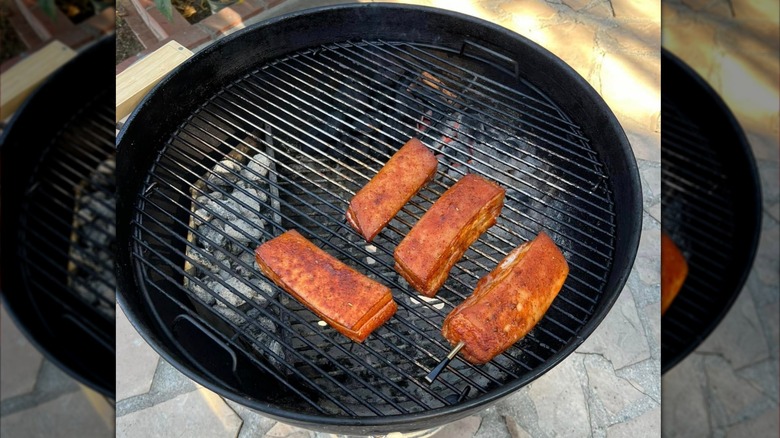
Many of the best woods for smoking pork come from trees that produce edible fruits and nuts. Pecan is a great choice for smoking pork belly, offering medium smoke wood that's not as mild as alder, but nowhere near as strong as mesquite. It imparts a smooth, smoky flavor that melds with the natural taste of pork to produce a more delicious bite.
As expected, pecan wood infuses pork with a nutty flavor, as well as a mild sweetness. This pairs incredibly well with richer cuts of pork, but especially pork belly due to its high fat content. The sweetness of pecan accentuates the natural sweetness of the pork, while its nuttiness complements the richness of the fat as it renders. The aroma as it smokes is pleasant, too. As users on Reddit have said, "The smoke smells sooooo good."
Because pecan wood does not have as strong a flavor as mesquite, it won't overwhelm your meat, making it more forgiving to work with. You'll still get noticeable smoke flavor without having to worry as much about overpowering the meat, which is ideal for newcomers. Unlike other woods, which can become acrid if you allow them to get too hot or smoke too long, pecan wood doesn't suffer from that problem.
Applewood
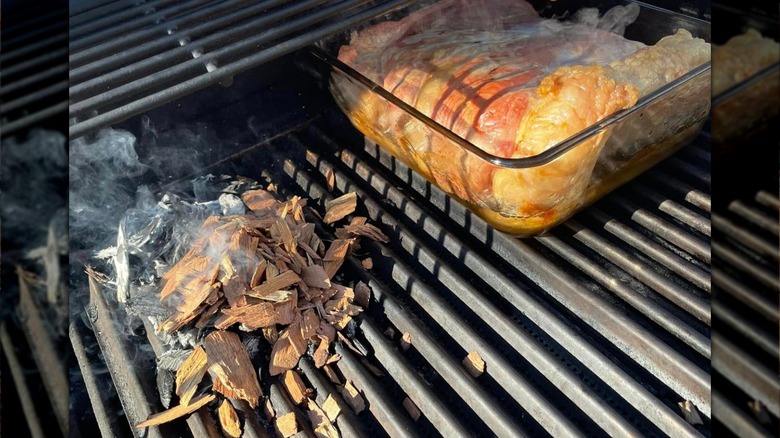
Apple is an extremely common choice for smoking pork, and applewood-smoked is a type of bacon available at most grocery stores. Like bacon, pork belly takes on the flavor of applewood smoke quite well, and like pecan, applewood brings sweet notes to the pork belly as it smokes. While pecan boasts a nutty flavor profile, applewood is fruitier. If you think of the classic pairing of pork chops and applesauce, you can see how this works. Pork pairs naturally with sweet and fruity flavors, which makes applewood an easy fit.
Applewood yields a mild smoke, so the flavor blends with the pork rather than overpowering it. It contrasts with the salty, savory flavor of the meat, especially the rich fat that makes pork belly such a popular smoking choice. When making burnt ends or just smoking a larger section of pork belly, applewood smoke adds a balanced flavor. The smell of applewood is also very pleasant during the smoking process, adding to the overall experience.
Because it is a milder wood, applewood works well for longer smoking times. This makes it perfect for beginners still learning how to manage smoke levels. It's also more forgiving during those extended sessions, less likely to overpower the meat with bitter or acrid flavors, which can be a risk with stronger woods.
Oak
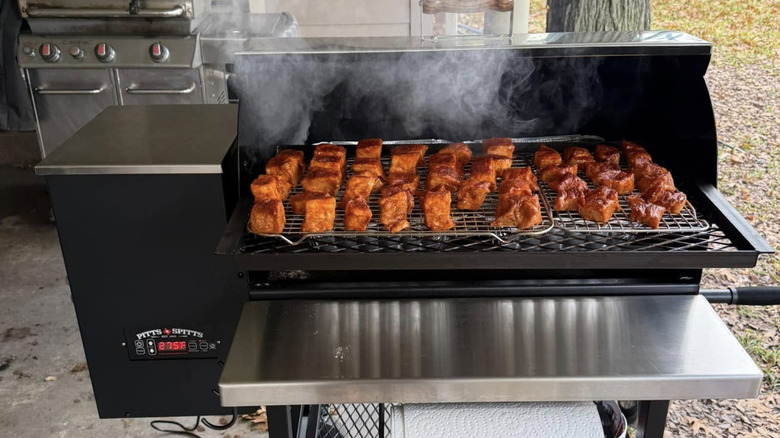
Oak smoke produces a stronger flavor than either applewood or pecan, and it's extremely popular for smoking brisket in Texas barbecue. It's often used with beef, but its balanced smoke profile also makes it a strong choice for pork. The flavor is still middle of the scale, not quite at the intensity of hickory or mesquite, but not so mild that you won't notice it either. Another wood recommended as an ideal for beginners, it is easy to work with and produces consistent results without requiring you to worry over smoke and heat levels.
Because oak burns clean, slow, and hot, it's also a favorite of professionals. There are several kinds of oak that can be used for smoking. Central Texas barbecue commonly uses post oak, but red oak and white oak are also options. Red oak tends to be stronger and white oak milder, with post oak sitting nicely in the middle.
Oak smoke could be considered straightforward and balanced in that it doesn't add many additional flavor notes. Though it may impart a slight nuttiness, it primarily adds a clean smoky flavor that enhances the pork without overpowering it. It's versatile enough that you can find whole discussions on Reddit about using oak as an all-purpose wood to smoke any kind of meat.
Hickory
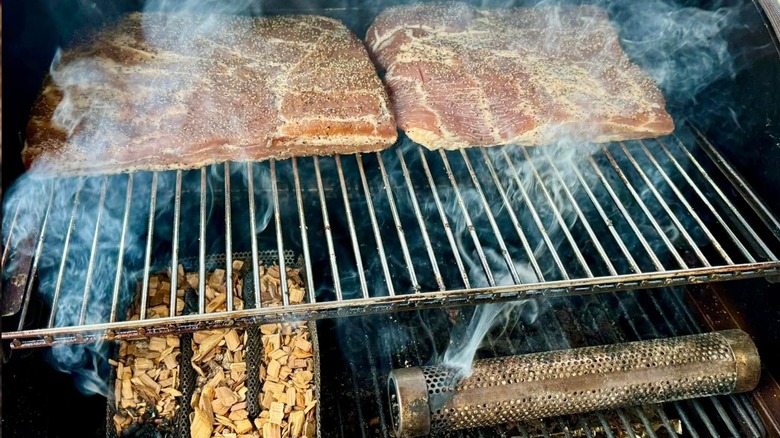
Hickory wood produces a bold, more assertive, smoky flavor than many other common smoking woods. For many pitmasters, that boldness is an integral part of barbecue pork dishes like pulled pork. Pork belly works well with hickory too, due to the high fat content. Since fat absorbs smoke so effortlessly, pork belly is one of the best cuts to hickory smoke when you want to emphasize the intense smokiness. Fat also helps balance the intensity, which is why pork belly and hickory work well together even though leaner cuts can become overwhelmed.
Hickory contributes much of the flavor we traditionally associate with bacon, so it's a natural complement to pork. You could make a strong argument that hickory smoke is what most in America imagine when they think of barbecue, as it's one of the most popular woods available. That popularity comes with a drawback, however. Unlike some of these other options, hickory requires more of a skilled hand, as it can become quite intense, risking an oversmoke that can turn meat bitter and unpleasant.
For those who feel like hickory is too intense for pork, it's often recommended that it be used in conjunction with milder wood. Apple and cherry are often suggested as complements to hickory since all options work well with pork while softening that bold, smoky flavor.
Cherry
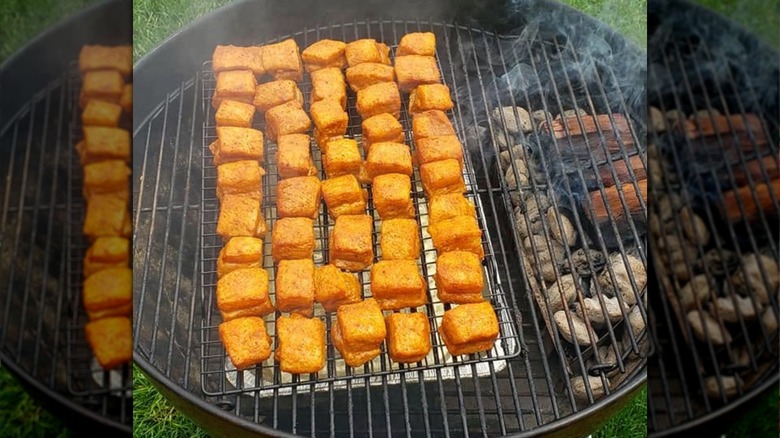
Cherry wood is popular for smoking pork for reasons you may not expect. Like many fruit woods, cherry produces a mild smoke flavor that falls toward the lighter end of the spectrum with hints of sweetness. It's not too different from apple or pecan in terms of how much flavor intensity it will impart. It has its own distinct, fruity notes, but that's not the only reason folks use it. In addition to the taste of the smoke, cherry produces a rich, reddish-brown color to the meat you're smoking.
Because cherry smoke boasts a mild intensity, it's a good choice for smokers at all skill levels. The notes of fruitiness and sweetness pair well with a savory, fatty cut like pork belly, but cherry can also blend well with bolder woods like oak and hickory. A blend ensures you get both that trademark flavor and the rich color you want, which is a great benefit if you are serving pork belly to those impressed by a memorable presentation. Factor in the added sweetness that you wouldn't get from those bolder-flavored smokes, and cherry becomes a real standout.