

Grill Vs Griddle: What's The Difference?
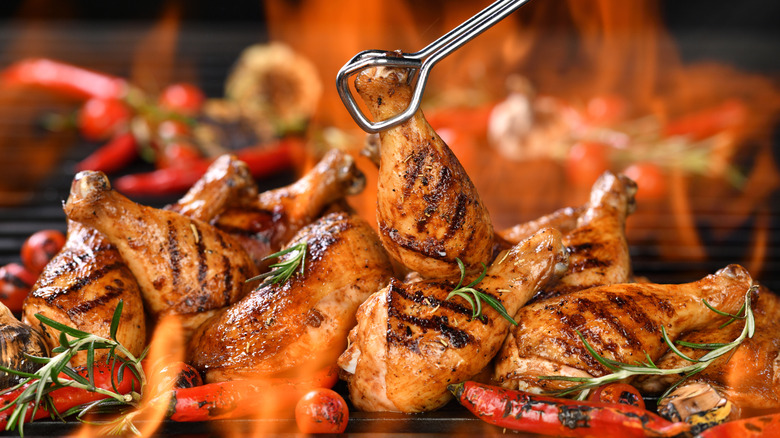
There are so many ways to cook your favorite foods, often inspiring debate about which method reigns supreme. A grill and a griddle are two common appliances, both with a fair amount of overlap in terms of usefulness. It's important, however, to consider the many differences between a grill and a griddle when choosing which best suits your needs. These differences include surface area, heat distribution, and the taste and texture that each one creates during cooking.
As far as materials, griddles are usually made with cast iron, carbon steel, or a non-stick-coated aluminum. For outdoor cooking enthusiasts, Blackstone is a popular brand that's made from cold-rolled steel. Much like a cast iron pan, it's important to know the right steps to follow for seasoning a Blackstone griddle prior to cooking on it. The flat surface of a griddle makes for a generally easier cleanup than a grill; however, there's still some effort involved in working with either one.
The grates on a grill are usually made from cast iron or stainless steel and require the use of charcoal, wood chips, or a gas such as propane to fuel the flames for cooking. As for cleaning, this isn't quite as straightforward as a griddle. In fact, you're probably forgetting to clean several hidden parts of your grill, which makes it slightly more labor-intensive to use from start to finish. With that said, both are more versatile than you might imagine.
Both options have their benefits for cooking
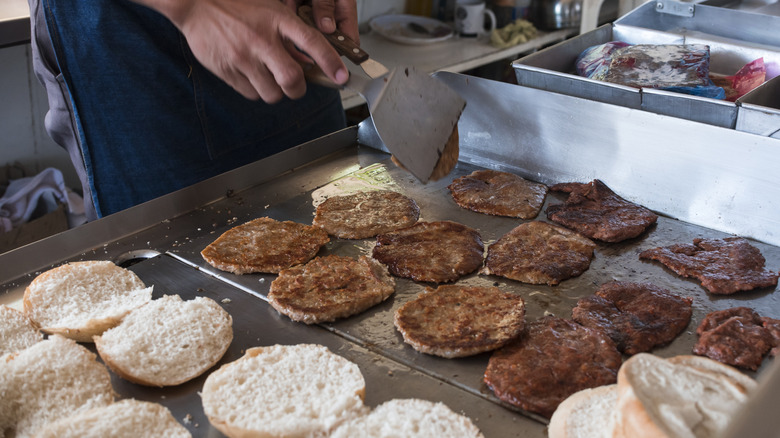
A flattop griddle seems almost synonymous with pancakes or diner fare, but this is by no means the only thing it does well. The smooth surface area allows for more consistent and even heat distribution, giving you better control over your cooking. Some of the absolute best uses for your griddle include making stir-fry dishes, searing thinly sliced or shaved steak, and, of course, preparing a batch of succulent smashburgers or gooey cheeseburgers.
On the flip side (pun intended!) is a grill, which cooks foods faster and via more direct heat. Unlike a griddle, a grill makes use of grates that are raised above an open flame, which requires a much keener eye to ensure you don't over- or undercook your food. Adding to this, a grill will make noticeable marks on whatever you're cooking and provide a more smoky style of flavor than a griddle. There are plenty of foods that both of these tools can do well. It's simply a matter of personal preference.
For example, a griddle and grill can both make delightful hamburgers, but there will be differences in the taste and texture. The flat surface of a griddle is ideal for flattening smashburgers, whereas the charcoal or wood chips from a grill will give your burger a flame-forward flavor. Among the many differences between a grill and a griddle, the choice will come down to your own cooking confidence and what flavors you love best.