

Do Container Herbs Need To Be Repotted?
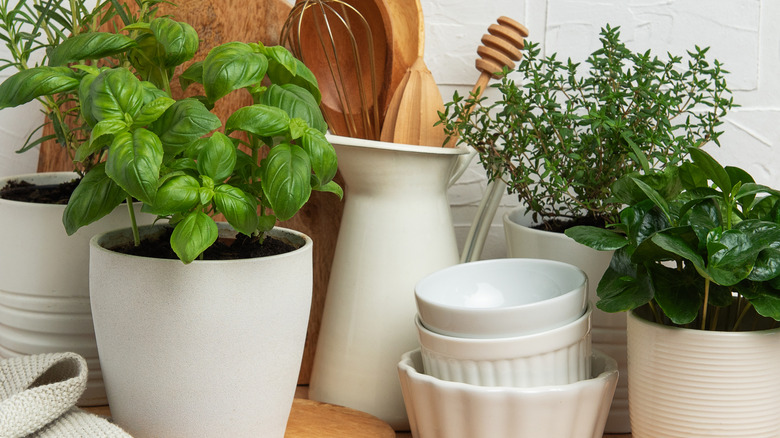
Having fresh herbs on hand is a great way to enhance your recipes. Potted herbs inside or near the kitchen make it easy to pinch a few sprigs whenever you need to add freshness to your dishes and bring a bit of the garden indoors. Most culinary herbs are quite forgiving, growing well in containers as long as they have plenty of sunlight, the right amount of water, and enough nutrients. However, most herb plants will eventually outgrow their containers and will need repotting.
Although different types of herbs have different growing habits and needs, repotting them will still be beneficial to all of them for various reasons. Even if you want to keep them indoors in windowsill-sized containers, your herb plants will benefit from repotting with fresh potting mix as the nutrients in the old soil get depleted over time.
Repotting when your herb plants start outgrowing their container will also let you divide the plants and create more individual plants for other containers, or to transplant them into the garden if you have an outdoor space. This is especially true if you use the herbs often, as these plants get bushier the more you cut them, as this helpful tip for bigger basil harvests shows. If your container herbs are outside, repotting will give you a chance to get rid of any weeds and grasses that may have snuck inside the pots.
Tips for repotting your container herbs
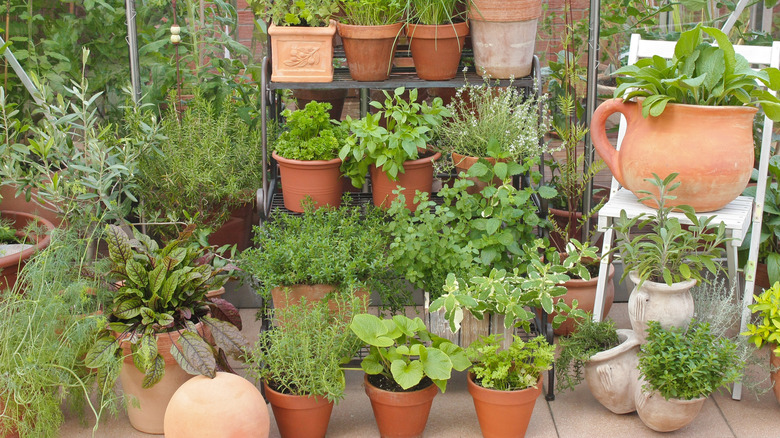
Small plants, such as the 'living herbs' you can buy at the grocery store, won't need to be repotted if you only plan to use them for a short period — these little guys only last for a week or two, and chances are you will use them well before their expiration date. However, if you intend for them to last longer than that, it is recommended to repot them as soon as you bring them home to give them more room to grow and thrive. In fact, these will be great if you're repurposing old cans to start a mini herb garden for the kitchen window.
Herbs are ready to be repotted when you see roots sticking out of the drainage holes, the soil starts drying faster than it used to, the plant seems to have stopped growing, or if it starts looking scraggly. For instance, mint starts growing 'runners' toward the sides of the pot, leaving a bare spot in the middle. Divide it at the roots, cutting off any dead or leggy growth, and repot in fresh potting mix. Other herbs like lemon balm, thyme, oregano, marjoram, chives, and lemongrass can also be divided and refreshed.
Ideally, you want to repot your established perennial herbs — such as mint, rosemary, thyme, sage, and oregano — after three years of growing in the same pot. It's best to keep new containers on the smaller side, no more than two inches larger than the previous one. This will ensure your herbs are not surrounded by too much soil, which can get soggy and lead to root rot. Remember, most herbs, especially Mediterranean natives, prefer dry, well-drained soils to thrive.