

What Is The Average Lifespan Of A Countertop Water Filter?
We may receive a commission on purchases made from links.
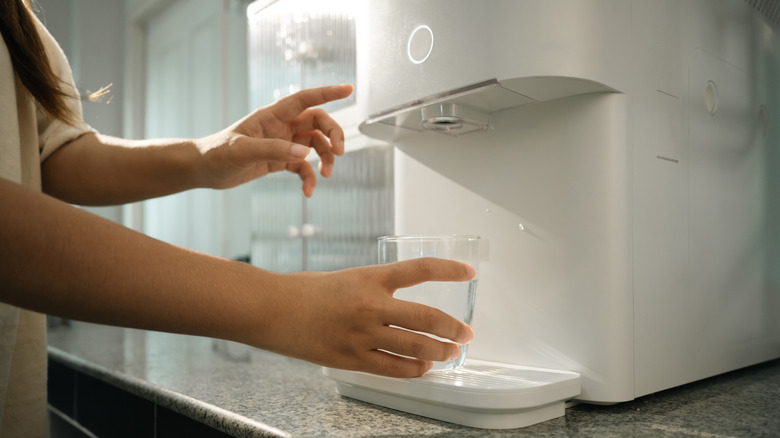
A countertop water filter may already be living on your kitchen counter. It's a cheap and easy way to turns iffy tap water into something you actually want to drink. But when's the last time you changed the cartridge?
Most people treat these systems as a one-and-done purchase. In reality, every countertop water filter — like the one in your fridge — has a built-in expiration date, and depending on the type, that date can land anywhere from two months to two years down the line. The biggest swing factor is the filtration technology itself. Basic activated carbon cartridges like the kind you'll find in most budget pitchers and entry-level countertop units burn out fast, often in two to six months. They can only absorb so much chlorine and odor before the carbon's saturated and can't hold anymore. Reverse osmosis membranes and ceramic filters last considerably longer, sometimes well over a year, since they're built for heavier-duty work like treating heavy metals and in very select filters taking out bacteria.
The water source itself is also a factor. The harder and "dirtier" the water, the quicker your filter is going to burn out. A filter that's only job is taking the chlorine taste out of piped-in municipal water, for instance, will last far longer than one that has to clean up hard, sediment-packed well water. And last but not least is frequency of use: a busy household running through gallons a day will need a fresh cartridge long before a single-person apartment does.
How to get the most out of your countertop water filter
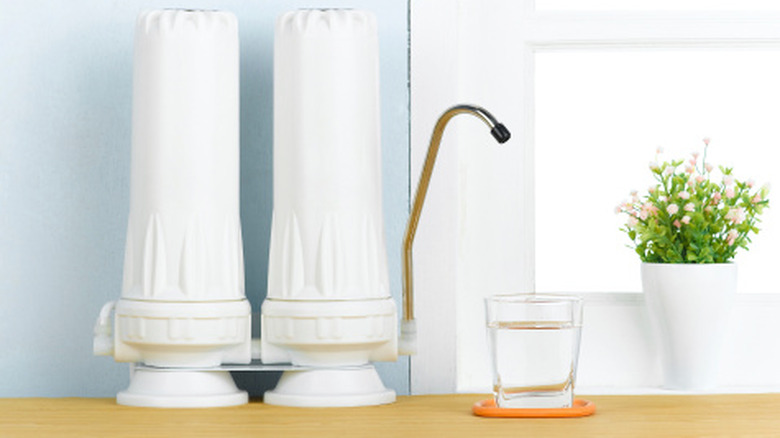
Once you understand that filters have a shelf life, stretching that life comes down to a handful of easy habits. Start with the water before it even reaches the unit: install a basic sediment pre-filter to catch all of the large particles like dust and loose gravel. That way, the cartridge inside your countertop system isn't doing double duty and burning out ahead of schedule.
Cleaning is another way to extend the life of your filter. Since the unit just sits there day after day, after a while, it just fades into the counter like a toaster you haven't looked at in months. But rinsing the tank itself, if the design allows, helps remove built-up grime and mineral scale that slow water flow. Skip harsh detergents on any membrane or ceramic component, though. Soap residue can do nearly as much damage as the contaminants you're trying to filter out in the first place.
If you notice a strange taste or odor, or water suddenly takes forever to pass through, that means the cartridge is done, regardless of what the manufacturer's timeline claims. If the system is going to sit unused for a long period, empty the tank and let it dry before storing it. Take these easy steps and you'll get to the long end of that lifespan range.