

What Happens If You Stop Changing Your Fridge's Water Filter?
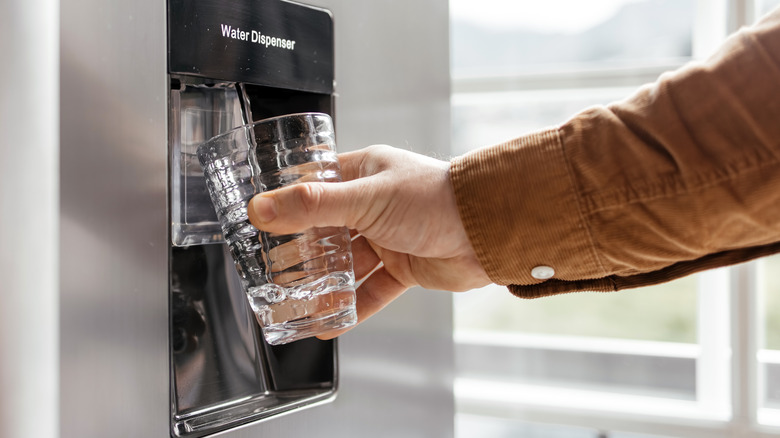
With everything going on in the world today, it's often easy to forget to do some minor maintenance around the house. One of these tasks is simple enough: Replacing the water filter inside your refrigerator every six months, if you have a unit with an exterior dispenser. But what exactly happens if you forget?
The answer varies depending on your water source, which is why we install these filters in the first place. Generally speaking, our source water may contain contaminants harmful to our bodies, including chlorine, lead, pesticides, and even pharmaceuticals, and it's better to be safe than sorry. Water filters reduce most of these through a three-layered process: a particle-filtration, to get rid of larger sediment; micro-filtration, for smaller sediment that snuck through the first; and absorption-filtration, in which microscopic pollutants are absorbed by a filter made of carbon. With all the contaminants trapped in the filter layers over time, a new one should be installed on a regular basis to maintain the flow and cleanliness of the water. If not, you could end up with bad tasting, visibly cloudy, or even harmful water or ice.
While the EPA has regulations in place to assure all tap water is safe, those regulations are for the source of the water and don't account for any questionable pipes delivering the water to your home. Furthermore, anyone with a private well source is susceptible to contaminants.
Maintaining Clean Water
While filtering water doesn't necessarily guarantee it's safe to drink, you can still do what you can to assure you have cleanest drinking water. Make sure the filter you buy is actually rated to eliminate contaminants by looking on the label for certifications from the NSF (National Sanitation Foundation) and ANSI (American National Standards Institute). Particularly, you should look for certification numbers 42, 53, and 401 for optimal filtration.
There are ways to prolong a filter's life span, including adding a water softener or a pre-filter at the source pipe before it enters the refrigerator. However, it's still recommended to replace the water filter every six months — or even sooner if you have a large family. Since each layer of a filter traps contaminants, those impurities can build up within the filter and reach a threshold in which mold or bacteria can grow inside and be introduced into the water on its way to the dispenser.
While you're on a roll maintaining your refrigerator's internal water flow and cleanliness, the other thing you should be aware of is cleaning the exterior water dispenser mechanism itself. Use a vinegar-based cleaning solution to flush the system and scrub the nozzle with a toothbrush, and you're on your way to have the cleanest possible drinking water you can, right from your refrigerator's tap.