

12 Of The Biggest Scandals In KFC History
Since getting its start in a gas station nearly 100 years ago, KFC has evolved into a global fast food favorite. While some see it as "school cafeteria" quality (yes, that's a direct quote courtesy of Reddit), plenty can't get enough of its crispy fried chicken, covered in those not-so-secret 11 herbs and spices — hence why it now has more than 33,000 locations all over the world.
But while it is loved by millions, KFC isn't perfect. In fact, you probably won't be surprised to learn that, like many fast food chains, KFC is actually very far from perfection. Over the years, the fast food giant has dealt with some major controversies, from running out of its key ingredient and food poisoning allegations to accusations of animal abuse. Here, we take a look back at some of the biggest scandals in KFC history. They might just put you off your next trip to see the Colonel.
When it ran out of chicken
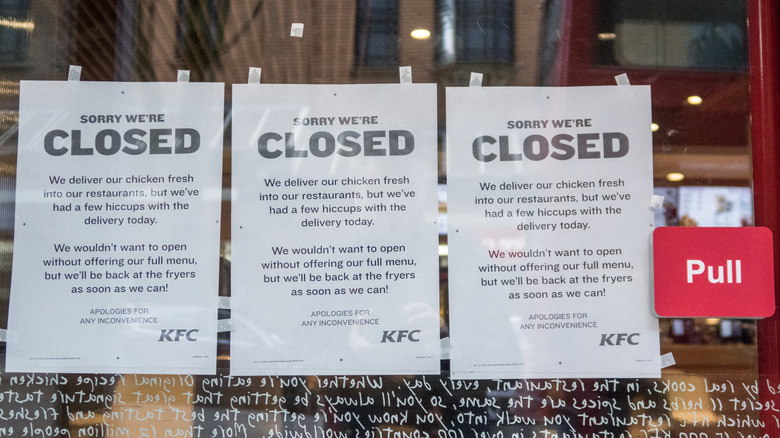
The clue is in the name, but KFC has one job: frying chicken. Usually, it's pretty good at doing that job, but in 2018, it failed spectacularly. The fast food chicken giant ran out of chicken in the U.K. Yes, completely. How, exactly, does something like this happen? KFC is hardly new to the chicken business: In fact, its franchises have been in operation since the 1950s, so it should be fairly flawless by now. Well, it seems like a case of poor preparation. And in the interest of fairness, KFC wasn't entirely to blame.
In February 2018, the U.K. arm of the fast food chain decided to switch delivery contracts. And with just one warehouse, the new supplier, DHL, was unable to cope with the logistical challenge of supplying fresh chicken to 900 restaurants across the country. At the time, KFC UK called it "teething problems" in a statement posted on X. The impact of the switch was huge, though. In fact, more than two-thirds of KFC's U.K. locations had to close completely for several days.
The logistical issues were eventually resolved, but a few months after the chaotic event, KFC decided to offer the contract for hundreds of its stores back to its original supplier, Bidvest. It makes sense: KFC didn't just disappoint customers, it was also forced to waste a heck of a lot of chicken, with several trucks' worth spoiling before they could make it to the restaurants.
It was accused of using meat from the floor in China
If you drop chicken on the floor while you're preparing dinner, the safest thing to do is to chuck it in the trash. After all, the ground is a haven for bacteria, and nobody wants their week ruined with a bout of food poisoning. You'd think this would be standard procedure in most places where food is prepared, including factories. But in 2014, a major scandal rocked China's fast food industry when factory workers, processing meat for McDonald's and Yum! Brands' chains, like KFC and Pizza Hut, were filmed picking up meat from the factory floor and placing it back with the rest.
The footage came from Dragon TV, which had filmed workers at the fast-food supplier Shanghai Husi Food Company. As well as picking up meat from the floor, the footage also showed workers changing the expiry dates on old packets of beef, likely meant for burger chain McDonald's. Despite parting with the Husi Food Company, the scandal had a catastrophic impact on Yum! Brands' sales in China, with customers avoiding KFC locations in particular. Let's be honest, it's not that surprising. Floor chicken doesn't sound particularly appetizing to us either.
It was accused of manipulating expiry dates
Nearly a decade after the undercover footage was released in China, a similar scandal hit KFC locations in the Czech Republic. This time, an investigative journalist revealed that, in one restaurant in the city of Jablonec nad Nisou, workers were washing and relabeling expired chicken before selling it to customers. Despite the fact that these stories were corroborated by KFC employees, the fast-food giant denied the allegations. Still, it was enough for the State Agricultural and Food Inspection Authority to get involved, which confirmed moderate hygiene concerns in around nine restaurants across the country.
But it wasn't the first time KFC had been accused of this kind of behavior. In 2025, KFC in Denmark filed for bankruptcy, after it had to close all of its restaurants following a damning documentary that, again, showed employees altering expiry dates on rotten chicken. It goes without saying, but rotten chicken is a major health risk. Consuming it can lead to unpleasant and dangerous food poisoning, including Salmonella, which can be fatal in some cases.
Films revealed overcrowding at its chicken farms
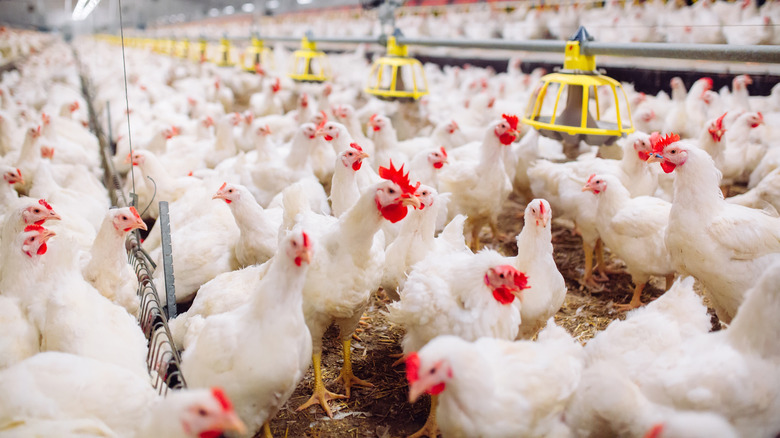
We're sorry to break it to you, but most of KFC's chicken doesn't come from picturesque farms with chickens running free on green fields below blue skies. In fact, most of the meat eaten in the U.S. and the U.K. comes from factory farms, also known as Concentrated Animal Feeding Operations (CAFOs). And reader, they sound bleak because they are pretty bleak. They're cramped, industrialized facilities, often offering very little room for the animals to move around.
In 2022, YouTuber Niko Omilana visited a KFC farm for the chain's Behind the Bucket campaign. Omilana's film was supposed to shine a light on how much KFC cares for its chickens, but, for many, it had the opposite effect. Thousands of chickens were shown packed into a shed with no access to the outside. "Those conditions looked horrendous," said one X user in response to the film. They added: "Nobody should eat those chickens. They are clearly massively distressed."
Another film produced by vegan brand VFC showed the same facility a few weeks later, and this time, things were worse. There were sick birds who couldn't stand, feces everywhere, and very little fresh straw. Experts who reviewed the footage said the birds appeared stressed due to the lack of enrichment.
The $20 million lawsuit over denying employees rest breaks
KFC hasn't just been in hot water for treating its chickens badly; in some places, it doesn't have the best reputation with its employees either. In fact, in 2023, Australian employees accused the chain of failing to provide the appropriate rest breaks every four hours. In Australia, employees are usually entitled to a rest break of around 10 to 15 minutes. Because they're short and the worker remains on duty, they are often paid. If an employer fails to provide these breaks, they could face legal action, which is exactly what happened to KFC.
In spring 2026, the chain, together with 80 of its franchise operators, agreed to pay nearly $29 million AUD (around $20 million USD) to settle a lawsuit over the missed breaks. The impact is significant. IIf the final amount is approved in September 2026, roughly 90,000 of its current and former employees could be entitled to claim some of the compensation.
The sexual harassment and retaliation investigation
Nobody should have to face sexual harassment in the workplace, but if it does happen, they should at least expect support from their employer. Unfortunately, some KFC employees in Florida reported receiving very little help from the chain after reporting sexual harassment in one of its Orlando restaurants.
Two workers claimed that the restaurant had a sexually hostile work environment, and when they raised the issue, one of them was fired. This is called retaliation, and it's illegal in the U.S., because it creates an atmosphere where employees feel unsafe and unable to raise legitimate concerns.
Fortunately for the affected workers, the Equal Employment Opportunity Commission got involved, investigated KFC, and ultimately found the chain had acted unlawfully. As a result, the chain pledged to train its workers on sexual discrimination and pay each of the victims $100,000.
It had to pay $5.7 million for allegedly poisoning a child
Earlier, we mentioned the very real risk of Salmonella, which can be caused by eating undercooked, contaminated, or spoiled food. Well, tragically, in 2005, a seven-year-old Australian girl named Monika Samaan contracted the foodborne illness after eating one of KFC's Twister wraps. She developed salmonella encephalopathy, a type of brain damage, and went into septic shock, which resulted in permanent disability.
Samaan wasn't alone; several members of her family also became ill after eating at KFC that day, though no one else developed such a serious illness. Complications with salmonellosis (salmonella infection) are rare, but when they occur, they are most likely to affect young children, people with compromised immune systems, or the elderly.
A lawsuit was filed on the child's behalf and accused KFC of a lack of food hygiene and serving food that had been dropped on the floor (sound familiar?). While KFC maintained its innocence, the courts thought differently and, in 2012, the fast food giant was instructed to pay $8.3 million AUD (around $5.7 million USD) to the family.
Fecal bacteria was found in the ice
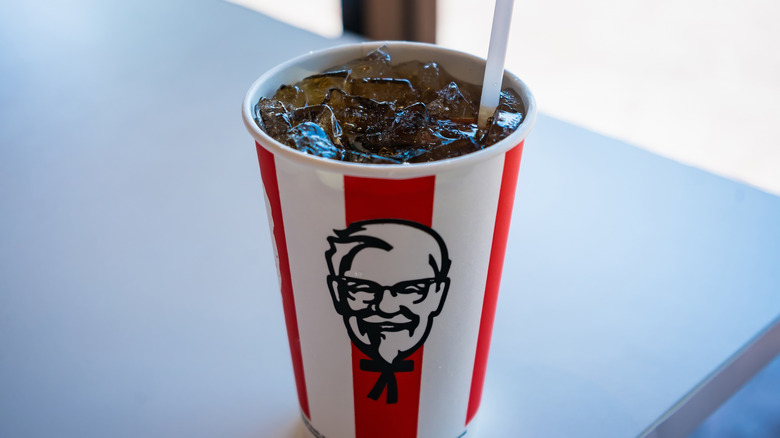
Arguably, nothing goes better with a fast-food meal than a cold soda with plenty of ice. But only if the ice doesn't have fecal bacteria in it, of course. Why would we even mention that, you ask? Well, in the U.K. in 2017, a BBC investigation conducted by the TV program "Watchdog" tested ice samples from fast-food restaurants across the country, and found fecal bacteria in 16 of them. Three were from McDonald's, six were from Burger King, and seven were from KFC.
Once again, the undercover investigation pointed to major food safety failures in KFC restaurants. In fact, experts speculated that the fecal bacterium was likely getting into the ice due to poor hygiene practices. Fecal bacteria in ice is off-putting, of course, but it's also dangerous. It can contain E.coli, which, again, can lead to foodborne illness if consumed. E.coli often causes mild symptoms, but in rare cases it can be serious. KFC took the issue seriously. In response to the "Watchdog" findings, the chain shut down its ice machines while it conducted a thorough internal investigation.
Its workers were filmed abusing chickens
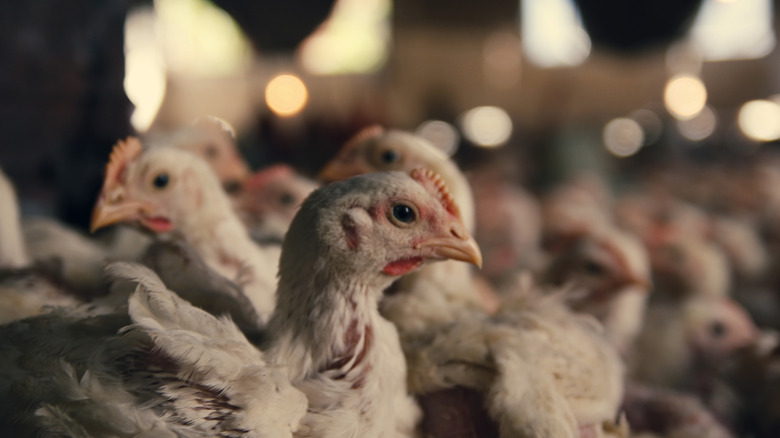
If you thought the overcrowding was bad, things were even worse for KFC's chickens back in 2004. In the U.S., animal rights investigators from People for the Ethical Treatment of Animals (PETA) filmed workers abusing chickens at a facility run by Pilgrim's Pride, one of the biggest chicken producers in the country. They were seen throwing the birds into cages and breaking their beaks. According to one journalist, this wasn't the worst of it. He said he also saw workers spitting tobacco at chickens, stamping on them, and tearing off their heads while they were still alive. The year before, PETA sued KFC for misleading customers over the way it treats its chickens.
Understandably, many customers were appalled by the findings. After the release of the video, KFC pledged to investigate the slaughterhouse in West Virginia where the footage was filmed, and claimed it wouldn't buy any more meat from the facility until the issue was resolved. In the end, 11 workers were fired over the video.
The Frankenchicken backtrack
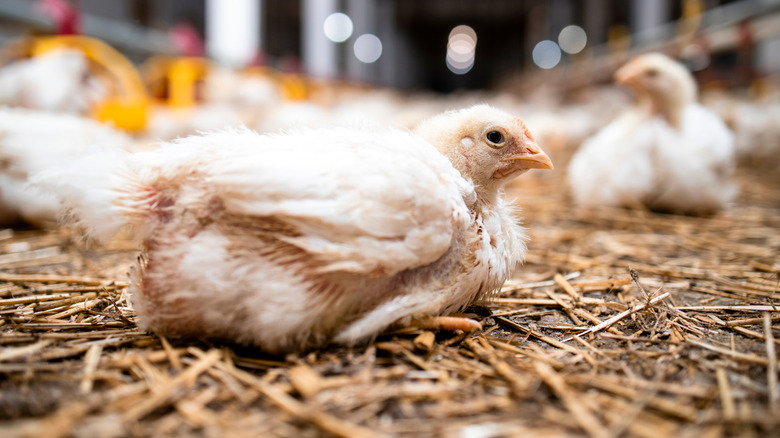
A Frankenchicken sounds like a character from a horror movie, right? Imagine a bird that can grow to full size in just over a month, at a rate that is 400% faster than natural. It's got to be some sort of super villain, perhaps injected with Compound V (if you know, you know). Well, actually, no. Frankenchicken is the nickname for the very real, fast-growing breeds of chicken that prop up the fast food industry.
While their fast-growing abilities help food giants to turn a profit, as you'd expect, it's not good for the chickens. In some cases, they are unable to stand, their legs broken beneath the unnatural weight. According to animal rights activists, they can also develop muscle diseases, like white striping and wooden breast syndrome.
In 2019, KFC promised to improve its welfare standards and move away from a reliance on Frankenchickens by 2026 in the U.K. But in 2024, it revealed it would no longer deliver on its pledge. According to the chain, there was no market for slower-growing breeds, but activists accused the brand of prioritizing lower costs over chicken welfare. Many social media users were also outraged. "If they are serving meat in our country it should be as humane as it can be, or they can FO," said one Reddit user in the r/unitedkingdom subreddit. "No way companies should put money [in front] of the [animal's] welfare."
It had to pull an ad after backlash over racism
Chicken abuse, sexual harassment, fecal bacteria, and racism. Yep, it doesn't get any better for KFC, unfortunately. In 2010, the fast food giant was accused of perpetuating racist stereotypes when it released a commercial in Australia showing a white cricketer calming down Black fans by giving them fried chicken. When the commercial started circulating online in the U.S., many were quick to point out the racist stereotype associated with Black Americans and fried chicken, which stems from the racist depiction of Black people eating fried chicken in the 1915 silent movie "Birth of a Nation."
While KFC maintained that this stereotype doesn't exist in Australia, it agreed to pull the commercial anyway. It's not the only fast food giant to get called out for perpetuating this particular racist stereotype. In a major Burger King scandal two years later, a commercial with Mary J. Blige was pulled from the air for a similar reason.
The Kristallnacht promotional message
To understand why this scandal was particularly abhorrent, we have to go back to November 9, 1938. On this night, Nazis across Germany vandalized Jewish businesses, burned synagogues, broke into Jewish homes, assaulted and murdered Jewish people, and sent thousands of Jewish men to concentration camps. The night became known as Kristallnacht, or Night of Broken Glass, and it's still acknowledged every year in Germany as part of Holocaust remembrance.
Germans choose to remember and honor the lives lost and ruined on Kristallnacht in many different ways. Some light candles, read poems, or listen to memories from survivors, for example. For most, KFC doesn't come into it (funnily enough), which is why many were shocked to receive a text message from the chain on November 9, 2022, urging them to commemorate Kristallnacht with cheesy chicken. Yes, that actually happened.
KFC was quick to apologize, blaming a system error, but for some, the damage was done. "Well, that's a particular kind of disgusting," said one Reddit user in the r/europe subreddit. Another added, "KFC executives need to be fired."