

What Tiny Dots On Stainless Steel Cookware Mean, And Are They Permanent
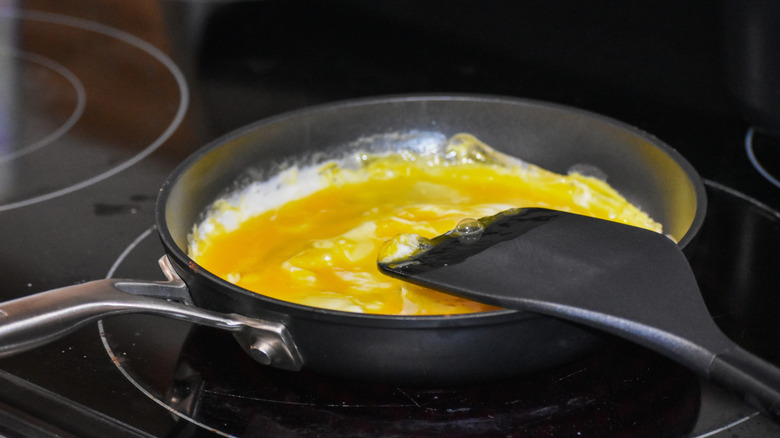
Stainless steel is one of the most popular cookware materials because it heats up super fast, retains heat, and, as long as you don't scratch its surface or scorch the living daylights out of it, you can trust it'll be reasonably non-stick for a long while. However, there are many mistakes that home cooks make with stainless steel, which can lead to permanent unsightly dots appearing on the surface of the pan.
These dots are the result of pitting, which often occurs when the stainless steel material comes into contact with chlorine or chloride. This compound is found in many ingredients, including salt (sodium chloride). Other causes of pitting include extremely alkaline or acidic substances and high temperatures (often in tandem with chloride and chlorine).
At first, these dots may appear small, and unless you're paying close attention to your pan's finish, you may not even notice them. While they may not affect the performance or capabilities of your pan, they still don't look pretty.
What causes pitting and how to avoid it
One of the most common ways salt comes into contact with stainless steel is when you salt water for boiling pasta. If you make the mistake of adding salt to the pot before the water boils, you risk the salt settling at the bottom of the pan and destroying the finish. You should also avoid salting anything in a cold pan; wait until the pan's contents reach a hot enough temperature that the salt disperses into it.
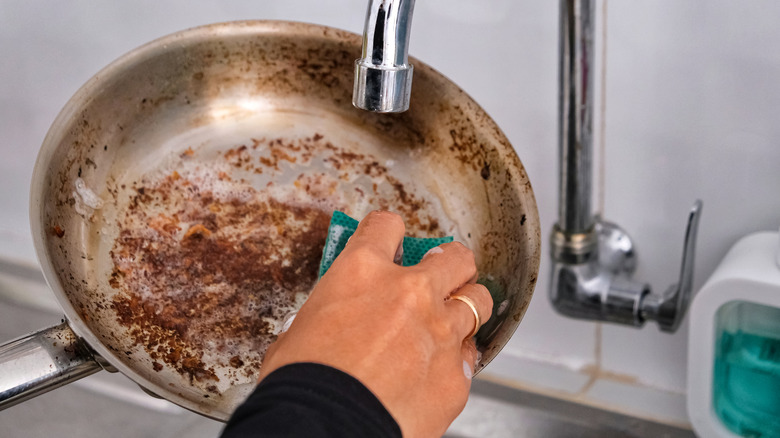
Chloride and chlorine can also come into contact with stainless steel pans if you use the wrong type of cleaning solution. Bleach, which contains an active component called sodium hypochlorite, can wear down the finish and cause pitting. The best way to clean stainless steel cookware is to scrub it with a gentle, non-abrasive surface (skip the steel wool) and deglaze the pan with hot water as needed. You can also take a page out of Martha Stewart's playbook and restore your pans with a calcium, lime, and rust remover — just note that it doesn't reverse pitting.