

Krispy Kreme's Biggest Flops Over The Years
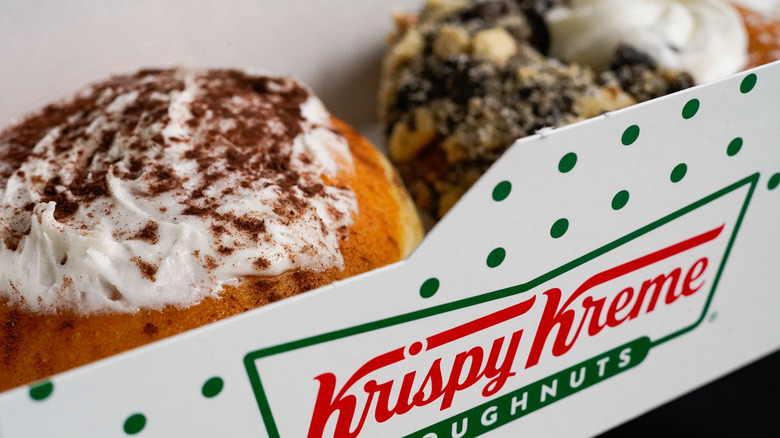
Krispy Kreme is an American institution. In fact, founded in the 1930s, the chain has been supplying consumers with its famous glazed doughnuts for the best part of a century. That's a heck of a long time, so as you'd expect, it's not all been plain sailing for the brand.
While Krispy Kreme has seen many successes (in 2022, it sold an impressive 1.6 billion doughnuts), there have also been a considerable number of bumps in the road. Over the years, the chain has come up against diet culture, financial losses, and a lack of demand for its doughnuts.
Here, we take a closer look at some of the biggest flops in Krispy Kreme history. Some of these were so unsuccessful, you've probably never even heard of them. Yes, even if you're a Krispy Kreme super fan. Krispy Kreme pizzas? What about cold cut sandwiches? We rest our case.
Whole wheat doughnuts
In the early 2000s, skipping carbohydrates was fashionable. In fact, if you weren't on the Atkins diet yourself, you probably knew somebody who was. Reports estimated that up to 30 million people in the U.S. had tried the diet, which emphasizes increasing protein and reducing carbohydrates, at some point in the early 2000s. For Krispy Kreme, this was a major problem: Doughnuts are basically all carbohydrates. In 2004, the chain revealed that the rising popularity of Atkins was hurting its sales.
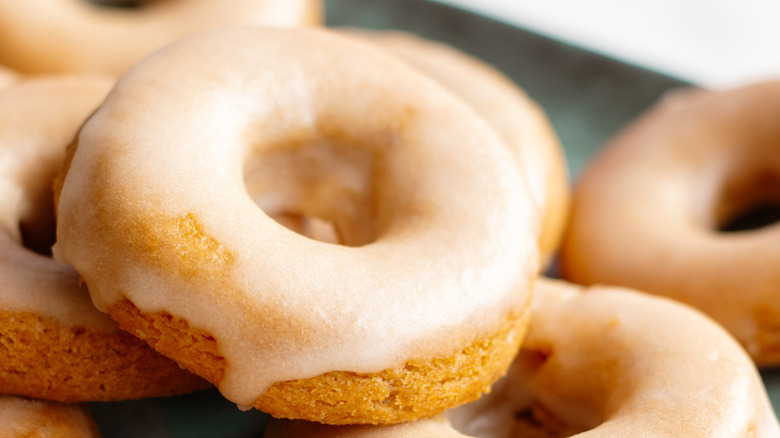
In a bid to boost demand, in February 2007, Krispy Kreme came out with a brand new kind of doughnut, glazed and flavored with caramel, but made with whole wheat. By 2007, Atkins had fallen out of favor, but diet culture still had a firm grip on society, and Krispy Kreme thought that a whole wheat option would win over health-conscious customers.
Well, we can assume it didn't work, because after that initial 2007 launch, the whole wheat doughnut was quietly discontinued and never mentioned again. It probably didn't help that the doughnut wasn't all that different in calories from the original. In fact, it was only 20 calories less than a normal Krispy Kreme doughnut, with just one gram less fat.
Multigrain doughnuts
The year 2007 was rough for Krispy Kreme. In fact, in spring, it reported that it had ended the first quarter of the year with a net loss of $7.4 million. Ouch. To be fair to Atkins, the financial woes probably weren't all down to diet culture. In 2004, the Securities and Exchange Commission started investigating the company for inflating corporate earnings with some, ahem, creative accounting, which certainly didn't help the situation.
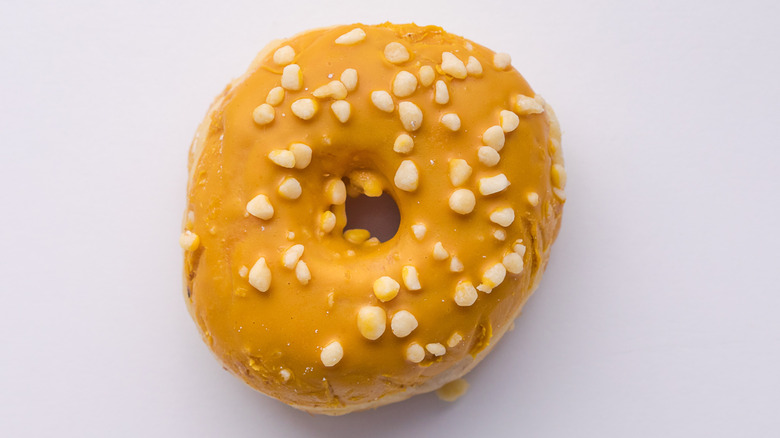
Anyway, Krispy Kreme decided to throw everything at the wall in 2007 and see what stuck. Focusing on the diet culture problem, in June, it followed up its whole wheat doughnuts with another seemingly healthier option: multigrain cake doughnuts. The doughnuts were made with seven grains, molasses, brown sugar, and flavored with pecan. Instead of the classic glaze, they were topped with crunchy oatmeal.
We can safely assume these were no more successful than the whole wheat options, because, again, they haven't been mentioned since. It turns out, people probably don't go to Krispy Kreme for healthier options. Who knew?
Its multiple attempts to expand to New England
Krispy Kreme's struggles in the 2000s were compounded by its growth strategy. It tried to aggressively expand during this era, but in many regions, it wasn't well-received. Take New England, for example. In 2003, Krispy Kreme partnered with Rhode Island Burger King franchise The Jan Companies with a goal to open 16 new locations across New England over the course of two years. But by 2005, it had only opened half of the target, and half of those had closed. The failure was likely linked to Krispy Kreme's inability to compete with its rival, and the beloved New England native, Dunkin' Donuts.
But Krispy Kreme wasn't dissuaded. In 2016, it decided to try again, announcing plans to open new locations in New Hampshire and Maine. Once again, it was a flop. The locations were popular at first, but they couldn't stay the course, and by 2022, there was just one New England Krispy Kreme location left, in a casino in Connecticut.
The Hong Kong expansion

Krispy Kreme wasn't just trying to capture the attention of New England's doughnut lovers in the 2000s, but it was also attempting to make a name for itself internationally, too. In some places, it worked. In 2004, it opened its first Mexican location, for example, and less than a decade later, it was celebrating its 100th spot in the country. Other markets weren't so successful, though.
Two years after the first Mexico opening, Krispy Kreme headed to Hong Kong. It launched stores in Hong Kong International Airport and six other districts, but, just like with New England, they didn't last. By 2008, Krispy Kreme pulled out of Hong Kong completely. At the time, Krispy Kreme said the costs were too high for it to stay in the region, but some locals believe there was more to it than that. In fact, many believe that Krispy Kreme just wasn't exciting or innovative enough.
"The issue is that Hong Kongers treat a lot of foods like trends," said one Redditor in the r/Hong_Kong subreddit. "Kreme was popular in the first year then something else comes along and the business dries up." Others, however, feel that Krispy Kreme just wasn't suited to Hong Kong tastes. "They are super sweet and most people can handle maybe [one] or [two] tops," added another Redditor.
Its attempt to launch into grocery store snack aisles
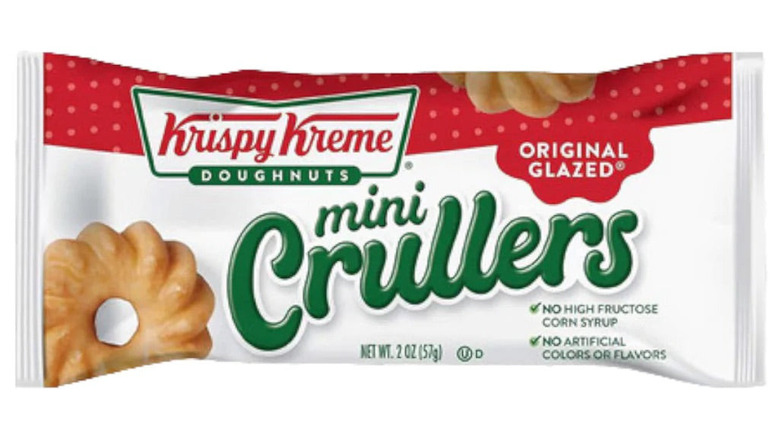
It's far from unusual to spot a Krispy Kreme doughnut in the grocery store. For the most part, these doughnuts are baked fresh at a Krispy Kreme shop and then shipped off to the store to be sold in the bakery or grab-and-go section. But for a brief period, Krispy Kreme decided to try to expand its grocery store presence by entering into the packaged snack business.
In 2020, it launched its own packs of Krispy Kreme Doughnut Bites and Krispy Kreme Mini Crullers at Walmart stores across the country. But the new venture didn't last very long. By spring 2023, Krispy Kreme stopped production completely. The factory in North Carolina that had been producing the doughnuts was closed, and the Doughnut Bites and Mini Crullers disappeared from the shelves.
In the end, Krispy Kreme decided it was best to just focus on fresh doughnuts. The company admitted that its packaged snacks weren't as popular as it had initially hoped. This was likely due to it not being able to compete in the crowded category, and ultimately, consumers not associating the brand with packaged snacks.
The partnership with McDonald's
Credit where credit is due, Krispy Kreme is always willing to try new things. In 2022, for example, it decided that teaming up with a fast food giant might be the key to future success. McDonald's and Krispy Kreme started a trial relationship, offering doughnuts in nine stores in Louisville, Kentucky. On paper, it seemed like a win for everybody. McDonald's would attract more people, Krispy Kreme would make more sales, and customers could have a doughnut with their morning Egg McMuffin.
At first, the partnership seemed like a match made in heaven. In 2023, McDonald's expanded the test to 160 locations across Kentucky. And then in 2024, the news of a national expansion came. By the end of 2026, the duo was planning to offer Krispy Kreme doughnuts in every McDonald's restaurant in America. But it wasn't to be. In 2025, Krispy Kreme and McDonald's called it quits. Unfortunately for Krispy Kreme, its doughnuts just weren't popular enough, and it was making substantial losses. It could no longer justify the extra expense of the partnership.
Things went from bad to worse when Krispy Kreme was slapped with a lawsuit over the failed partnership. Investors claimed they had been misled by the doughnut chain over the profitability and success of the collaboration.
The pizzas
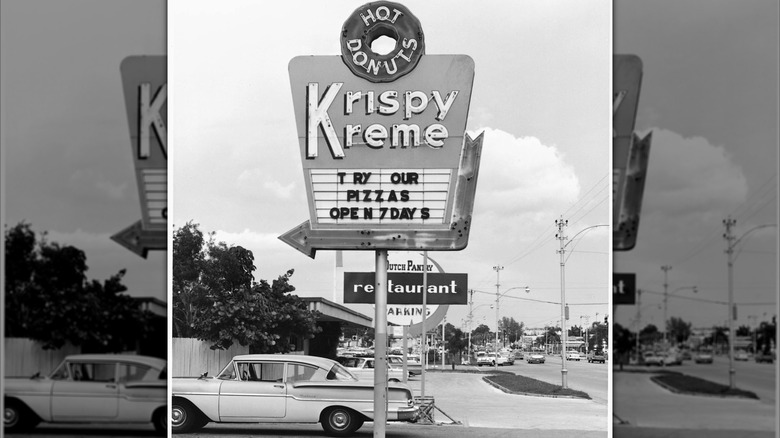
Yep, there actually was a time when Krispy Kreme sold pizzas. The move was certainly a flop, because barely anyone remembers it. In fact, when Krispy Kreme posted a throwback image to its social media of a black and white sign advertising pizzas, the only way some could figure out when this happened was by looking at the cars in the photo. Their conclusion? Probably around the 1960s.
That said, some do have vague memories of Krispy Kreme expanding beyond doughnuts. The menu likely changed from location to location, as while some swear that their local spot only ever offered sweet treats, others recall being able to buy eggs, sausage biscuits, and even cold cut sandwiches from the chain. Yes, really. "I remember sandwiches being sold at Krispy Kreme on South Boulevard in the early '60s," said one Facebook user in a group dedicated to memories of Charlotte, North Carolina.
Its collaboration with Texas Pete
As we've established, Krispy Kreme isn't afraid of a collaboration. But, also as we've established, it doesn't always go well. In 2018, the doughnut chain decided to pair up with an unusual partner: Texas Pete. Yes, as in the hot sauce brand. The partnership wasn't totally random. Both were founded in the same place, after all (Winston-Salem, North Carolina).
The first Texas Pete Krispy Kreme doughnuts were sold at the North Carolina State Fair, and while plenty were skeptical about whether the combination would work (the hot sauce was in the glaze of the doughnuts), some said the mix actually wasn't half bad. Perhaps that's not all that surprising. As hot honey proves, spicy-sweet combinations can actually be pretty popular. Still, in the end, Krispy Kreme decided that the combination was too divisive, and the hot sauce doughnuts never actually made it beyond the fair.