

What The Big Mac Index Actually Means For Your Wallet
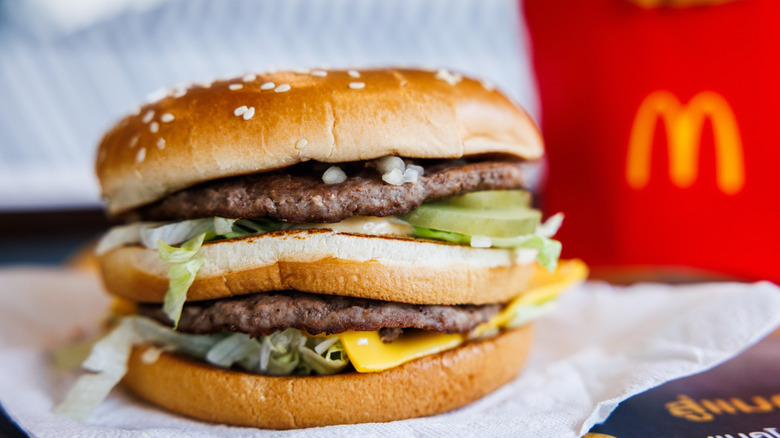
Wondering how far your dollar will stretch on that vacation you're planning abroad? Here's a tip: check out the price of a local McDonald's Big Mac where you're planning to visit and compare it to the price of a Big Mac back home. It's a quick way to roughly calculate how your money stacks up against the currency in another country.
The Economist staff came up with the idea in the late 1980s. It was meant to be a jokey way to analyze purchasing power in different places around the globe, rather than using the traditional economic market basket of goods. It turns out that translating the output of different countries into a comparable currency is tricky business. The Big Mac makes for a handy, comparable consumer good, since it's similarly prepared locally (with a few exceptions, like the McDonald's Japan Big Mac) in more than 100 countries.
To calculate how your trip is going to hit your wallet, the Big Mac Index divides the domestic McDonald's Big Mac price by the other country's Big Mac price — that's the implied exchange rate. To drill down on the specific purchasing power parity (PPP) between those two currencies, the Big Mac Index compares that number to the current market exchange rate, so you know if your visiting country's currency is overvalued or undervalued. If your visiting country's currency is undervalued? You'll be getting more bang for your buck on your trip.
Using the Big Mac Index for making travel plans

The Big Mac Index, helpful though it may be, is not foolproof. Economists will point out that its imprecision when it comes to accounting for global disturbances like geopolitical issues or economic sanctions makes it an imperfect measurement. That's an issue for economists. For everyday travelers, the Big Mac Index can be a useful generalist's tool.
In early 2026, the most expensive Big Macs, by country, were Switzerland ($7.99), Argentina ($6.95), and Uruguay ($6.91), and the least expensive were Taiwan ($2.38), Indonesia ($2.54), and India ($2.62). In comparison, a Big Mac cost $5.79 in the U.S. Of course, you won't know whether those currencies are over- or undervalued without running a quick tally on the Big Mac Index (you can access it here, via The Economist's free trial). It's a handy way to help you budget for your next trip and can give you a sense of when might be a good time to travel overseas.
The key is to keep in mind that the Big Mac Index lets you know where the foreign exchange rate is out of whack and how that can affect your travel budget — from hotel rates to transportation — in ways you might not have otherwise anticipated. Those bits of information can help you brainstorm unique travel destination ideas if you're starting from scratch, or can help you break the tie if you're grappling to choose between two places. If you lean toward countries with undervalued currencies compared to the U.S. dollar, your vacation will be easier on your wallet.