

What's The Average Lifespan Of Potato Plants?
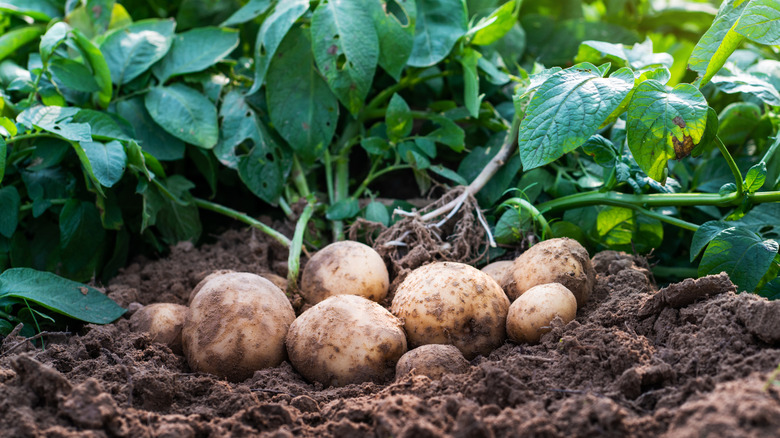
When we think of growing vegetables, we're often focused on the time it takes to get from planting to harvest, rather than on the case of fruit trees, how long the plant might last. Whether it's in a kitchen garden or in commercial potato farming, potatoes are planted from seed each year, then dug up completely to harvest the tubers that we then eat. But this isn't actually indicative of the potato plant's average lifespan. These vegetables are perennials, and when not disturbed by hungry humans, can in theory continue to grow for years on end.
Before you think you've discovered a never-ending source of fries or mash, there are some caveats. While potatoes left in the ground will provide you with a new harvest each year, the yield tends to slow down over time, with significant drops from about year five. There is also the danger of pests and diseases. Potatoes are prone to blight and beetles that can stay in the soil, so regardless of whether you leave the plants in the ground or plant them from scratch every year, the crop shouldn't be grown in the same bed for more than four years in a row.
For the annual harvest, the biggest factor in determining the time it takes a potato plant to grow tubers is the variety. Potato varieties like Red Norland can be harvested in as little as 60 days, while late varieties such as Russet need up to 120 days to reach maturity. Potato plants need both sunlight and warm temperatures to thrive, and a lack of either can slow down growth and extend the harvest timeframes.
The potato lifecycle from planting to harvest
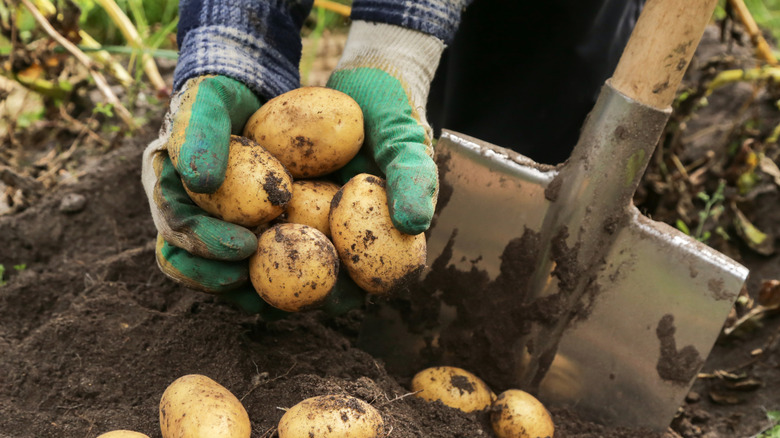
Regardless of the variety, potato plants all start in the same way, not from seeds, but from what's known as a seed potato. This is a potato (or piece of a potato) saved from a healthy crop. When replanted, it will sprout from the eyes, growing into a new plant. This applies to regular potatoes, but it's important to note that sweet potatoes are not grown the same way.
Potatoes all go through the same growth stages, with the length of each stage determined by variety and growing conditions. The first stage of growth is the sprout emerging from the soil, which then develops into a leafy plant. Once it's large enough to start photosynthesis, the plant will stop growing upwards and instead send energy down to the roots to form tubers. At this stage, the potato plant might also flower, though not all varieties do.
The potato tubers are ready to harvest when the leafy part of the plant dies off. Looking at these dead leaves and stems, it's easy to see why we think of potatoes as an annual plant, but any potatoes you don't remove for eating will stay alive (but dormant) under the soil. Provided that they don't freeze, these potatoes will grow into new plants after winter. If you live in a cooler climate, you could move these potatoes to pots indoors to be replanted in spring.