

Most Fried Rice Problems Come Down To These 2 Mistakes
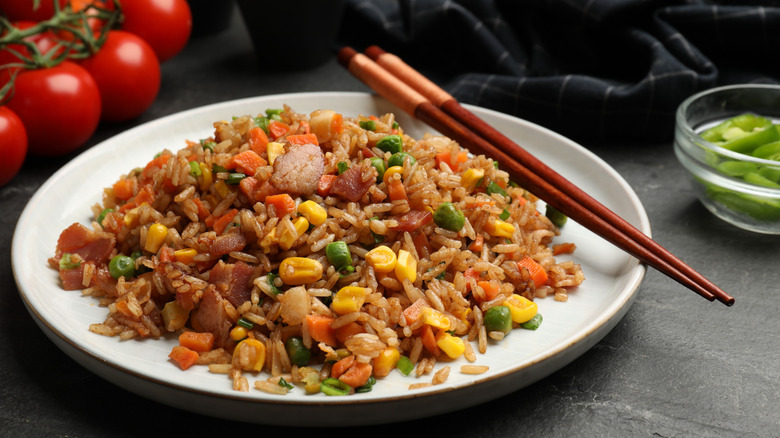
Fried rice is a comforting, umami-packed favorite of many households around the world. And though it's commonly associated with ordering take-out, it's actually easy to create at home if you know what you're doing. There are a few tricks of the trade to keep in mind, but two of the most common mistakes home cooks tend to make are easily avoidable. The first is crowding the pan, and the second is failing to heat said pan to a sufficient temperature.
Many of the toasted flavors present in fried rice come from the Maillard reaction, a series of chemical reactions that occur when the amino acids and sugars in food are exposed to high heat and transform into new flavor compounds. In a nutshell, the Maillard reaction leads to browning, which in turn creates "wok hei," that signature charred flavor authentic Cantonese fried rice is known for.
In order for browning to occur, food needs to be spaced out sufficiently on a pan. This is to allow any water present to evaporate as steam, creating the dry conditions necessary to kickstart the Maillard reaction. If you put too many ingredients in the pan at once when making fried rice, there won't be room for the steam to evaporate, and the dish will end up becoming soggy. It can also lower the heat of the pan, which can really impact your results.
The heat of your pan makes all the difference for fried rice
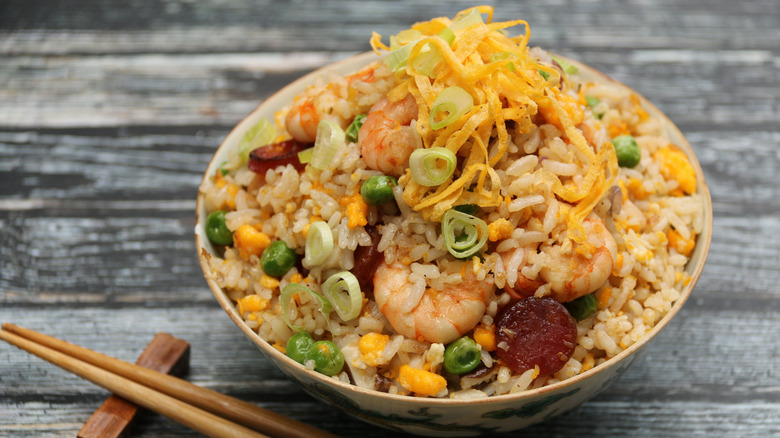
To avoid the issue of overcrowding, it's a good idea to fry each ingredient separately and then mix them together at the end of cooking. You should also use a wok if you can, which is the traditional method of preparation. Woks are designed to vaporize moisture and create specific zones of concentrated heat.
However, nothing will help you if you don't heat up your pan enough. Specialty restaurants are equipped with high-output wok burners that are a lot more powerful than those in home kitchens. If you want restaurant-worthy fried rice, place your wok on high heat and ensure it's properly warmed up (just beginning to smoke) before you even add the oil. This will promote evaporation, again helping that nifty Maillard reaction along its way.
Finally, it's better to use leftover rice for fried rice, as it has less moisture and a firmer texture than freshly-cooked rice. You also want to move quickly once the food hits the wok, constantly tossing everything to avoid burning and lock in the flavors. With these tips, you'll be well on your way to restaurant-quality fried rice in no time.