

What White Stains On Stainless Steel Cookware Actually Are
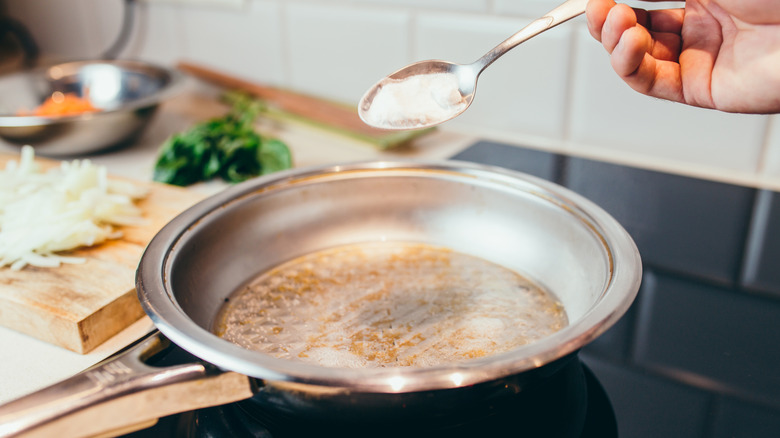
Good cookware isn't the easiest thing to come by. The top brands are expensive, a level of care is required, and you often need to visit specialty stores to get your hands on the best stuff. So, it can be incredibly irritating when imperfections start to develop on your pots and pans over time. Luckily, if you notice white spots forming on your stainless steel equipment, there's no need to worry — this is a common occurrence that can be easily reversed.
A chalky white residue appearing on stainless steel is typically due to "hard" tap water. The stains, called calcium deposits, are simply a buildup of minerals like calcium and magnesium that have moved through a mineral-rich material like limestone. The residue is left behind once the water evaporates.
Calcium deposits are completely natural, and they shouldn't pose any health risks, but they could lead to uneven heating and add a slightly metallic taste to your food. So it is best to try to remove the pesky spots once you see them forming, especially if you're working with some of the highest-rated stainless steel pans.
How to get rid of calcium deposits
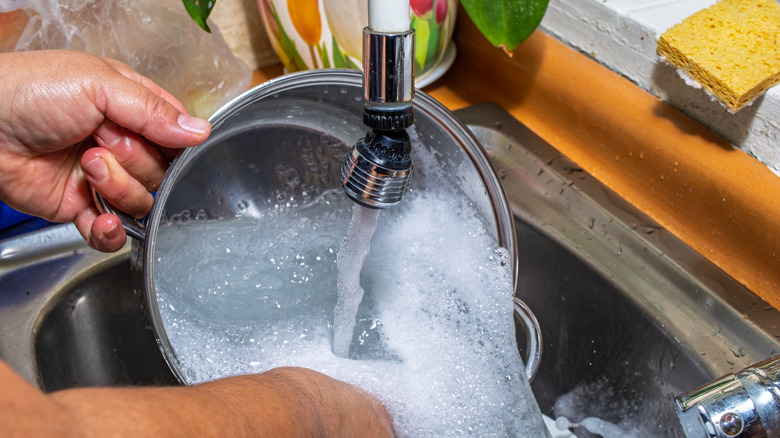
Sometimes calcium deposits will disappear with a lot of scrubbing, but if the stains are particularly stubborn, you can try a water and vinegar solution. Calcium deposits are alkaline, so the acidity in the vinegar will work to break them down. Simply mix up the solution at a 3:1 ratio and pour it into the pan or tray. Place over high heat and once it hits a boiling point, turn off the heat and stir with a wooden spoon until the marks are dissolved. Make sure to rinse the pot with warm water and soap before storing.
You can also keep the solution in a spray bottle and apply it to the stains directly, but this requires a little elbow grease. Once the stains have soaked for a few minutes, scrub gently with a soft sponge or cloth, being careful not to scratch the surface. Lemon juice is also high in acid, so rubbing the stains with a cut lemon may help, as can baking soda, which serves as a mild abrasive. Here's how to make a baking soda paste that can also have your dirty sheet pans looking brand new in no time.
To avoid the calcium deposits returning, make sure to wash and dry all of your stainless steel cookware thoroughly after use. Microfiber cloths are great for ensuring stainless steel is dry. Here are 11 other tips you need when cooking with stainless steel. There is a learning curve when cooking with stainless steel, but the material is durable and safe — and worth the effort to keep those white stains at bay.