

No Smashing, No Cast Iron: A Better Way To Easily Cook Crispy Burgers With Just Flipping
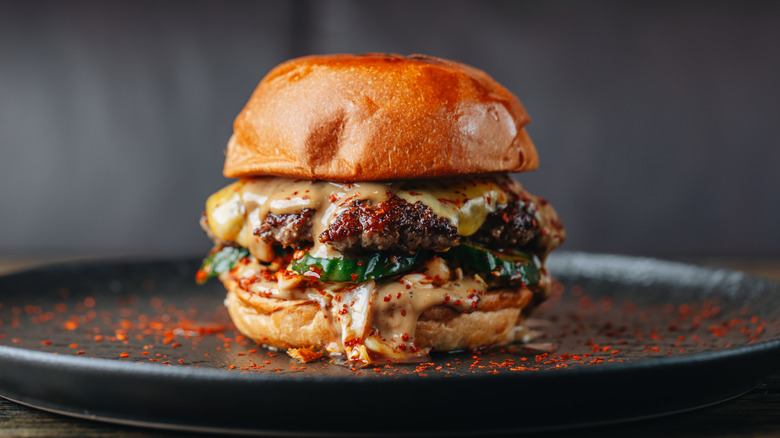
For a long time, conventional wisdom was that you should never flip a burger more than once. This is one area where burger wisdom mirrors that of cooking steaks, with advocates of the one-flip rule saying it means more even browning, and more even cooking in general, whereas flipping a steak or burger too many times can somehow dry them out. Burger and steak best practices do parallel each other, but not in the way people expect because, just like when grilling a steak, you should actually be flipping your burger more frequently to get the best, crispy crust.
One caveat here is that this does not apply to smash burgers. Here, the crust comes from the thinness of the patty at the edges and pressing the meat onto the flat surface. Plus, good smash burgers are so thin that they cook too quickly to flip more than once. But sometimes you want a crispy, browned patty that isn't that thin, and in that case you should be flipping quite frequently.
There are a few reasons for this. Browning is inhibited by moisture, and leaving your burger one side for most of its cooking time traps moisture that is trying to escape. Constant flipping, on the other hand, allows both sides of the patty to be continually exposed to the air while they are still hot, which maximizes evaporation. That allows more browning when you flip the burger back over onto the heat.
Frequent flipping helps burgers develop an evenly crisp crust
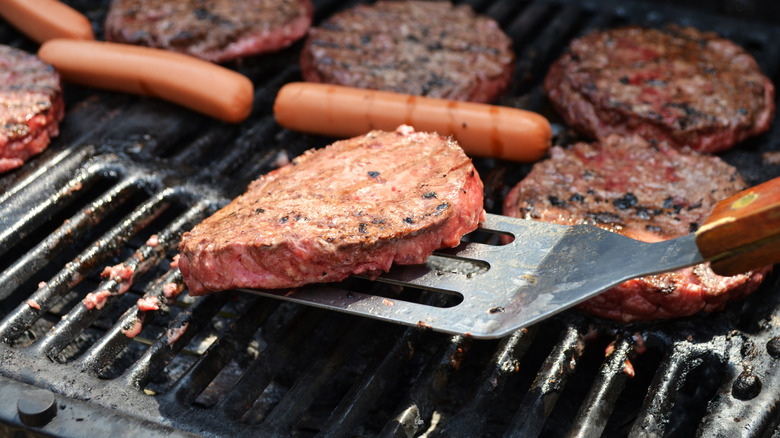
The browning you get from flipping burger patties more often will be a little better than leaving them alone, but there are other reasons to turn them frequently. Despite the old way of thinking, flipped patties cook more evenly, which makes plenty of sense when you think about the process. Constant flipping keeps both sides exposed to the same amount of heat, rather than letting one side cook most of the way through before turning, which can be hard to time precisely. It also prevents too thick of a gray, overcooked band of meat from forming under your crust. That's because repeated flipping means you aren't getting the long, continual heat exposure that can penetrate too far into your burger.
Finally, flipped burgers also have the advantage of actually cooking faster than untouched patties, despite also running less of a risk of being overcooked. For the one-flip method, the cool top of the burger is barely cooking the entire time that the bottom is browning. Flipping burgers frequently allows both sides to retain residual heat, regardless of which side is exposed to your grill or griddle.
As for how often you should flip your burgers, there is no right answer. The flipping method works with turns anywhere from 15 seconds to a minute on each side. It's mostly going to depend on the thickness of your burger, with thicker, restaurant-style burger patties able to spend more time on each side. The important thing is to just be precise in keeping each side evenly exposed to the heat. Do that and you'll end up with a perfect, crispy burger crust — no smashing or cast iron required.