

11 Hands Down Worst Things You Could Do With Your Pyrex
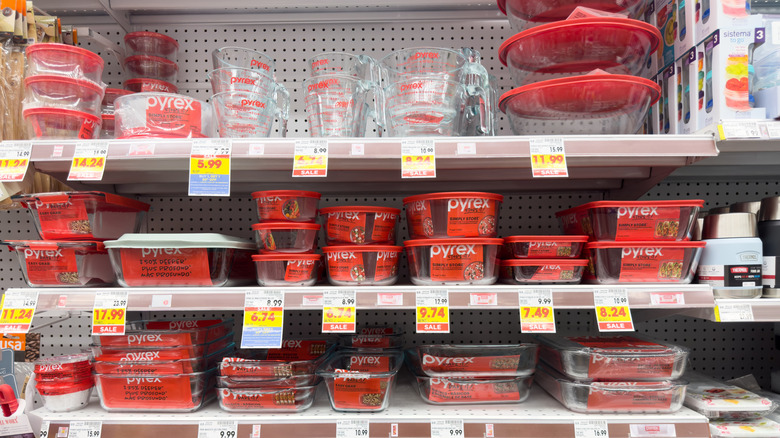
Most home chefs are familiar with Pyrex, a type of heat-resistant glass that's safe to use in conventional, convection, and microwave ovens. And while Pyrex kitchenware may have a longstanding reputation for being extra durable compared to other brands, there are still some mistakes you can make that could compromise its integrity.
Most modern Pyrex dishes are made from tempered soda lime glass, while vintage Pyrex dishes are typically made from borosilicate glass. There are a few ways to tell the difference between vintage and modern Pyrex products; for example, older items usually bear the Pyrex name in all caps. You can also find Pyrex ceramic bakeware products.
As Pyrex is a highly reputable brand, it's probably fair to say that when its products break, it's most likely down to user error. While it may sound obvious that dropping a dish on the floor can break it, thermal stress is another common culprit. Losing an expensive kitchen item or wasting a meal is always a headache, but Pyrex glass shattering can create a significant safety hazard. If you want to keep your Pyrex in tip-top shape for as long as possible and avoid any kitchen mishaps, below is a list of the very worst things you can do with it.
Using Pyrex with a direct heat source
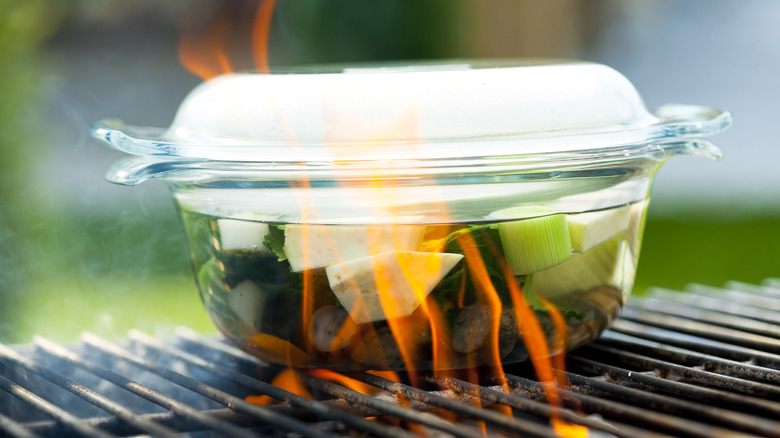
One of the worst things you can do with a Pyrex dish is place it on a direct heat source. Pyrex is designed to handle ambient heat — like the kind found in a conventional oven — where the temperature gradually surrounds the dish. But when heat is focused directly onto one area of the glass, it can create uneven expansion that puts stress on the dish and causes it to break.
There are several direct heat sources you will want to avoid when heating food in a Pyrex dish. For example, you shouldn't place Pyrex directly on a stovetop, whether it has gas flames, electrical coils, or a flat heating surface. Similarly, you shouldn't cook with Pyrex over a campfire, camp stove, or on a grill. Something else that a lot of us probably do that we shouldn't is put Pyrex under an oven broiler. When you finish off a casserole with a hot blast from the broiler to crisp or melt the top, you're subjecting the Pyrex to intense direct heat that it wasn't designed to handle.
You should also avoid putting objects designed to concentrate heat inside a Pyrex dish. Some microwave browning dishes and popcorn accessories are designed to become extremely hot in specific areas, which can create hot spots in the glass and increase the risk of breakage.
Subjecting Pyrex to rapid temperature changes
Pyrex is famed for its heat-resistant properties, and the company claims that its cookware is suitable for use in an oven preheated to any temperature a recipe might call for. It isn't actually the level of heat that can cause Pyrex to shatter, but rapid changes in temperature across the glass. If you've ever placed a glass Pyrex dish with ice-cold ingredients in a hot oven and had it explode, you learned this lesson the hard way.
This is thanks to something known as thermal shock. When glass heats up, it expands. If it suddenly comes into contact with a much cooler surface, it rapidly contracts, and the stress of that sudden change can cause it to crack or shatter. Older borosilicate Pyrex is remarkably resistant to thermal shock and can withstand temperature changes of up to 333 degrees Fahrenheit. However, newer soda lime Pyrex can only withstand temperature changes of around 99 degrees Fahrenheit before the chances of it exploding increase dramatically.
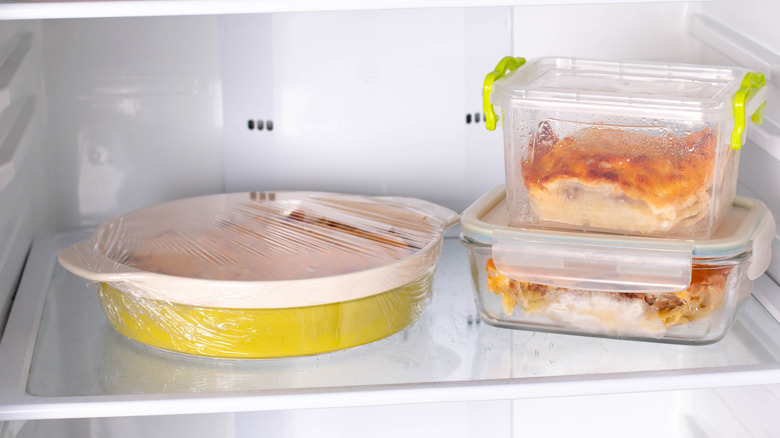
Ultimately, this means that you should allow a cold Pyrex dish to reach room temperature before putting it in a hot oven. You should also avoid putting a hot dish directly in the refrigerator or freezer, pouring boiling liquid into a cold dish, and placing a scorching hot dish in cool water or on a cold surface. And remember that thermal shock might damage the structural integrity of Pyrex without causing it to shatter immediately. If the dish seems to have broken spontaneously, it was likely affected by a rapid temperature change at some point.
Not following the dishwasher instructions
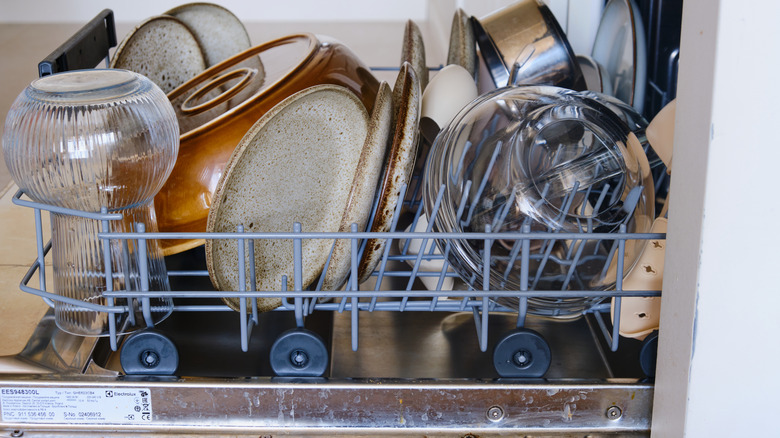
Handily, Pyrex is dishwasher safe, but there are still some things to bear in mind if you want to avoid any breakages. The most important thing to consider is how you load your dishwasher, leaving enough space around any Pyrex dishware to make sure it's not in contact with any other items.
If it's continually knocking against another dish throughout the wash cycle, there's a strong chance that it'll eventually chip or break. While most glass items should be placed in the top rack of the dishwasher to avoid the powerful water jets, Pyrex dishes can handle the pressure. For the best results, you should stack them on the bottom rack, angled so the water jets can blast any stuck-on food and the water doesn't pool in them. If your Pyrex still seems to be discolored after washing, the good news is that it's unlikely to be permanent and there are some useful tricks for removing stubborn stains.
Many Pyrex dishes also come with a plastic lid cover. These are also dishwasher-safe, but they should be placed in the top rack, away from heating components that could melt them. You'll want to avoid washing plastic lids under extra-hot dishwashing settings, like the sanitizing cycle.
Adding liquid to hot Pyrex
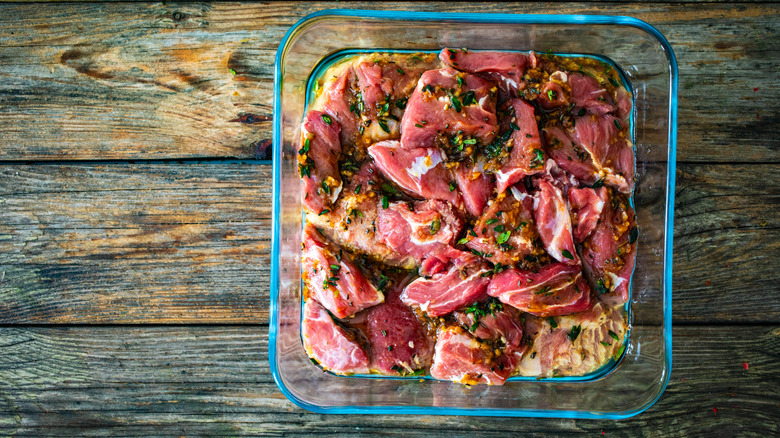
You should also remain mindful of the temperature of any liquids that come into contact with a hot Pyrex dish. If you add cool liquid to food in hot Pyrex partway through baking, like water, stock, or sauce, there's a greater chance of thermal shock causing a breakage.
The solution is to add any required liquids to the Pyrex dish before you start baking. You should avoid adding cold liquids to food that has been heating in Pyrex, like meat or vegetables. Instead, you'll want to add enough liquid to cover the bottom of your dish before you put it in the oven. This way, when additional liquid is released, it will mix with the hot liquid to avoid a drastic temperature change.
You should also be careful about where you set down a hot Pyrex dish. If you place it on a wet surface, the sudden temperature change can cause cracks or make it shatter outright. Similarly, you should avoid using a wet kitchen towel or potholder to remove hot Pyrex from the oven.
Using Pyrex in a countertop appliance
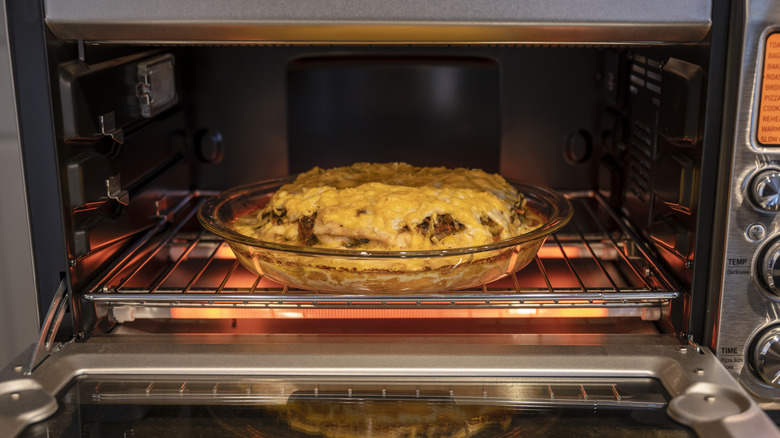
Pyrex glass is suitable for use in both conventional and convection ovens, and it's safe to put in the microwave. However, the company strongly advises against heating it in any other type of countertop appliance.
You might be wondering why Pyrex shouldn't be used in a countertop oven or toaster oven. It's because some models can expose glassware to more direct heat, rapid temperature changes, or uneven heating, increasing the risk of thermal shock and the glass shattering. The same applies to countertop grills, rice cookers, and air fryers. Pyrex dishes aren't safe to use inside a pressure cooker either — they may be heat resistant, but high levels of pressure can cause the glass to crack or even explode. And slow cookers may not be pressurized, but they're also a no-go for Pyrex due to the fact they can distribute heat unevenly across the surface of the glass.
Soaking ceramic Pyrex in water
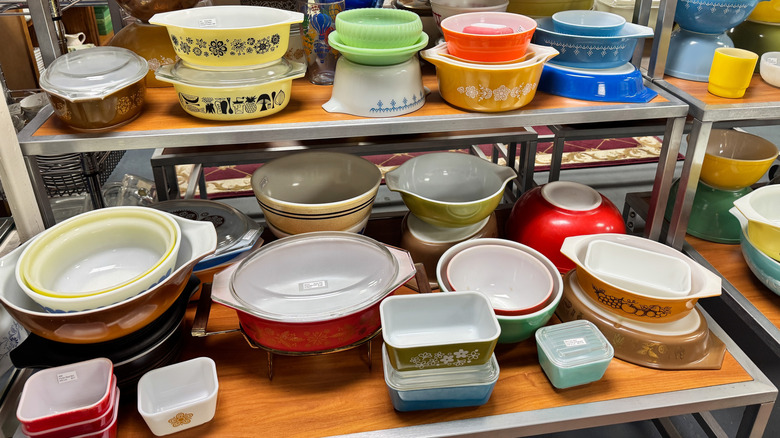
Pyrex also makes excellent ceramic cookware, which can usually handle higher temperatures than tempered glass. However, stoneware is typically far more susceptible to thermal shock, so you need to be even more careful with it than regular glass Pyrex. Another limitation of ceramic Pyrex is that you should avoid letting it soak in water for extended periods due to its porous nature.
If water seeps into the material, it will expand when the dish gets hot. If they ceramic and the glaze expand and contract at different rates, web-like-cracks can appear on the surface, known as crazing. Even if you don't heat the dish, if it's stored in a warm, humid environment, crazing may eventually occur.
Not only do these cracks ruin the aesthetic of ceramic Pyrex, but there are safety concerns as well. Food particles may find their way into those gaps, attracting hazardous microbes and creating a safety issue, or pieces of the ceramic may contaminate your food. Crazing also makes the dishes structurally weaker, increasing the possibility of it breaking while you're using it. In fact, professional chefs recommend you toss out cracked ceramic kitchenware, or at least relegate crazed items to display-only status.
Engraving or etching Pyrex glass
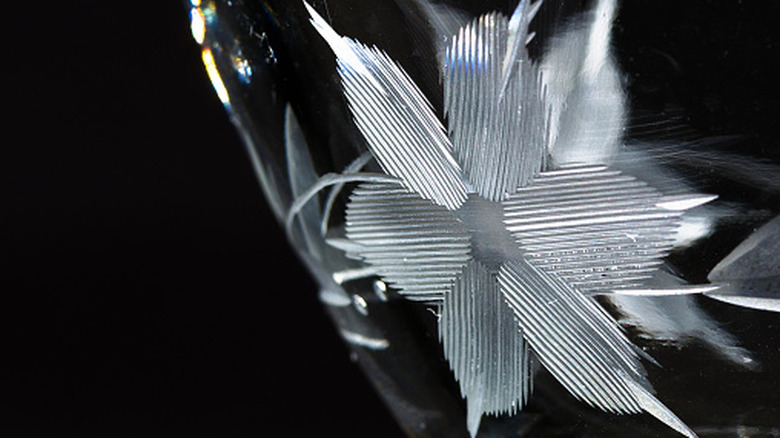
We get it; glass Pyrex looks fairly plain and boring. You can find plenty of people online who proudly show off the fun designs that they've acid- or laser-etched onto their Pyrex dishes, but one of the last things you should do is etch or engrave anything onto the surface of glass kitchenware.
While it may sound obvious to some, engraving or etching the surface of a Pyrex glass dish makes it weaker, more vulnerable to the effects of thermal shock, and more prone to breaking. If you engrave a Pyrex serving dish that never gets heated up or holds hot food, it's probably less likely to shatter as a result of etching, but doing so will still void Pyrex's product warranty. There are companies that offer professional glass etching services, but some even refuse to etch Pyrex — especially the modern soda lime version — because they're concerned of liability issues if the item breaks.
Putting the plastic Pyrex lid in the oven
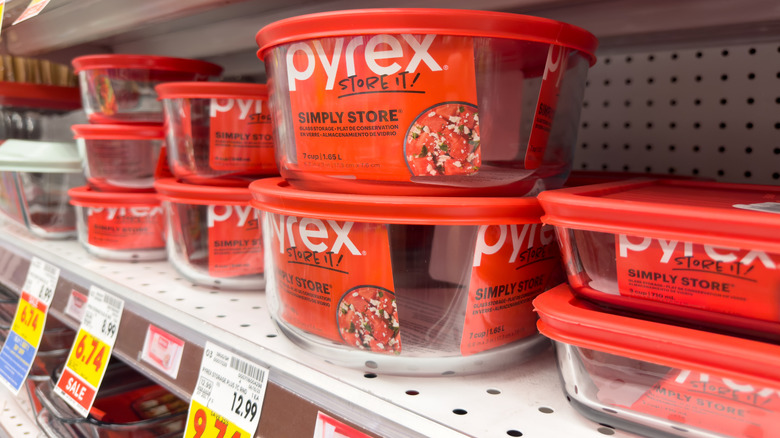
Leaving the plastic lid on your Pyrex dish when you put it in the oven is a common mistake that most people only make once. It's purpose is simply to keep food covered while it's out on your countertop, in the fridge, or in the freezer — it's not safe to use inside a conventional or convection oven.
So what happens if you do put the plastic lid in the oven? Well, at around 212 degrees Fahrenheit, it will start to melt (this temperature may vary depending on the lid material and manufacturer). That's likely a much lower temperature than you're using to cook your food, so there's a good chance you'll end up picking bits of melted plastic off your food and possibly needing to scrape it off the inside of your oven. If you manage to catch your mistake before the plastic has become a pile of goo, it's still likely to have warped. Plus, it may have released toxic fumes into the air and leeched microplastics into your meal.
There is a little bit of good news — plastic Pyrex lids are considered microwave safe at low to medium settings. And luckily, if you have accidentally ruined your dish cover, you can easily find replacement lids online.
Dropping or banging your Pyrex
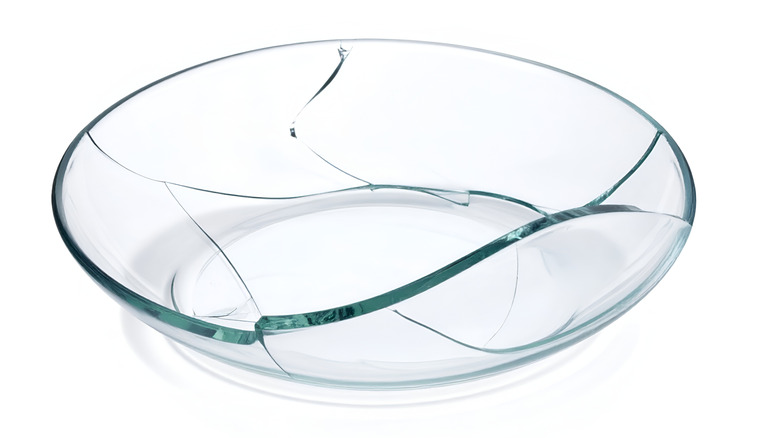
Pyrex is a fairly sturdy type of glass, but it's not indestructible. Modern Pyrex products are usually made of tempered glass — tempering refers to the process of heating glass to a high temperature and then cooling it quickly under controlled conditions — this strengthens the glass by creating internal tension and external compression. While tempered glass such as Pyrex is more impact-resistant than regular glass, it's not invincible and will still break if you abuse it.
Just like with any other glass item you own, you want to avoid dropping or hitting Pyrex glassware with hard items. We probably don't have to tell you what happens when you drop glass or hit it too hard. And while many of us have dropped a Pyrex dish and breathed a sigh of relief when it didn't shatter, that doesn't mean there's no damage. Any that time Pyrex has an impact with another surface, it undergoes mechanical stress. Unlike some materials, glass is extremely rigid and doesn't bend, so that mechanical stress puts it at risk of cracking, chipping, or shattering. The damage might not be visible initially, but the rougher you treat Pyrex, the more likely it is to break at some point down the line.
Continuing to use chipped or cracked Pyrex
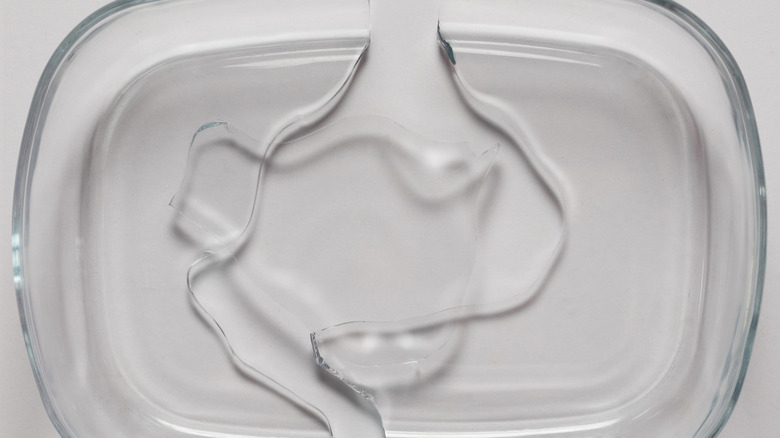
As you've probably gathered by now, there are quite a few ways for Pyrex glass to get damaged. Unfortunately, as with ceramic Pyrex, once the glass is cracked or chipped, you should stop using the dish immediately and safely dispose of it.
When Pyrex is damaged, it becomes structurally weak. This means that it's more likely to break in future, even if you're super careful with how you use it. Thermal stress can easily turn a minor chip into a significant crack over time. The last thing you want is for it to shatter while you're using it, especially if it's full of hot food. And if you're wondering whether it's possible to repair a chip or crack in Pyrex, the answer is: no. At least not if you still plan on cooking with it. Feel free to refurbish display pieces, but no repair job will reverse the structural issues — the defect will always remain, increasing the risk of it breaking when you least want it to.
Heating an empty Pyrex dish in the microwave
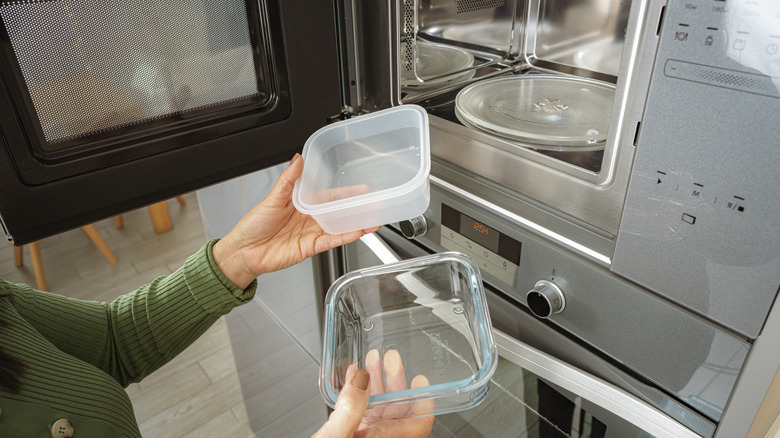
As we mentioned earlier, Pyrex glass is safe to use in the microwave, but there are some exceptions. You should never attempt to heat an empty Pyrex dish — or any dish for that matter — this way. If you need to quickly heat the dish, add some water to it first.
Microwave ovens work by emitting high-frequency electromagnetic waves that vibrate the water molecules in food to generate heat. However, these waves pass through glass, and when there's nothing to absorb that energy, it can cause electrical arcing or damage the internal components of the appliance. It may even pose a fire or electrical hazard. Adding water means there's something in the dish to safely absorb those electromagnetic waves. Besides, if you're using the microwave to sterilize your Pyrex, there needs to be water present anyway or it won't work — it's not actually the radiation that kills microorganisms but the heat and steam.