

Does Cooking Bacon In A Saucepan Improve The Flavor? We Put It To The Test
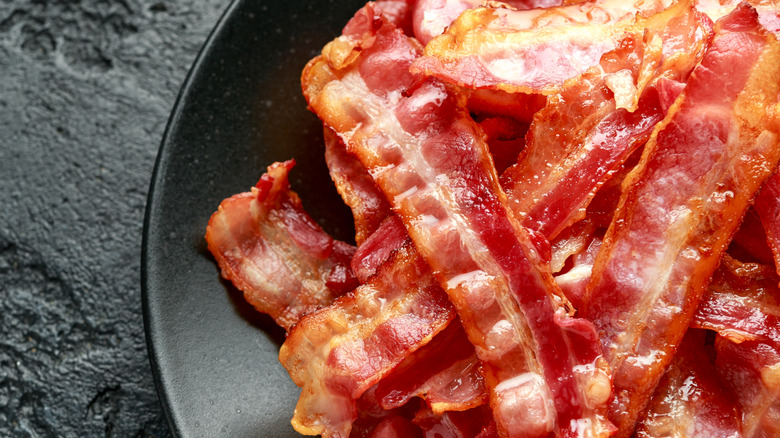
Everyone has their go-to method for preparing bacon. We can draw on many tips to cook the absolute best bacon, but regardless of your preferred technique, there are those of us who are never truly satisfied, ever-searching for that quintessential quick-and-easy way to cook rashers. While I've had my tried-and-true favorite method for cooking bacon in place for years — crispy oven-baked bacon — I'm always game to try a fresh hack. So, when I spotted one gaining traction online about cooking bacon in a saucepan, I put it to the test.
Rumor has it that the saucepan bacon technique cuts cooking time and hassle, and has the potential to increase crispness and flavor. There was even one person who dared to say this method left her time to do other things while it cooked — and this is what I like most about preparing oven-baked bacon. Could cooking bacon in a saucepan be even easier than my beloved oven technique? There was only one way to find out.
It turns out there's not much to the cooking method itself: open a whole package of bacon, throw it in your saucepan (or another steep-sided pot), turn the strips with tongs as they cook until done, and remove them from the pot. This all sounded easy enough, but would I end up with perfectly cooked bacon with less muss and fuss than using a traditional skillet or baking sheet? And would cooking bacon in a saucepan somehow enhance its flavor? Let the challenge begin!
Putting the saucepan to the test
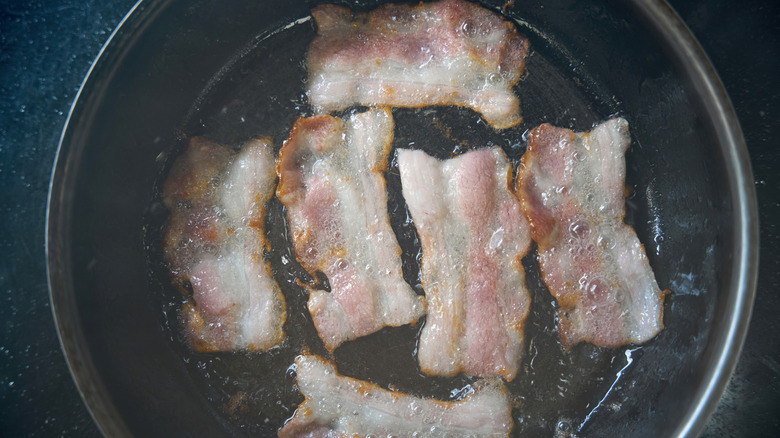
Adding my unseparated bacon to a pot on medium heat, I let it cook until done, taking about 15 to 20 minutes. While fans of this saucepan method tout its ease, reduced mess, and potential enhanced flavor, I definitely encountered some drawbacks — including having to tend to the bacon nearly nonstop. Using a saucepan means basically deep-frying bacon in its own fat — and you pay in effort. A pair of tongs does the heavy lifting here, breaking up the strips and turning the bacon as it cooks. Once its fat is rendered, things pick up, with the strips browning and curling at epic speeds. This requires near-constant moving of the strips, working quickly to ensure they all cook evenly but don't burn. (Pro tip: Never leave hot bacon frying unattended.)
For me, saucepan bacon was a bust. Though it was pretty evenly cooked, this technique entailed a lot of bacon-sitting. The strips turned out curled, floppy, and extra chewy — not flat and crisp. And as for that potential leveled-up flavor? It never materialized. It's no more flavorful than cooking it on a baking sheet or skillet (which makes sense, as both methods also rely on bacon's rendered fat to aid its cooking). Compared to the set-it-and-forget-it technique of oven-cooked bacon, saucepan cooking also loses on its biggest promise — ease. Where did it come through? Less mess. The high walls of a saucepan keep most grease inside, creating less splatter than frying pans.
Overall, pitted against cooking bacon in the oven, this technique loses. Baking is still the easiest and most flavorfully efficient way to cook that ideal piece of bacon, sans the mess. As for the saucepan's results? Those are best reserved for chopping and topping baked potatoes, or sprinkling atop decadent mac and cheese recipes. But if you want that classic, crispy flat strip of the bacon-iest-tasting-bacon, stick with your oven.