

9 Cooking Hacks That Just Don't Work
There is no mystery about why we continue to obsess over cooking hacks. Anything that promises a novel way to make cooking easier, faster, or less expensive is always going to attract attention, even if it makes our lives only marginally more efficient. There are plenty of cooking hacks that actually work, from using a thread to cut cakes to sprinkling bacon with flour to make it extra crispy. But for all the kitchen hacks that do work, there is, almost certainly, an equal number that not only have no basis in reality but also drive chefs crazy. There is no evidence, for example, that storing guacamole with an avocado pit in it actually works, even though you'll find plenty of social media posts that insist otherwise.
To break through the noise of the internet and figure out which so-called hacks just aren't worth your time, we spoke with two experts — Jürgen David, the director of pastry research and Development at the Institute of Culinary Education, and Emily Laurae, a pastry chef and recipe developer. They both pointed to hacks that don't work for very specific reasons, but in Laurae's words, most of them fall afoul of a broader issue. "Generally, the biggest misconception I see is that baking shortcuts can replace time and technique within a recipe," she said. "Baking is chemistry, and while some hacks can save a few minutes, they rarely produce identical results."
1. Adding oil to pasta water to prevent it from sticking
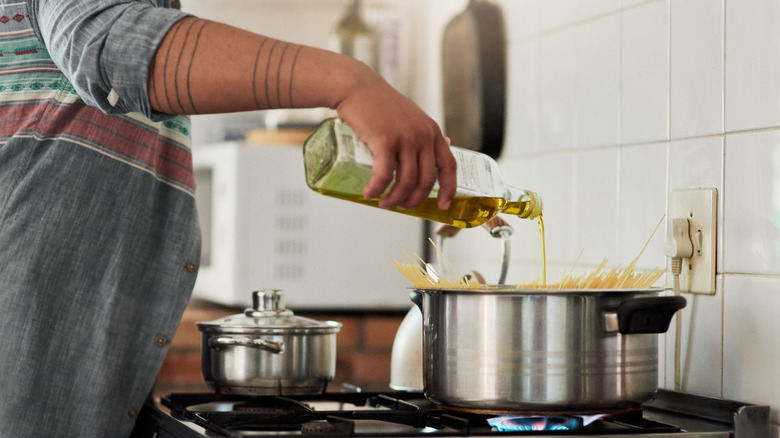
Pasta has an annoying habit of sticking to itself when you cook it. There is pretty much no way to get around this fact. It is full of starch, and when starch molecules are placed in warm water, they burst and become an invisible glue. This begins at the start of the cooking process, which is why some people believe adding oil to the water before adding the dry pasta will stop the sticking before it happens. Unfortunately, as Jürgen David told us, this trick has unintended consequences, and it doesn't even work.
In short, he explained, "The pasta will get coated in the oil and will not let your sauce stick to it." Unless you're planning to eat plain pasta, the oil hack will do more harm than good. Ironically, it won't even prevent the pasta from sticking. Because oil and water don't mix, the oil will simply accumulate on the surface of the water and do nothing to stop the pasta from sticking. When you drain the water, the oil will coat the clumpy pasta, meaning you will have the worst of both worlds: oily pasta that is stuck together and won't let the sauce stick to it. Your best solution is to stir the pasta early in the boiling process when the starch is at its most gluey. After that, the molecules become too waterlogged to cause sticking.
2. Using your dishwasher to sous vide
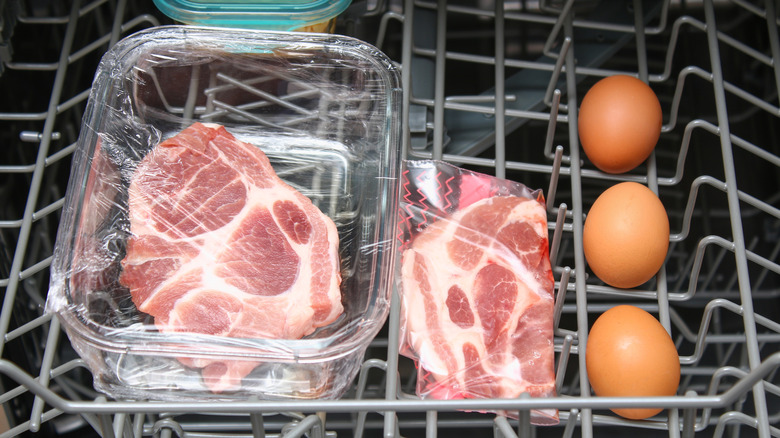
If you've never tried cooking with your dishwasher, you might be stunned to learn that it does, in fact, work with certain recipes — but you still shouldn't do it. The sous vide method, which involves cooking vacuum-sealed food in a water bath at a low temperature, is surprisingly similar to what happens when you hit "start" on your dishwasher. If you don't have a sous vide machine but still want the textural control and flavor of the sous vide process, you might follow the lead of countless recipes on social media and cooking websites by simply using your dishwasher instead. You might even get a delicious meal out of it. But there are reasons why you should think twice about jumping on the bandwagon.
For one thing, your dishwasher is not nearly as precise in its temperature control as a sous vide machine. Even if it were, you wouldn't be able to monitor the temperature while it was running or adjust it to the proper temperature for the food you're cooking. This matters because different types of meat must reach a certain temperature to kill off potential pathogens. From a food safety perspective, cooking your meals in the dishwasher is downright dangerous.
For another thing, the potential for cross-contamination is high. If your raw food isn't properly sealed, it could contaminate your dishes on future cycles or be contaminated by detergent or food residue from previous cycles.
3. Only adding salt at the end of cooking
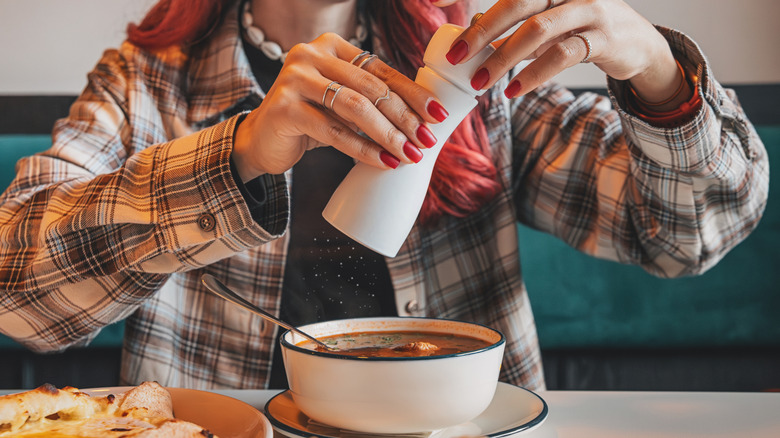
There is a very strong argument for lowering your salt intake. Too much of it can raise your blood pressure, which in turn increases your likelihood of heart disease and strokes. Combined, these are the leading causes of death in the United States, according to the Centers for Disease Control and Prevention. Processed foods account for most of the sodium in our diet, so it stands to reason that removing salt from our cooking, one of the few places where we have control over our sodium, would be the best way to reduce it.
However, this is one of those hills on which most chefs would be willing to die, because adding salt at the end of cooking, no matter how much you use, is not the same as adding it throughout. Take a bite of chicken that's been salted only after cooking, and you'll find that the interior is flavorless while the exterior tastes overwhelmingly salty. Salt the meat before cooking it, and you'll end up with a piece that is seasoned all the way through. America's Test Kitchen did the legwork and crunched the numbers, finding that the rate at which salt diffuses into food doubles with every 10-degree increase in temperature up to the boiling point. Interestingly, vegetables are even slower to absorb salt than meat, so it's just as important to salt roasting potatoes as it is grilled chicken or a hearty beef stew.
4. Using baking soda to make hard boiled eggs easier to peel
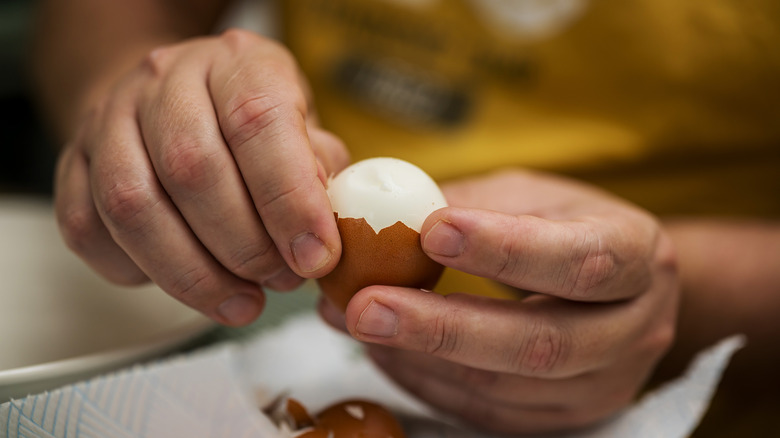
Peeling eggs can drive you crazy. If the white refuses to let go of the shell, you could end up with a ragged orb the size of an avocado pit with most of the white sitting in the bottom of your sink. Boiling an egg might be one of the easiest recipes out there, but breaking the egg free of its confinement has probably been frustrating cooks of every level since the very first boiled egg. Of the many methods for peeling hard-boiled eggs, adding baking soda is perhaps the most mysterious. The claim is that the baking soda makes the water alkaline, raising the pH of the egg and making it less likely to stick to its shell. But how could an ingredient on the outside of the shell affect the pH of the egg inside?
The short answer is that it doesn't. Multiple cooks have tried this method, particularly on fresh eggs, which are often considered harder to peel, but have found no correlation (let alone causation) between the use of baking soda and the ease of the peeling process. If anything, it just makes the eggs smell more sulfurous.
5. Microwaving cake batter instead of baking it
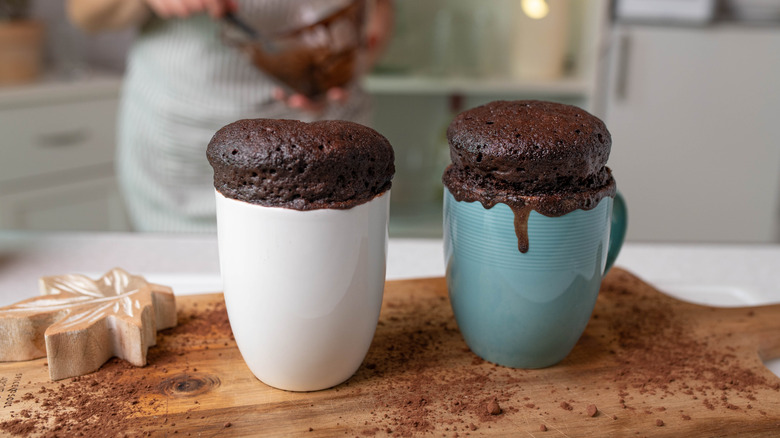
Microwave mug cakes seem almost too good to be true. Cooking an egg in the microwave is one thing, but baking a cake in just a few minutes approaches miracle territory. As Emily Laurae told us, however, mug cakes are very different from cakes baked in an oven because the baking methods are so different. "An oven surrounds batter with gradual, dry heat, while a microwave heats water molecules rapidly from within," she explained. "That quick heating often results in a cake that's rubbery or dense rather than light and tender." You can't beat a mug cake for convenience, but there is just no substitute for a baked cake.
If you're planning to curl up on the sofa with a movie, a mug cake is the ideal option. But if you're looking for a special-occasion recipe, it's best to stick with oven-baked cakes. You can dress up a mug cake to look like a little work of art, but there is nothing you can do to compensate for the rubbery texture.
6. Chilling cookie dough in the freezer instead of the fridge
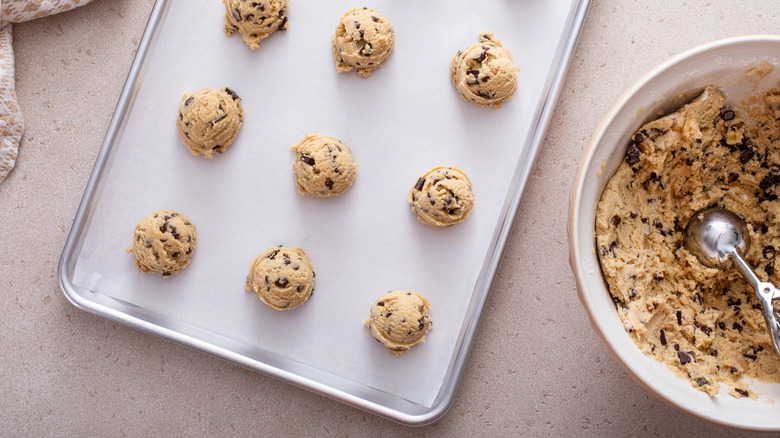
There are few things more irritating in a cookie recipe than thinking it will take no more than an hour and a half to make, only to discover that the dough has to be chilled in the fridge overnight before you can bake it. If you're determined to have cookies anyway, you might try to speed that chilling process by sticking the dough in the freezer for 30 minutes instead, but as both experts we spoke to explained, this completely misses the point of chilling the dough.
"During an overnight rest, the flour continues to hydrate, sugars dissolve more fully, and flavors develop," Emily Laurae explained. "Those changes create a dough that bakes up with better texture, deeper flavor, and often more caramelization." Thirty minutes or an hour in the freezer might help the cookies maintain their shape when baked, but it won't achieve any of the other elements that make overnight chilling so vital. Jürgen David also pointed out that when you freeze the dough, you actually pause the hydration process, which is the opposite of what you get when you refrigerate it. According to him, you should only freeze your dough if you're storing it for later.
7. Swapping sugar with another type of sweetener in baking
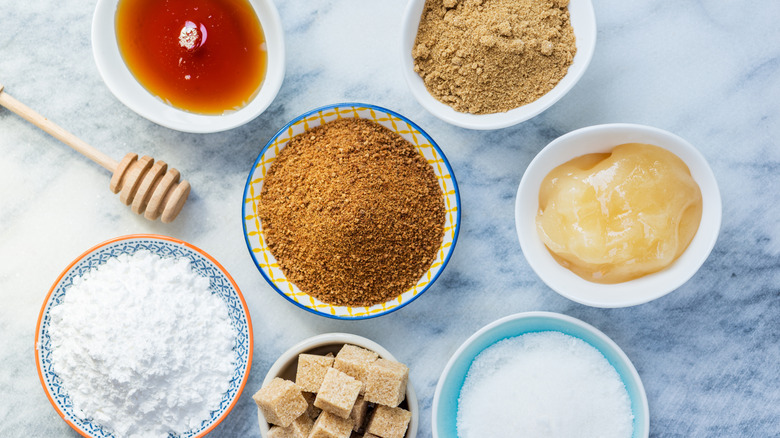
Whether you're swapping sugar for honey because you prefer the flavor or are opting for maple syrup instead of brown sugar because it has a lower glycemic index, it's worth hesitating. According to Jürgen David, sugar substitution is not a simple swap, and it can have unintended consequences. "Other sweeteners might mimic the flavor of sugar, but they do not have the same molecular structure as sugar and will not react the same way," he said, adding, "Baking is science, after all."
It's true. Sugar isn't just in a recipe to provide sweetness. It also helps with browning, creates a light but stable structure when whipped with butter or egg whites, and even helps enhance moisture due to its hygroscopic qualities. Reducing this vital ingredient may alter the color, structure, and texture of a baked good, along with the flavor, and swapping it for another ingredient is just as tricky. There are many different types of sugar, and you need to know how your potential substitute will react in a recipe before using it. For example, honey has a high moisture content and greater acidity than sugar, meaning that you'll have to adjust the liquid ingredients in your recipe and even add a pinch of baking soda to offset the acidity. It also browns faster, which means you might want to lower the oven temperature and cook it longer. Even then, you may find that the results are not what you expected.
8. Rinsing pasta after cooking
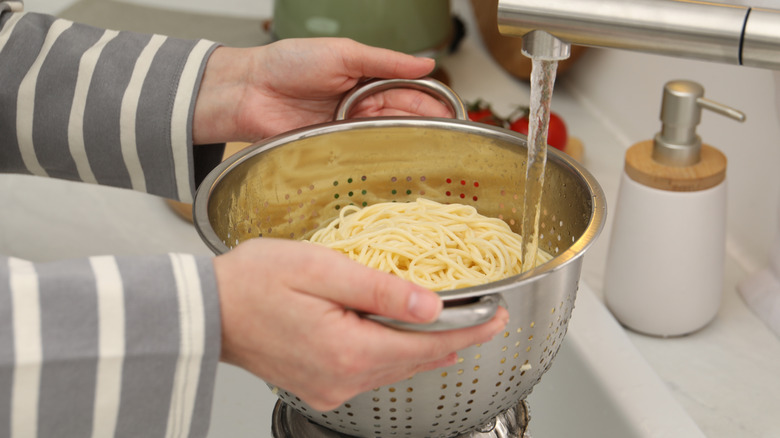
Cooking pasta is just a matter of boiling it and waiting for the timer to go off, but getting it to that coveted just-barely-cooked stage is more of an art than a science. People can spend years learning how to tell when pasta is al dente, but even when you get to that precise moment, the pasta will continue to cook from residual heat. This is why many people start pouring cold water over their noodles to end the cooking process at just the right moment. Unfortunately, though, rinsing your pasta will probably lead to worse results than slightly overcooking it.
The starchiness that makes pasta stick together early in cooking is also what makes the sauce stick to it when you combine them. Otherwise, you'll be eating mostly naked pasta served in a pool of sauce. Not only should you avoid rinsing the pasta, but you should also reserve some of the starchy pasta water. Mixing it into the sauce will double down on the thickening and binding qualities of the starch, creating one deliciously cohesive dish.
9. Using bone-in meat for more flavor
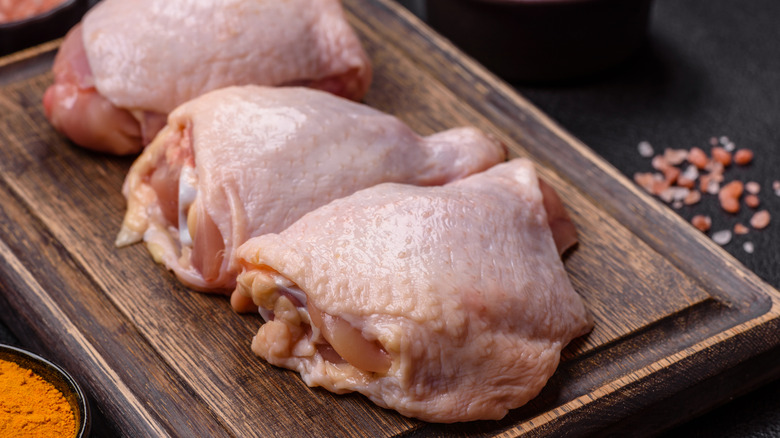
Cooking bone-in meat can be a hassle for both the cook and the eaters. Whether you're eating a drumstick or carving up a tomahawk steak, a little more legwork is required to cut or chew around the bone than if you were digging into a boneless chicken thigh or a pork sausage. There is a time-honored argument that all this labor is worth it because the flavor of bone-in meat is far superior, but it turns out that this is not backed up by the evidence.
Cooks who have tried bone-in meat alongside boneless meat found no difference in a blind tasting (Per Serious Eats). Bone marrow is extremely flavorful, but it can't escape the hard outer casing of bones when the meat is grilled or baked. The meat around the bones can indeed be tastier and juicier than other parts of the meat, but that is because the bone can shield the meat from heat, making it rarer. The only instance in which the marrow can escape the bone and add to the flavor is when you cook the meat slowly in liquid. Even then, the marrow will flavor the liquid, not the meat itself. That said, there is no reason not to cook bone-in meat if you actually enjoy gnawing on it. Just don't expect the flavor to be any better.