

A Deli Expert's Top Tip For Making High-Quality Sandwiches At Home

We may receive a commission on purchases made from links.
A truly great sandwich is a beautiful thing. And it's way more than just ingredients stacked between bread. The best sammies are carefully balanced, with each component working together in beautiful harmony to create the perfect bite. It's why we turned to sandwich expert Owen Han, content creator and author of "Stacked: The Art of the Perfect Sandwich," for his pro tips.
"Focus on balance, not just ingredients," Han advises. "Most people think deli sandwiches are special because of the meat, but what separates a great sandwich from an average one is how every component works together." While it's tempting to concentrate on the right kind of deli meat or artisanal cheese, sandwich aficionados agree that balance matters even more than individual ingredients. "The bread, meat, cheese, vegetables, condiments, acidity, and texture should all complement each other," he adds. "When one ingredient overwhelms everything else, the sandwich suffers."
When it comes to the one ingredient that can make or break your sandwich, Han advises to "start with better bread," explaining, "You can use great meats and toppings, but if the bread isn't fresh, the sandwich will never reach its full potential. Bread is the foundation of every great sandwich." Bread isn't merely a vessel for fillings; it's quite often the first thing you taste and makes up for almost half the eating experience. Whether it's a crusty baguette, a chewy ciabatta, or a hearty sourdough, it can dramatically change the style of a sandwich. That's why it's important to choose the right bread for your sandwiches.
Every bite should deliver the same combination of flavors and ingredients
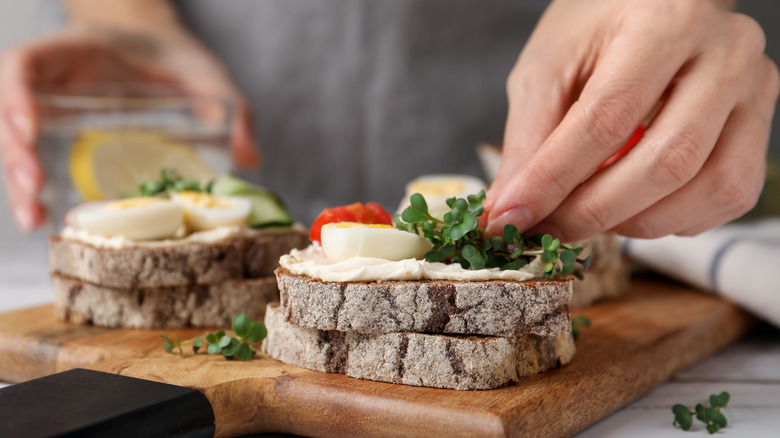
Once you've selected the perfect bread, it's time to think about another balancing act. Behind every great sandwich is a combination of flavors and textures that play off one another. A rich meat begs for bright, acidic ingredients like mustard or a garlic lemon sauce. Creamy cheese plays well with crunchy vegetables like lettuce or onions. Even a light coating of a terrific condiment can transform an ordinary sandwich. And when it comes time to put everything together? Han says, "For construction, distribute ingredients evenly from edge to edge and avoid stacking everything in the center."
Layering ingredients thoughtfully lets each mouthful deliver a little bit of everything. Han confirms, stating, "Every bite should have the same balance of flavors and textures. That's one of the details great delis pay attention to, and it makes a huge difference in the final eating experience." And don't overlook the power of warm bread. There's actually scientific evidence that it pays to toast bread for a sandwich. Toasting has a one-two punch of bringing out the nutty, yeasty flavors of bread while also helping it hold up against moist ingredients and condiments.
Finally, resist the urge to overstuff. One of the hallmarks of a great sandwich artist is practicing restraint. Too many ingredients can overpower any nuance and, even worse, make the sandwich difficult to hold and eat. Follow Han's pro tips, and you'll soon be making restaurant-quality sandwiches at home.