

Why Grocery Store Sale Prices Aren't All That They Appear To Be
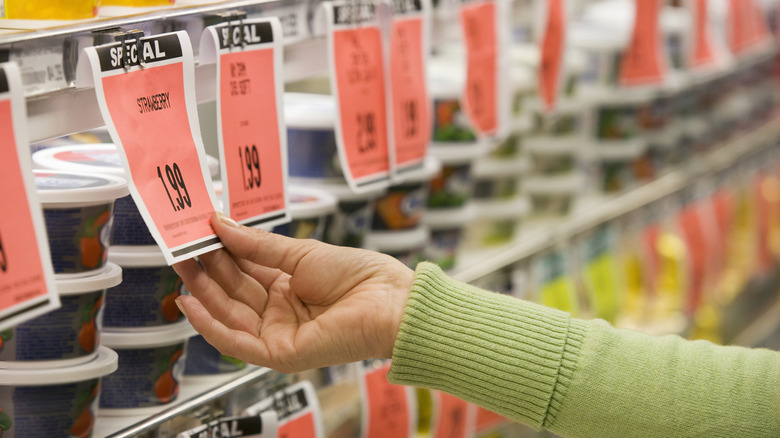
Like a carefully designed maze, store layouts are strategically planned to encourage spending, as the placement of items and the way in which customers are directed through stores are deliberately planned. Deals are also designed to make shoppers spend more. Colorful signs and labels announcing discounts can trick shoppers into buying, and product placement can prompt customers to pick up items not on their shopping list.
Consumer psychology has identified practices like placing more expensive brands at eye level and designing end caps to trick you into spending more, even when no discount exists. The cognitive bias known as the anchoring effect is frequently exploited by grocers, with deals like "buy 2 for $5" used to distort shoppers' perception of value. Items marked at "reduced prices" may never have been sold at a higher price. Therefore, it's important to know the baseline prices of items to determine if a sale price is actually a deal.
Outsmarting a grocery store's sneaky strategies

A sense of urgency can also spur impulse purchases, with a shopper's fear of missing out prompting the purchase of sale-labeled products. Grocery store sales cycles, flash sales, and lightning deals capitalize on that same sense of urgency.
"Buy one, get one free" isn't always understood as a 50% discount by shoppers. For many, the offer feels like getting something for nothing, which can seem more compelling than paying half price for two items. Research from Marketing Science has shown that for shoppers, a "free" label is not simply about cost but also a perceived overall increase in the benefit of a purchase. This often forces buys greater in number than a shopper's original plan, simply to access the free item.
Buying only items that are listed on a shopping list and scanning lower and higher shelves for cheaper alternatives are smart strategies to keep in mind during weekly grocery runs. Since an advertised sale price might not be much lower than the original, compare advertised prices online and at other stores to make sure you're actually getting a deal. Ask yourself if you'd buy the products if they weren't marked on sale. When in doubt, delaying the purchase even a day or two is one of the easiest ways to avoid an impulse buy.