

If You Like Thyme, It's Time To Try Savory
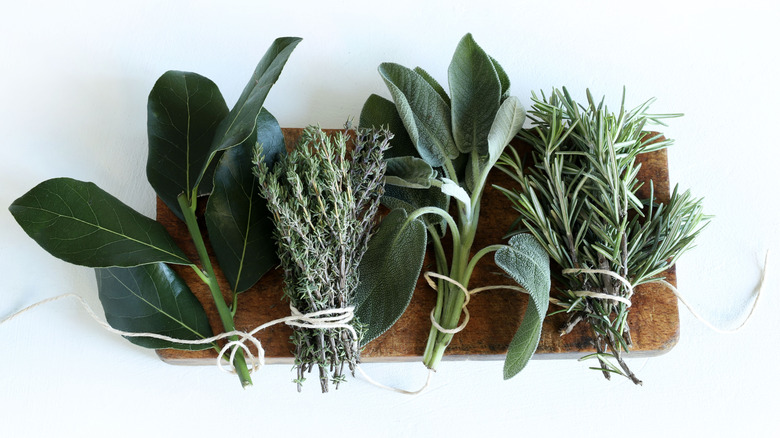
There are a few herbs that every good cook likes to keep stocked in their kitchen. Thyme and rosemary are major players, as are oregano and mint. But if there's one other underused herb that you need to try out if you're a fan of leafy, green aromatics: savory.
No, we're not talking about a general flavor profile. Rather, savory is the name of a small green plant that's a member of the mint family. The Mediterranean herb, which actually inspired the descriptive term of the same name, has been used for thousands of years. It was a primary seasoning before the popularization of black pepper and it's a main ingredient in most herbes de Provence mixtures.
There are two varietals of savory: summer savory and winter savory. Both are reminiscent of thyme and boast notes similar to marjoram and mint. However, summer savory tastes more like pepper, while winter savory has an earthier, pine-like flavor. Both add a delicious, fragrant twist to a range of dishes from hearty stew recipes to bright salad dressings, adding a lot of oomph without any need for sodium.
How to use savory at home
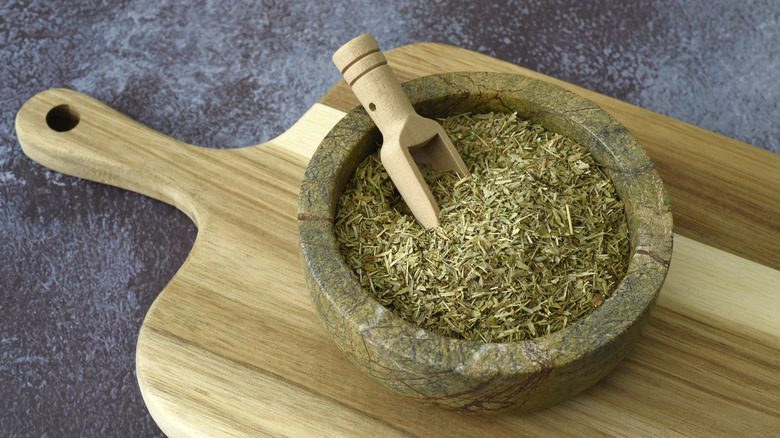
Savory is typically sold as a dried spice that you can find in larger supermarkets or specialty spice shops. The plant is easy to grow if you want to try it fresh — it just needs a lot of sunlight. Once picked, it will last for up to one week in the refrigerator, or you can dry it by hanging it up near a window in the kitchen. It can be used similarly to thyme.
Winter savory adds a great flavor to roasted or grilled meats and it's delicious in an autumnal stuffing recipe, too. Summer savory, on the other hand, works better with lighter dishes, such as salad dressings, soups, and classic clam chowder. It is often used to make sausages and can be mixed into other breakfast dishes as well. Try folding it into soft and fluffy scrambled eggs or sprinkle a little on your omelet. There's no need to go too crazy — try subbing it in at a 1:1 ratio for other strong herbs like thyme and going from there.
Both winter and summer savory taste delicious with lentils and beans, not to mention a range of vegetables like green beans and potatoes. The herb may be used to make soothing tea for sore throats, and some believe that it aids in digestion. In fact, savory was first brought across the Atlantic as a medicinal herb, and it was used as an aphrodisiac in ancient Rome before that. There isn't too much proof to back those uses, but it will give your dinners a new flavor.