

The Mistake That Can Cause Your Burger Patties To Be Dense
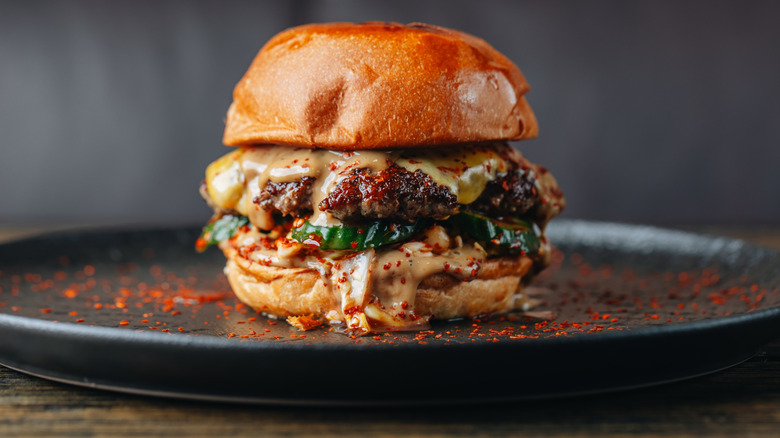
Burgers are the all-American favorite that we have shaped and molded into countless different recipes. No matter which ground protein you form into patties, the goal is that they're juicy and tender. So, if your burger patties turn out dense, we consulted an expert to suss out potential mistakes you might be making with your burgers.
We spoke with David Selman, culinary director at The Stand Restaurants, who thinks that dense burgers could be the result of the composition of your burger blend. "One of the most easily controlled factors for density and juiciness is fat content," Selman explains. "My sweet spot is 20% to 25%, or what your local butcher counter is going to call an 80/20 or 75/25 blend." Fat isn't just essential for flavor; it also lends the burgers their juicy, tender consistency.
"When the fat heats up, it will start to melt and mix with other cooking juices, giving you nice light pockets of flavor in your burger," Selman adds. While a leaner burger may sound healthier, a higher fat-beef ratio for burgers is vital. As the expert explains, "Too lean and you'll get a drier and denser burger, but too much fat, and you'll deal with a lot of flare-ups on the grill and a cooked burger that ends up much smaller due to excess fat cooking away."
More mistakes to avoid if you want to prevent dense burgers
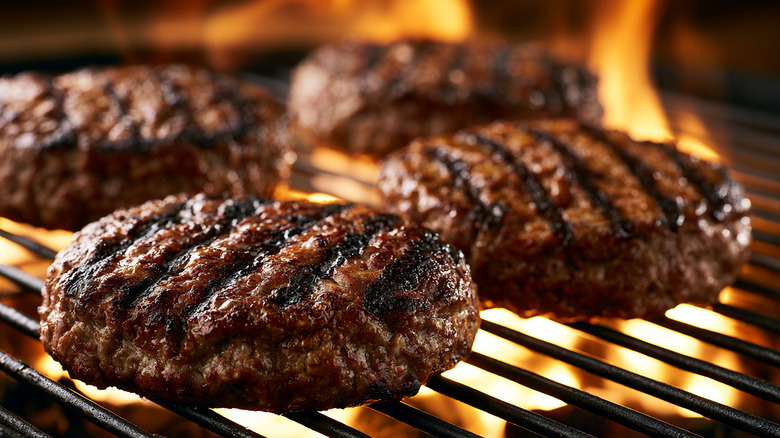
While 75/25 beef-fat ratio will prevent burgers from drying out or shrinking as they cook, which could result in a disappointingly dense texture, more mistakes could occur during the preparation and grilling process that may still sabotage the patties' texture. According to Selman, the formation of the patties themselves plays a key role in both structure and density. "Hand-form the patty solidly but gently," he instructs. "Too light and your patty might fall apart but a tight patty will only get tighter and more dense as it cooks."
Furthermore, the more you cook a burger, the more fat will burn off and out of it. "Meat contracts as it cooks," he adds, "so couple this with some nice melty fat, and a well-done burger is going to quite literally squeeze the juices out." It's fine if you don't want a bloody, rare burger, but you might want to set your sights on a medium-done cook so that the ground beef remains tender, with a light pink interior that still retains flavorful juices.
Since the fat melts and cooks off the burger over the grill, avoid pressing the burger with a spatula while it's cooking. "Once the burger is getting warmed through it's best to be gentle with it," he notes. Searing the burger will create nice char and grill marks, but Selman adds that "pressing a nice, juicy patty will squeeze the juices right out and compact the finished product."