

When It's Safe Vs Unsafe To Eat The Fruit Those Pesky Fruit Flies Have Been Landing On
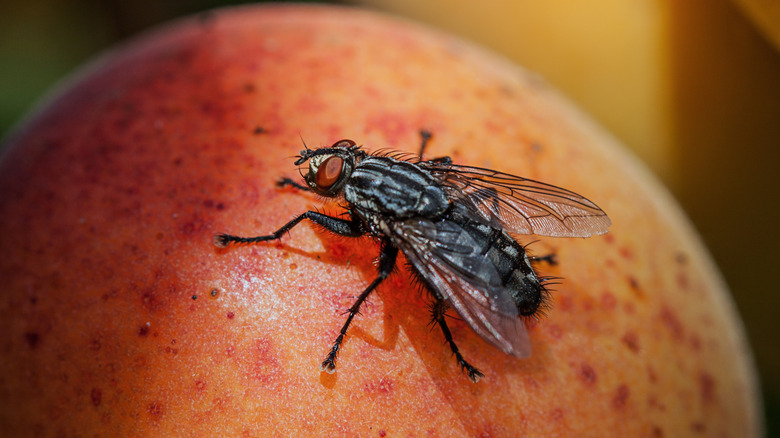
On hot summer days, fruit flies landing on your fruit and other produce can be at best a nuisance, and at worst utterly revolting. Fruit flies can't bite or sting people, so while they won't directly harm humans, they can spread bacteria from elsewhere, like the trash or a dirty kitchen drain, onto fresh fruit. For this reason, so long as your fruit doesn't have visible cracks in the skin or mushy parts, washing it with running water before eating is generally a safe and sufficient way to remove any potential bacteria from its surface. When appropriate, peeling your fresh-but-not-overripe fruit will also make it safe to eat.
When fruit becomes overripe or begins to decay, it's at its most appealing to fruit flies. Interestingly, fruit flies don't actually eat fruit; they are drawn to fungus and the vinegary, fermentation-like smell of rotting fruit, and lay their eggs here because it's an ideal place for their larvae to feed.
Fruit flies can detect fermenting odors from over a kilometer away and come to lay eggs in the cracks and crevices of your overripe fruit. These eggs will hatch into maggot larvae, so unless that's in some way appealing to you, if your fruit is going mushy, with split skin and exposed flesh, it's best to throw it away, as washing won't reliably rid it of eggs or larvae.
How to keep your fruit safe from fruit flies
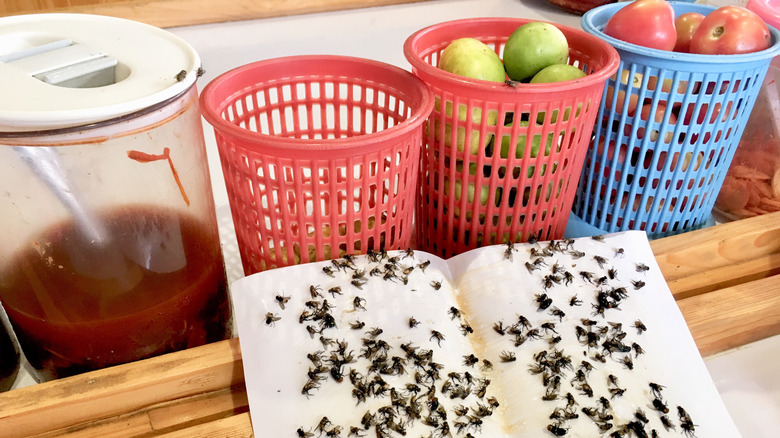
Fortunately, fruit flies aren't an unstoppable problem. You can keep most fruit in the fridge where flies can't get to it – doing this will also greatly slow the ripening process, giving you more time to choose when to enjoy it. For fruit like bananas, which turn black quickly in the fridge, or if you want your fruit to ripen faster at room temperature, make sure they are stored covered or in a container so flies can't access them.
There are heaps of different tricks to disable any fruit flies that have entered your kitchen. Much like some people, fruit flies are drawn to alcohol, especially whiskey, and even a diluted whiskey solution will work to stop fruit flies, which get stuck in the liquid. Another simple fly trap can be made with duct tape and sugar water, which lures flies to the sugar and traps them on the tape.
The final line of defense to prevent fruit flies from eating your fruit is the cleaning process. In most cases, it's best to wash fruit just before you eat it, not when it first enters your home, as washing can speed up deterioration. There are plenty of veggie wash sprays on the market, but these can be expensive. Tasting Table found that a solution of water, lemon juice and vinegar (or even distilled water alone) was just as effective at removing visible dirt from fruit.