

The Overlooked Steak Cut That Can Easily Outshine Filet Mignon
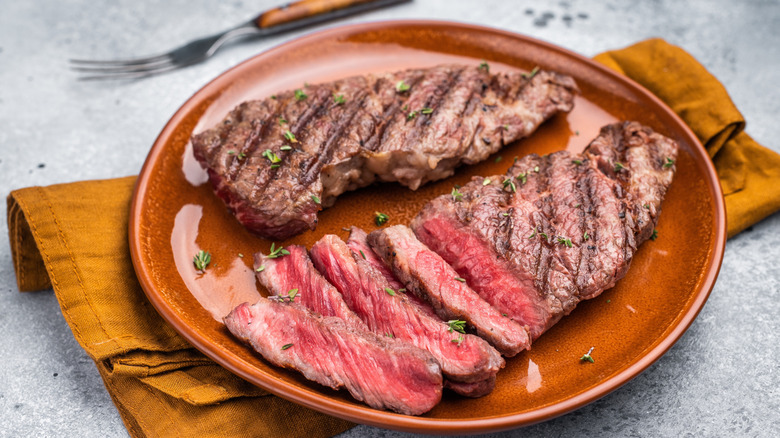
It feels like it's getting harder and harder to find less expensive cuts of steak these days, but there is one overlooked alternative for filet mignon that still doesn't get much attention. Whether it's the proliferation of social media hyping up recipes for every last square inch of the cow, or the search for lower-priced meats following post-pandemic inflation, the demand for more affordable cuts of steak is higher than ever. That often means considering steaks that were not well known before, and thus lower in price, like a Denver steak or the Brazilian favorite, picanha. But there is one cut you may not know that might be even better than both of them: the flat iron steak.
Flat iron steak goes by several other names, including top blade and top chuck steak, and is actually kind of unusual, which may be why it has flown under the radar. Coming from the chuck area of the cow, which is located in the front around the shoulders, it's a section that is normally known as tough and full of connective tissue, making it better when ground or used in slow-cooked stews and chuck roasts. However, the flat iron is cut from the inside of the shoulder, with a layer of protective gristle around it, so it's actually one of the most tender steaks you can find. It's even comparable to a filet mignon in texture; yet, according to a price report by the U.S. Department of Agriculture, the average cost of a flat iron steak can be almost half of a filet mignon in grocery stores.
Flat iron steak is almost as tender as filet mignon at a fraction of the price
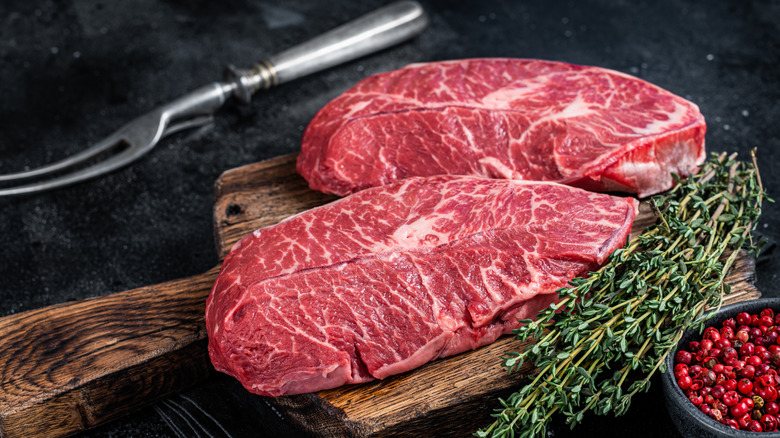
It's not just that flat iron steak can deliver filet mignon-like tenderness at a lower price, it may actually be the better cut, overall. Because it comes from the chuck area, as opposed to the lean tenderloin, flat iron steaks are also very well marbled with fat, giving them tons of flavor and a nice, rich juiciness. The one downside that flat iron might have, depending on your taste, is that it has a bit of a mineral flavor compared to other cuts. Flat iron steaks also tend to have denser meat, so they are best cooked to only medium rare, even though they have the kind of marbling that would normally make cooking to medium acceptable. Additionally, while tender, its muscle structure is similar to other "flat" steaks like skirt and flank steaks, so it should be cut against the grain to make it easier to chew.
With those small notes taken in consideration, the cut's excellent flavor means cooking flat iron steak is as simple as seasoning it with salt and pepper, and cooking it over high heat. This is the kind of steak that is perfect for grilling, and the smoke from the grill can even help mask some of the mineral flavors. Outside of that, flat iron is quite versatile. It's also excellent pan-seared over high heat. It's tender enough for stir-fry, but has enough marbling to work as stew meat, too. It really is a winning, all-purpose cut of steak. It's no wonder chefs have been keeping the secret to themselves for all these years.