

What Is The Average Lifespan Of A Blender?
We may receive a commission on purchases made from links.
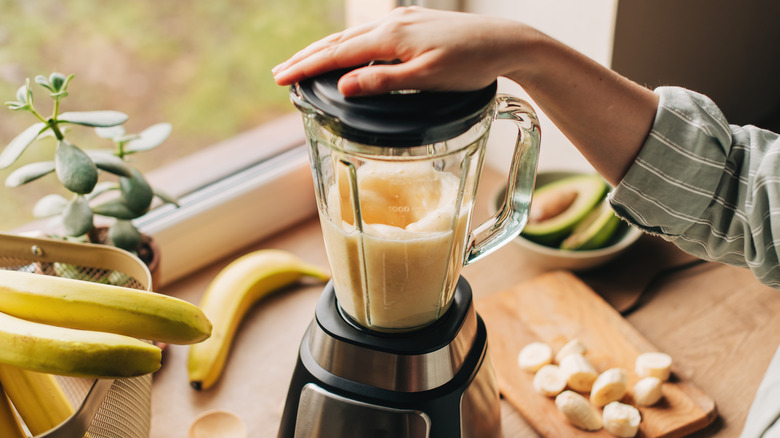
Even small appliances play a crucial role in a well-stocked kitchen, and for occasional use, a budget-friendly, medium-quality blender might be fine. But for folks who start each morning with a smoothie, it's important to invest in a higher-quality model that can last the long haul to avoid premature replacements. As a general rule, foodies can expect to get roughly five to seven years out of their blenders. However, factors like frequency of use, the foods you blend, and appliance materials can all significantly impact this range. Repeatedly blending ice for frozen cocktails will wear down the blades faster than, say, blending soft, ripe tomatoes for a salsa.
While "expensive" doesn't necessarily mean "better" (as we've observed with the popular, retro Smeg brand refrigerators), you really do get what you pay for when it comes to blender durability. For example, opting for an appliance with a powerful motor helps ensure a longer lifespan because it can accomplish myriad tasks without incurring body-damaging stress. To illustrate the difference in sturdiness, consider how these low-, middle-, and upper-priced blender models compare.
Expect to get five to seven years out of your blender
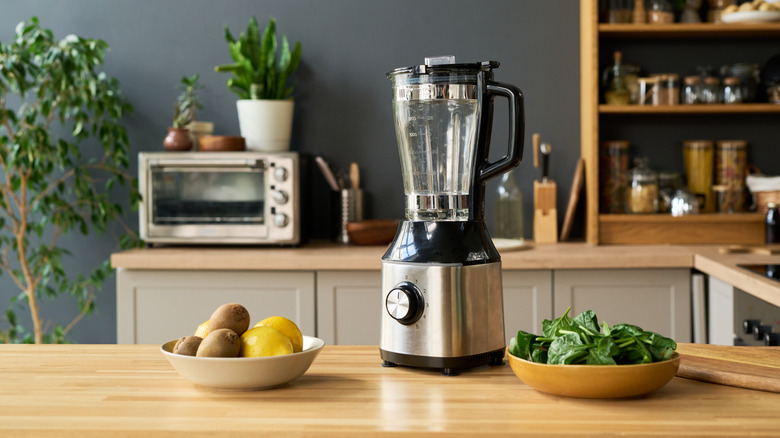
The Ninja Professional Blender 2.0 ($109.99 on Amazon), for instance, features blending and ice-crushing functions and a 1200 W motor. Since the appliance's blades are specifically designed to crush ice, buyers can (ostensibly) expect less excess wear from mixing hard objects over time. On the higher end of the spectrum, the professional-grade Vitamix VX1 Blender ($379.95) is equipped with laser-cut stainless steel blades and 1440 W of power. It's stronger than the Ninja and backed by an industry-leading five-year limited warranty, so foodies won't have to worry about replacements for a good while.
On the lower end, the Hamilton Beach Power Elite Wave Action Blender ($39.99) is a budget-friendly appliance that straddles the intersection of value and quality. Customer reviews praise its performance for everyday use — specifically for blending softer ingredients like smoothies and salsas. With 700 watts of power and a three-year limited warranty, it doesn't have any fancy functions or accessories and might not last the long haul (or even the seven-year mark, depending on how often you use it). That aside, it's a straightforward tool that can get the job done in the immediacy.
Ultimately, foodies should opt for a blender that suits their unique needs, with the knowledge that it'll last for around five years. If avoiding replacement is near the top of your priority list, consider shelling out for a higher-quality model.
Different models offer different uses and lifespans
A Reddit thread in r/BuyItForLife inquires, "Best blender that lasts a long time? No Ninja." So what should you go for? The majority of the comments sing the praises of the Vitamix blender for its long-lasting durability. As one commenter puts it, "Vitamix is stupid. Why would I pay $500 for a blender. Then I bought one. I now recommend $500 blenders. Buy once. Cry once." Others echo, "We've had a Vitamix for five years so far. No issues." Elsewhere online, a Quora poster notes that the brand's Magic Bullet blender is still in use after 12 years.
To make sure you're getting the most mileage out of your blender, there are a few go-to tips that will make your kitchen appliances last way longer. For one, take care not to overfill the pitcher, which can overwork and subsequently damage the machine. Another way to ensure a longer lifespan is to thoroughly clean your blender after every single use, disassembling and scrubbing each component. Neglecting regular maintenance can prematurely dull the blades or even impair motor function. Still, even a great blender won't last forever. If you notice the seal is broken, the blades are dulled beyond repair, or certain speed functions stop working, these are all signs that your appliance is failing from fatigue and might need replacing soon.