

The Small Filet-O-Fish Box Detail You've Probably Overlooked Tells An Important Story
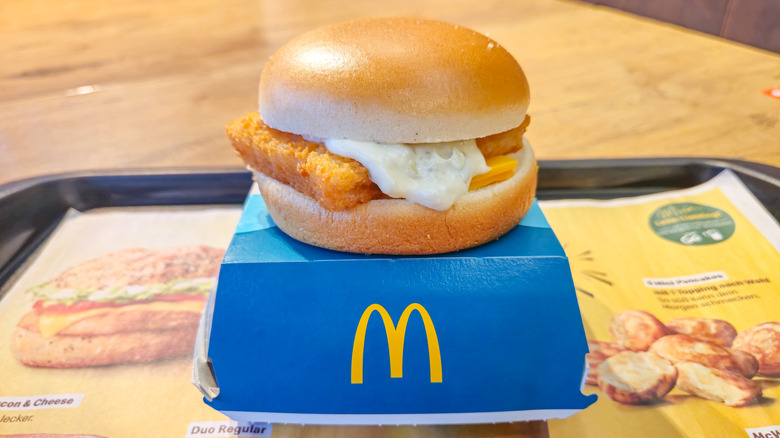
McDonald's may be a fast-food chain, but its customers still expect a certain level of sustainability, as people are becoming ever more eco-conscious. For those who have wondered whether the fish in McDonald's famous Filet-O-Fish sandwich is sustainably sourced, the answer lies right on the box — a blue MSC certification emblem that signifies the fish was sourced in an environmentally friendly way.
MSC stands for Marine Stewardship Council, which is a nonprofit organization that aims to protect seafood resources for future generations. When buying seafood, it's a major red flag if you can't find a sustainable certification on the packaging. MSC awards its certificate to companies that sell sustainably wild-caught fish, a practice that is checked and confirmed by independent auditors. To ensure the standards remain high, the companies with this certification get reassessed on a regular basis, and the results are made public.
Although MSC has been around since 1997, McDonald's has been working with the organization since 2011. The fish in Filet-O-Fish is Alaskan pollock, exclusively caught in the United States, in a zero-waste fishery that ensures no part of the fish goes to waste. Per McDonald's, the chain is "the first and only global restaurant company to serve Marine Stewardship Council-certified fish at every U.S. restaurant location."
McDonald's Filet-O-Fish is very committed to seafood sustainability
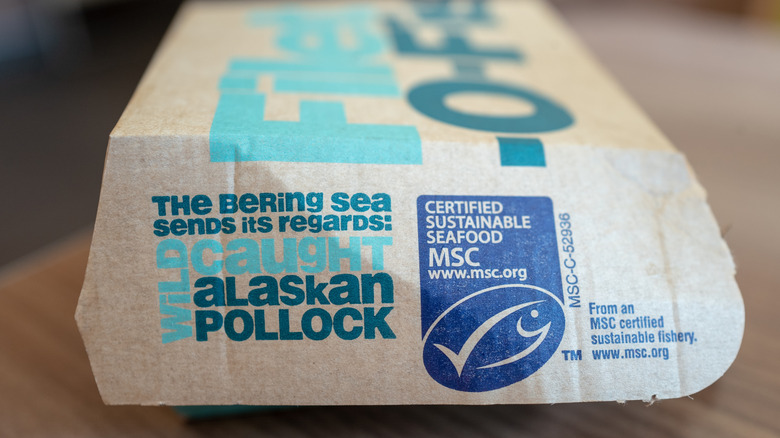
McDonald's pledge of sustainability extends beyond the United States, as many of its international markets carry the MSC certification on the Filet-O-Fish box as well. In fact, the chain claims that only 1% of all the fish it sells globally don't come from sustainable fisheries — and there is a goal to eventually become entirely sustainable everywhere. The restaurant also partners with Conservation International, an organization dedicated to protecting natural ecosystems, as McDonald's strives to preserve marine resources and future fish availability. When sourcing fish for its burgers, the chain aims to only catch the fish it needs, thus having a very small bycatch and not unnecessarily depleting the seas.
Not just kind to the environment, sustainability can also lower the costs for fast-food restaurants, making it a win-win situation. Since the '70s, McDonald's has been sourcing a lion's share of its protein from the same distribution company, Keystone Foods (owned by Tyson since 2018). This giant company supplies McDonald's with 15 million pounds of fish per year, along with 150 million pounds of beef and 300 million pounds of chicken.