

The Safety Rule You Shouldn't Ignore When Buying Meat From The Grocery Store On Hot Days
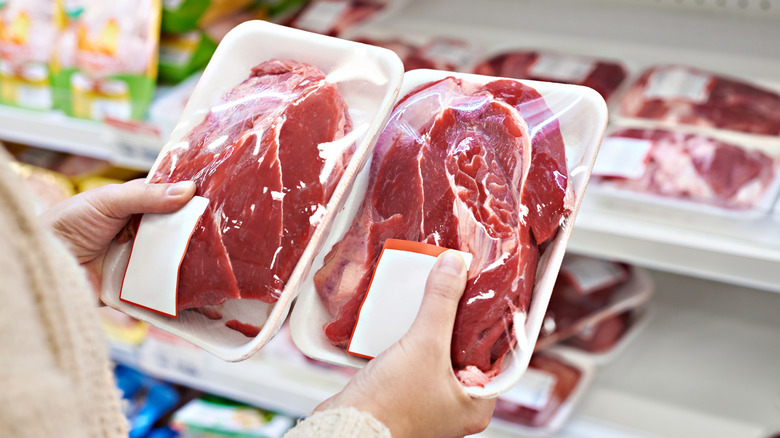
It feels like everything slows down in the summer. The days are longer, and we make time to lounge outside, grilling in the backyard, or staying at the beach until sunset. During the dog days of summer, even simple errands seem less urgent. But it's during precisely that time that bacteria are having their most productive season. If you're buying meat from the grocery store, one rule matters most: Don't leave it unrefrigerated for more than an hour on very hot days — and ideally for much less time. That recommendation is rooted in a food safety concept called the "Danger Zone," a temperature range where microbes thrive and multiply quickly.
The goal of refrigerated storage is to create an inhospitable environment, slowing bacterial growth before populations get out of control. Bacteria reproduce by dividing: one cell becomes two, two becomes four, and given enough time, the population explodes. Their happy place is between 40 and 140 degrees Fahrenheit. Below 40, growth is very slow or nonexistent. Above 140, heat kills many microbes. The Goldilocks range in the middle is the so-called Danger Zone.
On hot summer days, the stakes are even higher. Once outdoor temperatures climb above 90 degrees, the USDA recommends limiting the time perishable foods spend outside refrigeration to one hour. Meat doesn't instantly become dangerous the moment that hour is up. Rather, every additional minute gives bacteria more opportunity to multiply. And unlike an ultimate BBQ platter, in the case of bacteria, more is not better.
Tick, tock goes the meat clock
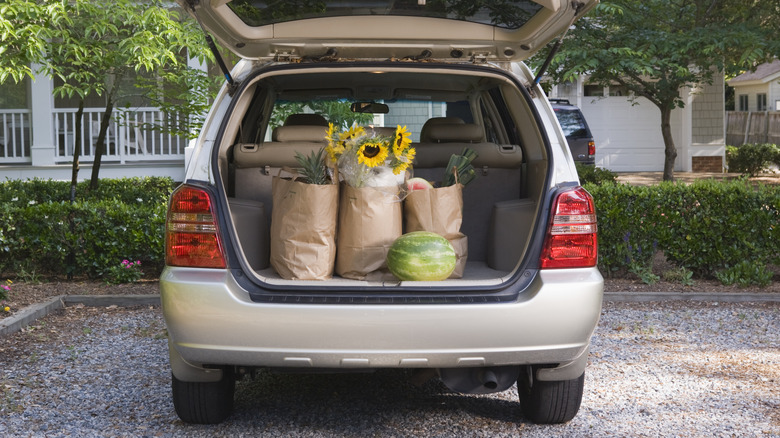
The clock starts ticking the moment a package of meat leaves the refrigerated case. Its temperature begins rising while it sits in your cart as you finish shopping and wait in the checkout line, crosses the sun-baked parking lot, rides home in the car, and even spends a few minutes on the counter during unpacking.
Unlike insects, bacteria aren't physically walking across your food and taking bites out of it. A few microbes aren't necessarily a problem, but populations can grow to problematic levels. Refrigeration doesn't kill bacteria; it slows their growth. So the fridge isn't a reset button, especially if bacteria populations have already multiplied. Just as meat warms up gradually, it also cools gradually once returned to the refrigerator, passing through that window of bacterial opportunity.
Food safety is a continuum of risk, influenced by the compounding interplay of time and temperature. In the middle of winter, when ambient temperatures may be closer to refrigerator temperatures, there's a little more wiggle room because microbial growth is slower closer to 40 degrees Fahrenheit. But on a hot summer day, those small stretches of time add up — fast. A ten-minute drive home on a mild day is different than a 45-minute trip when temperatures are pushing into the 90s. Running additional errands after buying meat widens that risky window. If you live far from the store, an insulated cooler bag can buy you valuable time. Packing cold items together can also help slow temperature increases. The best strategy takes the guesswork out of it: Buy refrigerated foods last, head home as soon as possible, and get them into the refrigerator quickly.
Spoiled, rotten?
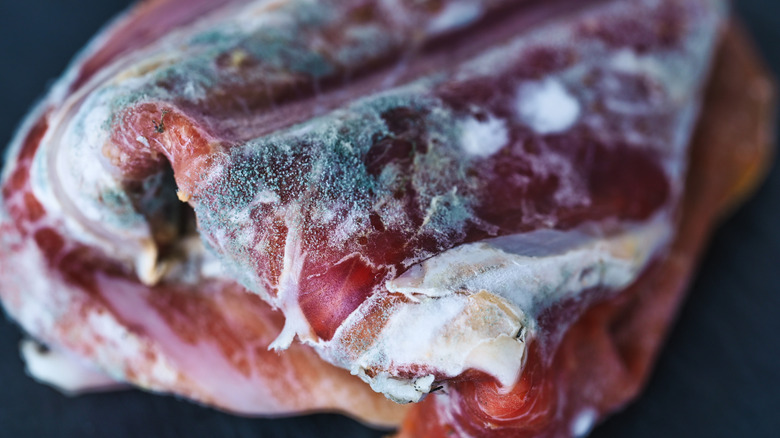
Just as the refrigerator can't save a piece of meat that's too far gone, not every food safety concern can be mended with heat. Thorough cooking above 140 degrees Fahrenheit destroys many disease-causing bacteria that may be present on raw meat, like E. coli and Salmonella, by damaging the cellular structures they need to survive. But bacteria themselves aren't the only concern. Some microbes produce waste products and toxins as they grow. Staphylococcus aureus, for example, can generate heat-stable enterotoxins that may remain even after cooking. Clostridium perfringens is another common culprit. It forms spores that survive cooking and later germinate on foods such as roasts, stews, and big batches of sauces like gravy — large volumes of food that are cooled too slowly or held too long at unsafe temperatures.
Another important distinction is the difference between spoilage and contamination. Spoilage is the natural process of organic material decomposing. Spoilage organisms are the microbes responsible for many of the obvious red flags that food has turned: stinky smells, slimy coatings, visible mold growth, and changes in colors and textures. Pathogens, the organisms more commonly associated with foodborne illness, are more nefarious because you can't necessarily see them or their effects. Spoilage and contamination can overlap, but they aren't interchangeable.
It's empowering to understand the science, but you don't need a microbiology degree to practice good food safety. The underlying principle is simple: Bacteria like warmth, moisture, and time. By taking away one of those variables, you make their lives harder — and yours safer. That's why food safety experts insist on getting meat home as quickly as possible on hot days. The less time meat spends in the Danger Zone, the fewer opportunities harmful microbes have to turn your cookout into a cautionary tale.