

This Creamy French Cheese Is Banned In America (Here's What You're Actually Buying)
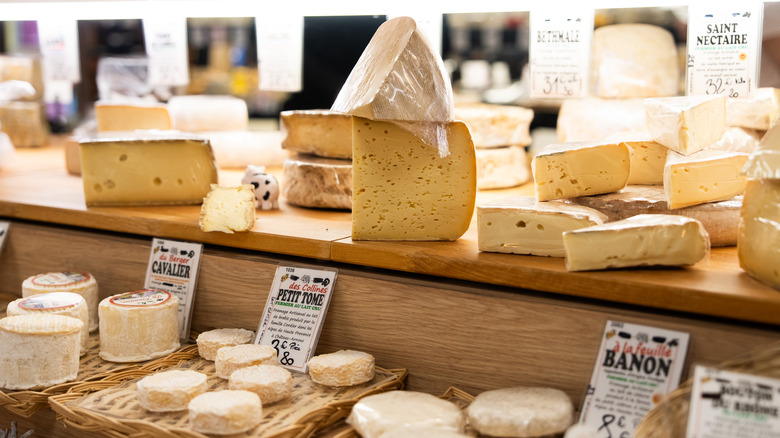
It's as versatile as it is tasty, and is one of the most popular French cheeses alongside Camembert and Comté. You can get really creative with this cheese too; it's great in a sandwich or on a toasted baguette, it can add oomph to your French toast, and is heavenly when baked and served with honey. In case you haven't guessed already, we're talking about Brie — a creamy French cheese that is actually banned in America. Well, at least the truly authentic version of it is.
Whether it's a sharp and funky Pont l'Évêque made from the milk of cows that graze for at least six months of the year or the French version of Munster, which is rubbed by hand with brine until the rind is the right shade of pink-orange, the list of French cheeses to try is long and varied. Unfortunately, with many of them, the only way to have an authentic tasting is to board a flight and travel to France. This is also true of authentic Brie, which, like many French cheeses, is made with raw, unpasteurized milk, and doesn't meet the aging criteria required to be imported to the U.S. according to FDA regulations.
What you're actually buying in America are versions of Brie that are often made with pasteurized milk, which not only changes its texture and flavor but also impacts the ripening process. And if they are made with raw milk, they're aged for 60 days before being imported, as per regulations. This is a lot longer than authentic Brie you'll get in France.
What makes Brie authentic?
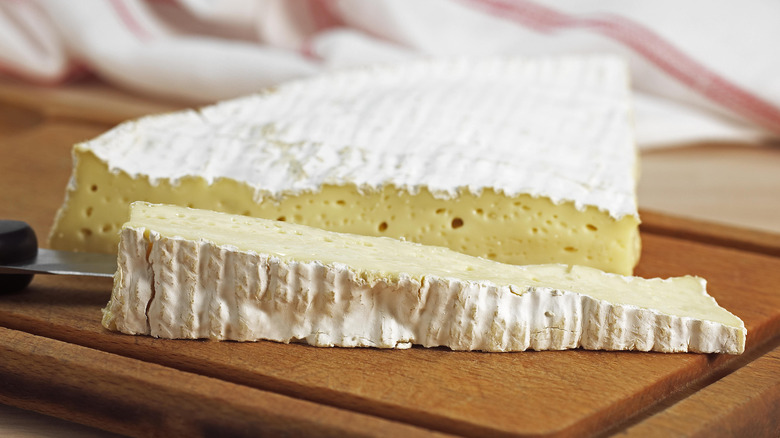
Brie is a soft cheese from a region near Paris called La Brie, and has been around since the eighth century. In the early 1980s, the French government added Brie to a list of cheeses given an Appellation d'Origine Protégée (AOP), a type of certification that confirms that the cheese was made in a particular region, using very specific techniques. This is very similar to the rule that requires champagne to come from a specific region of France (even if champagne's true origins actually lie in a mistake).
Two of the most popular types of Brie on this list are Brie de Meaux and Brie de Melun, both of which are made from raw milk and aged for around five weeks. However, the FDA requires that cheeses made using unpasteurized milk must be aged for a minimum of 60 days, when harmful bacteria stop growing.
Is it dangerous to consume raw milk or milk products? The FDA and the CDC have long believed it is, even stating that it's a public health concern. "You can get very sick from unpasteurized (raw) milk and dairy products made with raw milk, including any type of cheese as well as ice cream and yogurt," the FoodSafety.gov website notes. Pasteurization kills bacteria such as E. coli and Listeria in milk, making it safe for consumption. As it turns out, the process also kills some of the good bacteria that give cheese its inherent funk.
What's the difference between raw and pasteurized Brie?
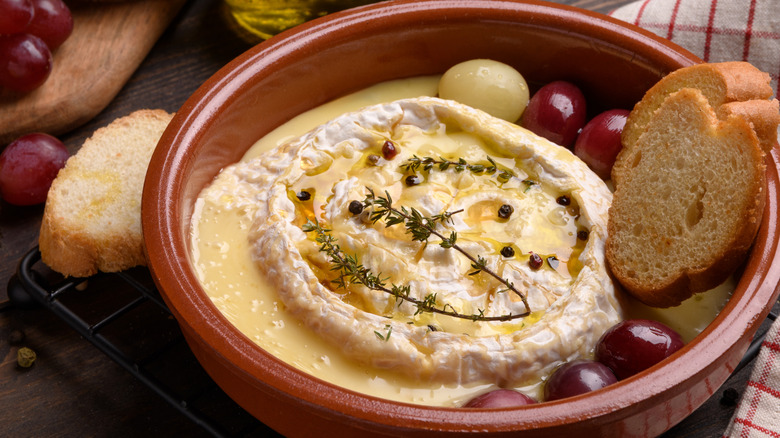
In case you're wondering what the big deal is about raw milk cheeses, just imagine eating softer, more funky versions of your favorite cheeses. Brie de Meaux, which is protected by the AOP guidelines, has a creamy, custard-like texture inside the earthy, bloomy rind (bloomy rinds are one of four types of rinds you'll commonly find on cheeses). The Brie you'll find in American supermarkets is likely to cover a whole range from creamy to not-creamy-enough, depending on where it has been manufactured, what kind of milk has been used, and how long it has been aged for. Le Fromager, a Brie-style cheese from the Fromager d'Affinois stable, tops our list of nine supermarket Brie cheeses, ranked.
According to one Redditor, the closest you can get in terms of flavor to AOP-approved Brie is a Brie-style cheese confusingly labeled Fromage de Meaux, or the Brie Fermier Jouvence. "Neither are raw, but their flavor is very close. There is a certain character, though, that only the raw milk brie has," they wrote. Meanwhile, there are a few different ways to get your hands on banned cheese in the U.S., and some of them may not even involve smuggling.