

This Burger King False Advertisement Scandal Has Stuck With Customers Years Later
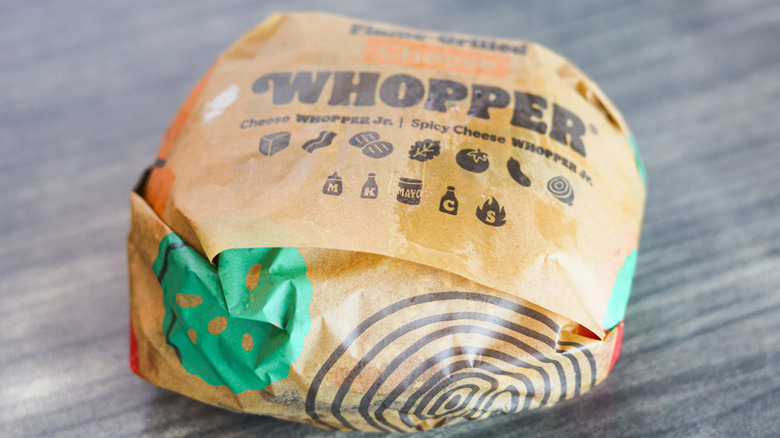
Like many large companies, Burger King has weathered its fair share of scandals. From the foot lettuce incident to a horsemeat scandal, Burger King has dealt with issues both internal and external with varying levels of success. Sometimes those scandals lead to fast food lawsuits. The false advertising lawsuit brought against the chain in 2020 alleged that Burger King exaggerated the size of Whoppers by as much as 35%, a claim the restaurant denies.
In 2022, four more plaintiffs sued the chain over similar claims. The lawsuit alleged that advertisements for the Whopper showed the burger much larger than it actually was, with meat overflowing the bun. It wasn't simply a matter of the image being physically large. The accusation was that the burger depicted was meatier than anything Burger King made for customers. Multiple plaintiffs came forward in the case, enough for the lawsuit to be converted to a class action suit in 2023. At the time, Burger King was accused of "materially overstating the size of nearly every menu item in its current advertisements" (via USA Today).
In early 2025, the class action suit was allowed to move forward. By November, Burger King received some relief when the same judge ruled that the various claims had too many differences to justify nationwide class action status. At that time, there were 19 plaintiffs in 13 states. This was a small win for Burger King, but not what it hoped for since it sought to have the case dismissed entirely.
Burger King defends itself
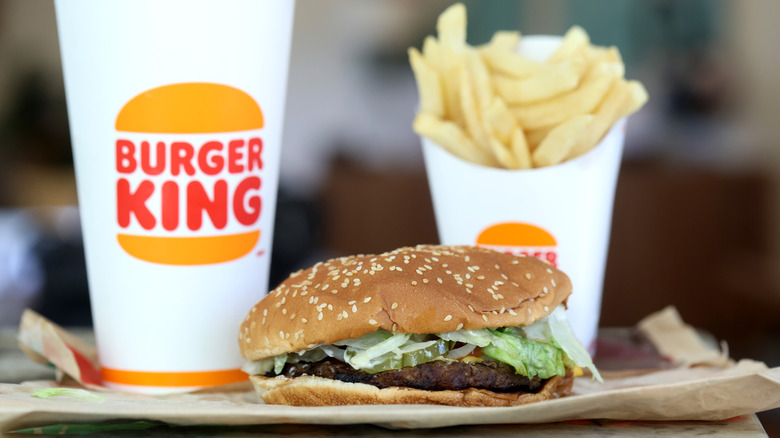
The restaurant responded to the lawsuits by claiming the patties used in ads were the same ones served to customers, and the size of a Whopper has been consistent for years. Part of the issue may be that advertisements are created with the help of food stylists, whose job is to make food look appealing. Because food stylists are trying to present a perfect version of a Whopper in ads, including not fully cooking the patty so it retains volume, the food can appear larger on screen or in photos.
Ads featuring undercooked meat were cited in a similar lawsuit brought against Wendy's and McDonald's, which was later dismissed. In that case, the judge ruled that fast food companies presenting visually appealing food is no different from other companies advertising to entice customers. On Reddit, many users brought up the other dismissed lawsuits, and one Redditor called the Burger King suit the kind of "frivolous litigation [that] only increases costs for the rest of us." Others also used the word "frivolous."
More importantly for Burger King as its case moves forward, the judge in the McDonald's and Wendy's case said both restaurants provided information about burger size and caloric content on their websites. In other words, if a customer was truly interested in the exact size of the burger, the information was available. It remains to be seen whether a judge in Burger King's case will reach the same conclusion.