

The Easiest Way To Help Prevent Freezer Burn From Ruining Your Food
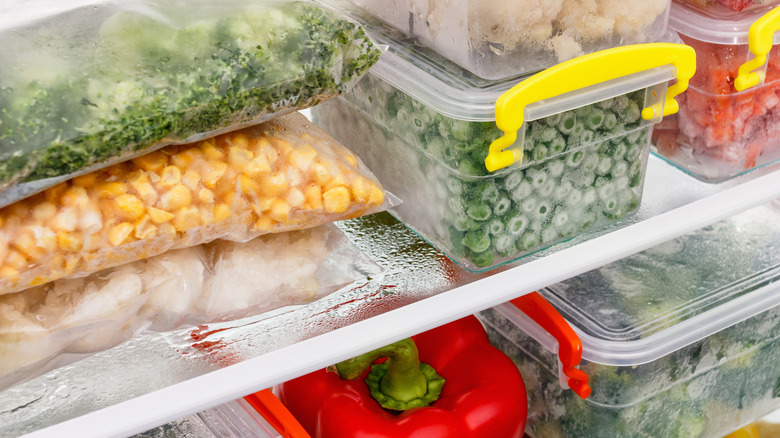
If you're someone who likes to keep the freezer stocked, there's a good chance that you've experienced the annoyance of freezer burn. It's so disheartening to grab something you're craving, only to find it covered in a sheet of ice. And whether it's a simple pint of ice cream or a week's worth of meals you end up throwing away, no one likes to waste food. Luckily, there is an easy way to minimize the risk of freezer burn: keep the freezer door closed as much as possible.
Freezer burn occurs when the outer layers of frozen food lose moisture after they are exposed to dry air. When this happens, food starts to dehydrate, and this can change the flavor and texture of your meat, vegetables, and dairy. The tell-tale sign is the formation of ice crystals on the surface. The color of the food will probably dull as well if it's been exposed to oxygen, making meats look gray or brown. Vegetables and moisture-heavy foods may shrivel.
If you notice these patterns, it might be because the door of your freezer has been left open for too long. When the freezer is exposed to outside air, the temperature inside can fluctuate, leading to conditions that cause freezer burn. Taking a few precautionary steps can help preserve your bulk food and leftovers, however. Make sure the door is sealed every time you close it and move quickly when you're reaching for something inside the freezer. Store frequently used items within reach and keep your freezer organized so you don't spend too much time searching for what you need. Here are some additional tricks for saving space in the freezer to keep you from blindly staring into it with the door open every time.
Can you eat food with freezer burn?
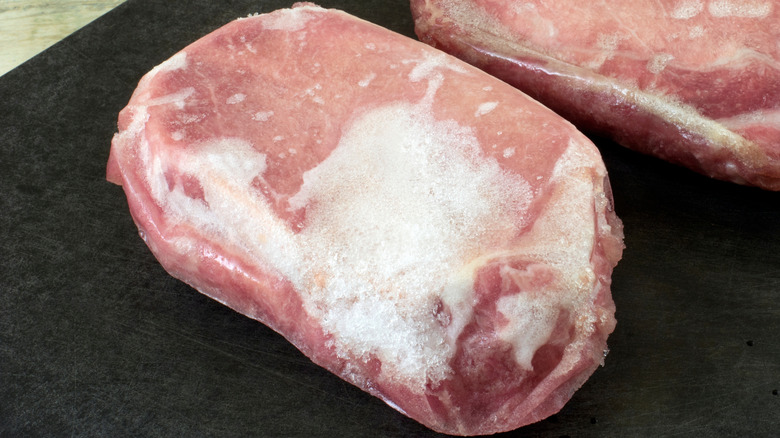
Another major cause of freezer burn is storing food improperly. If you're freezing a freshly cooked meal, cool it first. If the container is too hot, it could cause other foods around it to partially defrost. When the temperature of those items drops again, freezer burn can occur. Wrap food tightly to eliminate exposure to air, or better yet, vacuum seal it. This simple wrapping method can prevent freezer-burned meat. To keep freezer temperatures consistent, keep the thermostat below 0 degrees Fahrenheit.
Freezer burn doesn't necessarily make food unsafe to eat, but it won't be very enjoyable. Meats can end up tough and leathery, vegetables may shrink and dry out, and freezer-burned ice cream can develop a grainy texture. Worst of all, fatty foods can taste rancid if oxidation occurs. If there are any signs of spoilage, throw the item away.
Freezer burn is hard to reverse, but you can repurpose some crystallized foods or try to cut off any dry spots. Use freezer-burnt ice cream to make milkshakes, blend less-than-desirable fruit into smoothies, and add shriveled berries into baked goods. Freezer-burned vegetables can be used for soups, and tough meats make for great stock bases. Hopefully, if you start watching how long that freezer door stays open, you can avoid the disappointment of ice crystals on your frozen foods.