

What's The Actual Difference Between Pork Loin & Tenderloin?
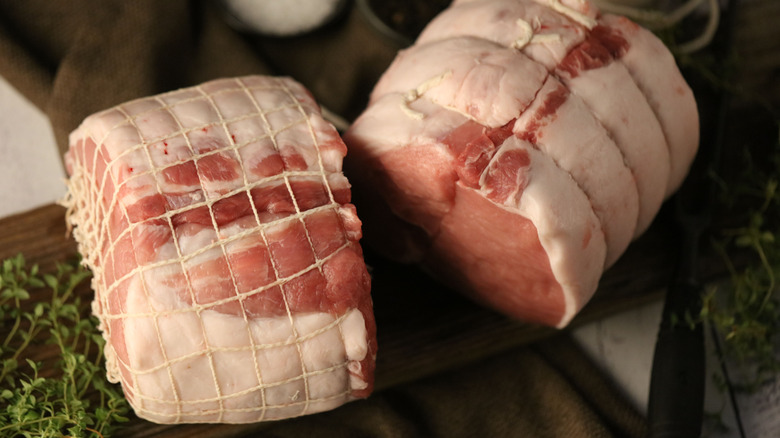
Ever stand in front of the butcher's case and feel a bit insecure about your knowledge of the different cuts? Especially those that sound alike? That's definitely a common experience when it comes to pork loin versus pork tenderloin. The only difference you might be familiar with is the price. So what makes pork tenderloin worth more money? Mostly, where it's cut from the pig, and how that makes it much more tender and lean. So let's look more closely at what that means.
Let's start with the loin (the upper back of the pig) in general — a primal cut. Cuts that come from the loin include pork loin, pork chops, tenderloin, and baby back ribs. The two pork loins are the cuts of meat that run along both sides of the animal's backbone. These are still large cuts and get further broken down into smaller cuts. The center-cut roast from the pork loin is where it can get confusing, as sometimes it's just labeled "pork loin" or top loin roast. It's the meatiest part of the pork loin and is often sold boneless.
Tenderloin, on the other hand, is a small, skinny cut that's always boneless. It comes from directly underneath the pig's backbone, which means the muscle is not used very much. This makes it supremely tender, and extra lean. Hence, it's worth more money. It's considered the filet of the pig. Both the pork loin and tenderloin though have a similar, mild pork flavor and can be cooked in a variety of ways.
The difference in cooking pork loin versus tenderloin
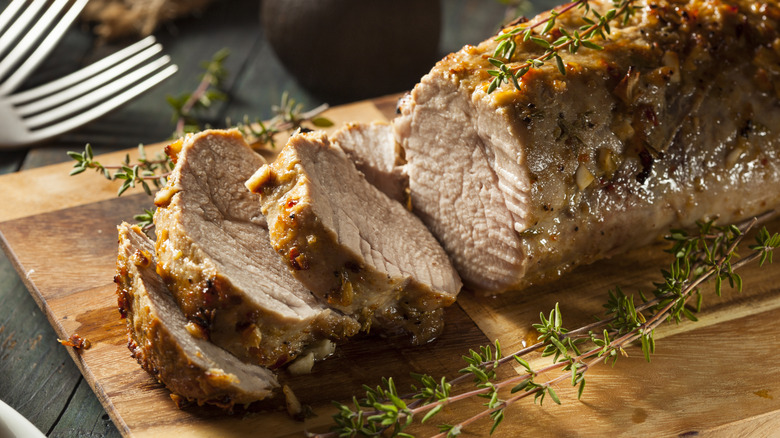
Let's say you come across a center-cut roast, that nice, meaty part of the pork loin. As the name suggests, one of the best ways to cook it is in the oven. It's recommended to use a simple, fool-proof brine on the roast first, as it's prone to drying out. Cook it slowly at a medium temperature, around 350 degrees Fahrenheit. You can also break out your slow cooker for a pork loin roast recipe that uses a delicious spice rub — slow cooking it in liquid helps for a nice, juicy result. If you have a smoker, this low-and-slow technique is perfect for pork loin, just remember the timing rule.
Tenderloin, as the name suggests, and for reasons we've already covered, is a very tender cut of meat. It doesn't need to be brined, and can be cooked more quickly at higher temperatures compared to pork loin roasts. While you can season and smoke a pork tenderloin, or simply roast it, perhaps a more impressive way to serve it is stuffed with olives, peppers, and cheese, then grilled, or cut into medallions and served with grapes and pomegranate sauce, à la Jacques Pépin.