

10 Essential Phrases And Words To Know At Thai Restaurants
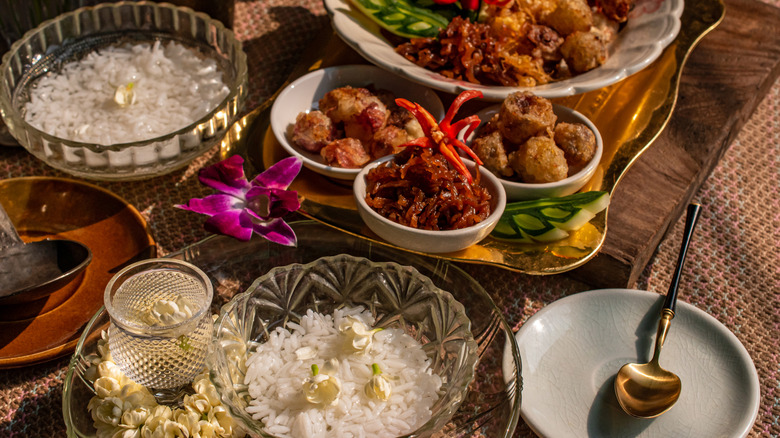
Correction 6/25/26: An earlier version of this article stated that Very Thai is located in New York City. It is located in Los Angeles.
Thai food has long been popular in the United States, beginning with its reign of the takeout industry and avalanching into restaurants going viral as more and more people immerse themselves in Thai food culture. This immersion began with pad Thai back in 2002, when Thailand's government provided 500 million baht in funding for a culinary campaign that would put pad Thai on the map — literally — and lead to overseas food trade and more international influence for Thailand.
But Thai cuisine expands much further than pad Thai. Thai food brings together a multitude of flavors and satisfies any culinary craving you may have, whether it's sour, salty, sweet, or anything in between. There are an array of dishes on the menu at any Thai restaurant you visit, and sometimes it can be intimidating to know how to order correctly — and how to order for what you're craving, especially if you are not too familiar with Thai cuisine.
That's why we're here. With the help of Thai food experts, including chef Ian Kittichai of Kò Sà-Wǎn at Atlantis Paradise Island; executive chef Aditya Kangutkar of Twin Tails; Rocky Romruen, partner at Narkara; and chef Nick Chang of Very Thai in Los Angeles, we have compiled a list of words and phrases that will help you know what to order and how to order it the next time you dine at a Thai restaurant.
Samrub: a set menu
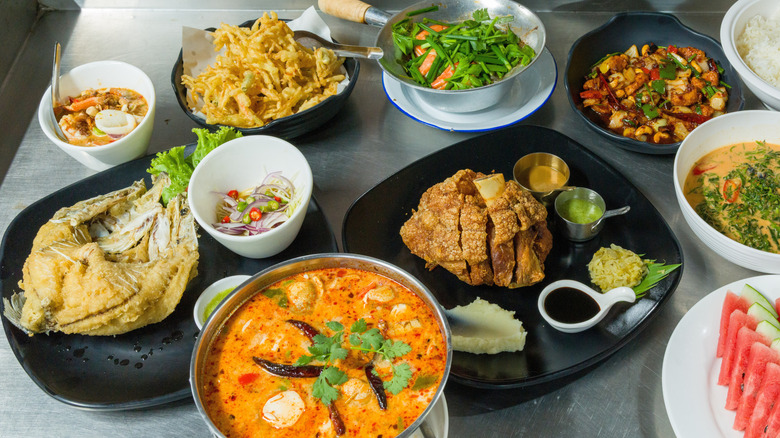
The word "samrub" reflects the tradition of serving food family-style in Thai culture. According to chef Ian Kittichai, "samrub" translates to "a set," "a deck," or "a suite." In a restaurant, this means a set menu — similar to the French term "prix fixe," which describes a set menu served for a set price. Thai version of "family-style" might look a little bit different than you'd expect.
"It is not a tasting menu in the Western sensibility," says Kittichai. "It is a progression of dishes from smaller snacks, dips, [and] bites to soups, salads, curries, meats, seafood, and fish." Of course, these dishes are followed with desserts, which are an essential part of Thai food culture and hospitality. Plus, according to Kittichai, all dishes are usually served with steamed Thai rice.
Though some dishes from the samrub can be made as a one-plate, quick meal if you're in a hurry, when you are in a restaurant setting, you can always expect a meticulous assortment of dishes on the samrub. The preparation of the samrub is about bringing flavors together as much as it is about nutrition, the latter of which is important because of Thai culture's belief in food as medicine. A successful samrub balances flavors well enough to give your body enough sour, sweet, rich, and more elements for it to be nutritionally balanced.
Pad: to stir-fry
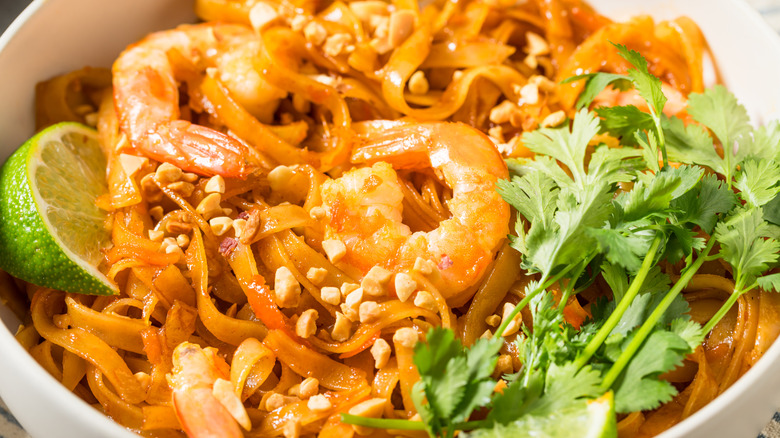
The introduction most people have to Thai food starts with pad Thai, which is one of the most approachable Thai dishes, chosen by the Thai government to put Thailand on the global map. "Pad" on its own, though, means "to stir-fry," referencing how a dish is cooked. In this case, it means the ingredients in the dish were prepared together in a wok.
According to executive chef Aditya Kangutkar, "pad" can also be spelled "phat." The word "pad" is seen in other dish names as well. Pad kra pow, for example, is stir-fried minced meat with holy basil, usually served as a main dish, according to Ian Kittichai, whereas pad pak is a dish of stir-fried vegetables that typically accompanies a main dish along with steamed rice. Other pad dishes include pad see eiw (stir-fried noodles with soy sauce), and pad kee mao (stir-fried broad noodles with a spicy sauce).
The wok has been a popular tool for stir-frying for more than 3,000 years, since it allows for good heat distribution, which makes for an even stir-fry with balanced flavors. A wok's hottest part is at the base, whereas the sides tend to cool as you move upward. In Americanized dishes like pad kra pow, for example, the meat can be brown on the bottom base along with the vegetables. Once the vegetables are done crisping, they can be moved up to the side of the wok so the meat could continue cooking while the vegetables stay warm but do not burn.
Yum: to mix
When you think of the Thai word "yum," think of the idea of tossing everything together, says Ian Kittichai. The word "yum" typically means "to mix," and in Thai cuisine specifically, it refers to Thai salads, according to Narkara partner Rocky Romruen. Thai salads are traditionally made with lime, fish sauce, chili, herbs, and any desired proteins. "I always tell guests to expect something fresh, tangy, and a little spicy," he says.
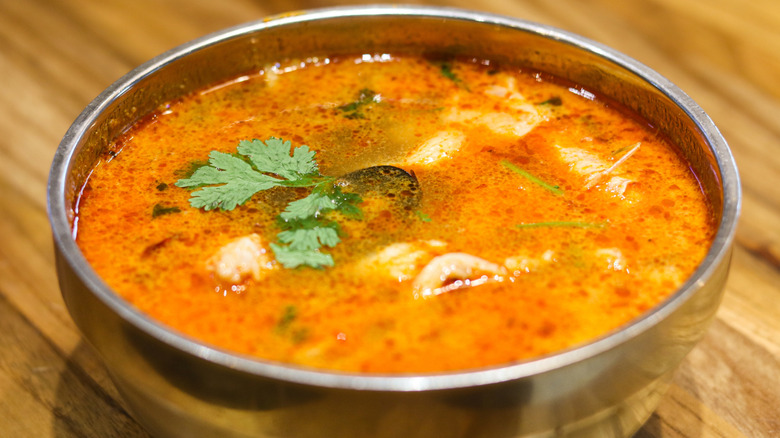
Another "yum" dish is tom yum, where tom means "to boil," says Aditya Kangutkar. The dish, then, is a yum (a salad mixture) brought to a boil, leading to a popular Thai soup that melds the sweet, sour, and spicy notes that usually exist in a yum. Other popular Thai salad dishes include yum mamuang, a Thai green mango salad that is filled with vibrant flavors from the mango, shallots, garlic, and peanuts, and yum talay, a seafood salad that combines the natural sweetness of seafood (including shrimp, squid, mussels, and scallops) with earthy flavors from cilantro and mint.
While many yum dishes are salads, they do not always have to be appetizers. Some variations, like yum pad Thai (Thai rice noodle salad), combine classic hearty Thai dishes with the salad style of yum dishes, leading to a salad that is fresh while still being filling.
Other cooking techniques to know
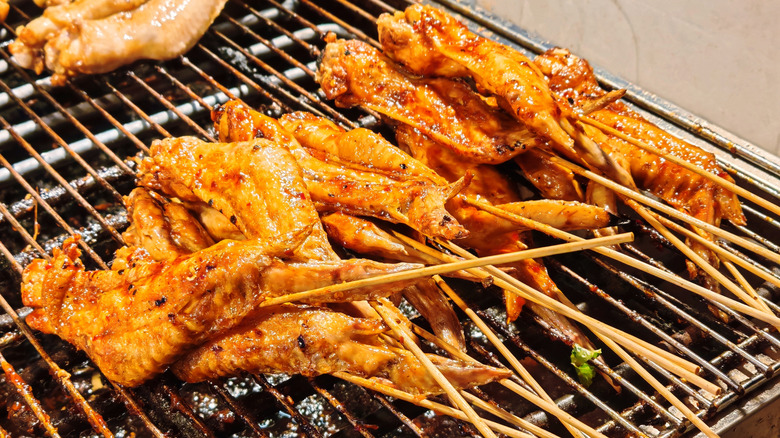
There are a few other cooking techniques commonly used in Thai food. The word "tod" indicates that a dish or ingredient in the dish has been deep-fried, according to Ian Kittichai. Dishes with the word "tod" in their name tend to have a crispy element because of the batter used to deep-fry the ingredients. Kluay tod, for example, uses a batter made of coconut flakes, sesame seeds, and a flour mix; the coconut adds a sweet aroma that is complemented by the nutty crunchiness of the sesame seeds.
The word "neung" indicates utilizing steam. In Thai cuisine, rice is often cooked with a huad; this bamboo basket rests on a narrow pot; the material ensures that the rice's moisture can be released, while also maintaining the humidity level. A common steamed Thai dish is pla neung manao, or steamed fish with herbs and lime. Most traditionally, this dish calls for a whole fish to be steamed with a broth, which helps the fish retain its flavor without being overshadowed by batter or oil.
Then there's "yang," which indicates that a dish has been grilled. If you're looking for Thai-style barbecue, look no further than gai yang, a popular street food dish in Thailand. Gai yang incorporates traditional Thai flavors like fish sauce, soy sauce, and lemongrass, which coats a spatchcocked chicken.
Larb: a meat salad
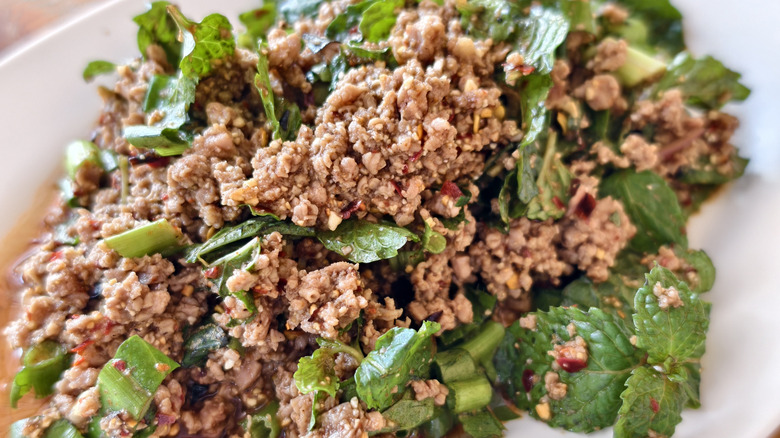
The word "larb" on a Thai menu indicates an appetizer that contains the flavors of lime, fish sauce, herbs, chili, and toasted rice powder. Rather than a traditional salad, Thai larb tends to refer to a meat salad and is usually recognizable because of its aroma — that's why the toasted rice powder is so important. Larb is traditionally shared by a group and eaten with sticky rice, according to Rocky Romruen. This tradition of group eating is likely because in the past, larb was a dish served only at important festivals to honor guests for attending — the inclusion of meat was a sign of the hospitality culture in Thailand.
Larb dishes can be made with various proteins, like larb moo, which is made with minced pork; larb nuea, made with beef; and larb gai, made with chicken. According to Romruen, larb dishes come from Northeastern Thailand, the region that borders Laos and Cambodia, so it's easy to see how they can be influenced by other Southeast Asia countries and flavors. What makes each larb dish unique, then, is its variation on seasonings and spices, which is different depending on where you get it.
Gaeng: a dish with curry or curry paste
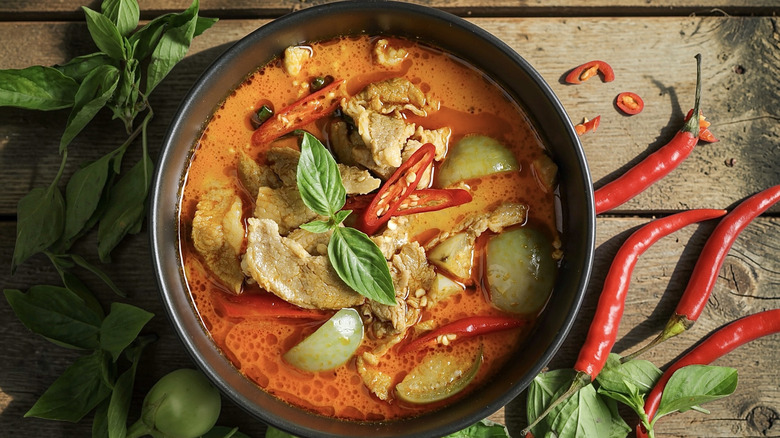
"Gaeng" means the dish you're ordering is a curry or uses curry paste, according to Rocky Romruen, who adds that the type of gaeng you receive is dependent on the region of Thailand a restaurant is pulling their culinary inspiration from. One of the most common Thai curries is gaeng kiew wan, according to Aditya Kangutkar, which is a Thai green curry. "Kiew wan refers to a softer, lighter green color — almost a pastel shade — created by adding coconut milk to a bright green curry paste," says Kangutkar. Yet, according to Romruen, many diners mistakenly think that all Thai curries have coconut milk, but they do not. "Some are rich and creamy, but some are light and more like a soup. Different regions of Thailand have different styles of gaeng," he says.
Gaeng jued, for example, is a Thai glass noodle soup. Its name translates to "bland curry," which is misleading — the dish is surely flavorful, but the addition of the "bland" descriptor is because the dish lacks spice, which is common in many Thai dishes. Gaeng jued is created using pork or chicken broth and is seasoned with fish sauce and soy sauce.
"Gaeng" can also mean a dish simply utilizes curry paste, like in gai pad prik gaeng. This dish combines the flavors of curry with a stir-fry cooking method. The chicken is stir-fried in red curry paste, which is made using chilies (often dried red spur peppers), peppercorns, lemongrass, and other ingredients. Gai pad prik gaeng is a common Thai street food dish.
Nam jim: dipping sauce
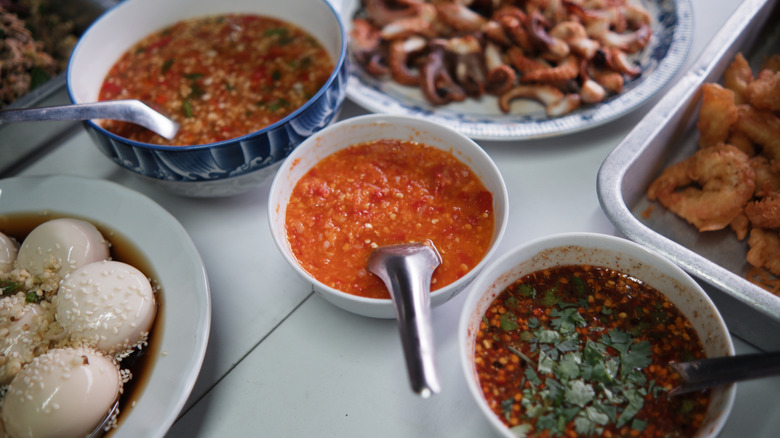
According to Rocky Romruen, "nam jim means 'dipping sauce.'" There are a variety of them in Thai cuisines — some spicy, some sour, some sweet. In other cuisines, sauces are seen as more of a condiment than a key element of a dish. In Thai cuisine, however, this is not the case. "Usually the sauce is made to match the dish, so it is an important part of the meal and not just something extra on the side," Romruen says.
"Nam" means "water" or "liquid," while "jim" means "to dip." According to Romruen, common varieties of nam jim include nam jim jaew, which is a tamarind sauce typically served with meat; nam jim seafood, a spicy garlic-lime sauce commonly served with seafood; and nam jim gai, a sweet chili sauce usually served with fried foods.
Nuua sat: meat
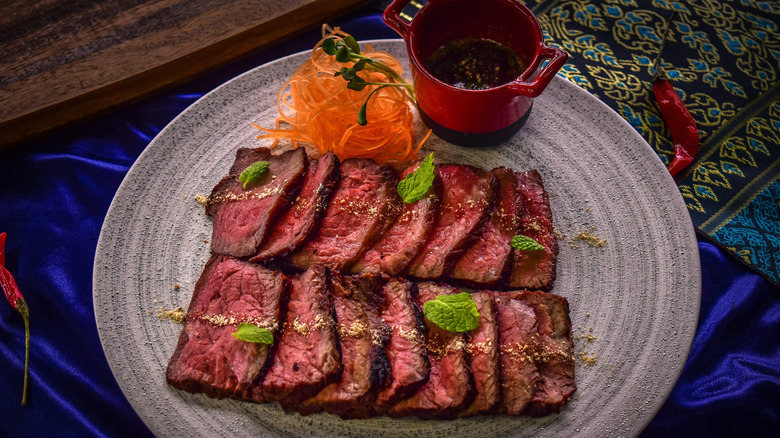
The general word for "meat" in Thai is "nuua sat," and diners can usually expect to see the word "nuua" used before the animal on a Thai menu, as this is how they specify what kind of meat you're getting. For example, "nuua gai" indicates chicken, and "nuua muu" indicates pork. According to chef Nick Chang, a pork dish you can typically expect to see on a Thai menu is pork jowl, which comes from the cheek of the pig. "[It] is valued for its balance of meat and fat," he says. "When grilled, it develops a rich texture while remaining tender."
Beef is also commonly used in Thai cuisine, and beef dishes tend to focus on incorporating herbs and aromatics into the dish, Chang says. One infamous Thai beef dish is suea long hai, which translates to the "crying tiger."
There are some variations on the tale behind the crying tiger dish, but the ingredients stay the same. It hails from northeastern Thailand and is a grilled beef dish served with a spicy, bold nam jim jaew. The cut of meat is usually a flank or brisket, and thus tends to be chewy. One of the common tales told about the dish is that it got its name from being so tough and chewy that even a tiger couldn't chew through it. Other variations on the legend speculate that the meat was so good, a tiger would cry when the meal was over.
Aeb: protein wrapped in banana leaf
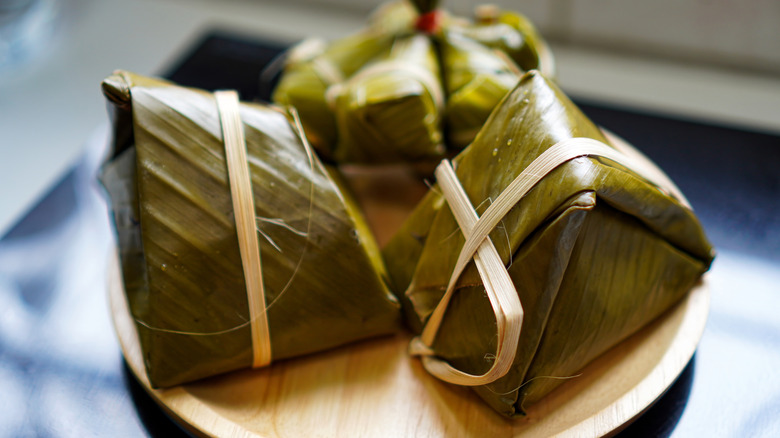
If you have ever seen banana leaves on a Thai menu, it is likely because the protein you are ordering was wrapped in the leaf when it was cooked. This technique creates a dish called aeb. According to Nick Chang, banana leaves are used as a natural wrapping when grilling or steaming meat and, more commonly, fish. "Rather than serving as an ingredient itself, the leaf helps retain moisture during cooking while imparting a subtle aroma," he says.
As far as flavors go, the banana leaf adds a freshness and fragrance to the cooked fish. It can also benefit its texture. "Diners unfamiliar with banana leaf preparations can expect fish that is typically more tender and fragrant than fish cooked directly over heat," says Chang. The banana leaf-wrapped fish is usually cooked over a charcoal fire, so the banana leaf protects the fish from burning. The banana leaf will absorb the char, allowing just the smoky aroma to penetrate the fish to make it more enjoyable. Aeb is typically made with catfish or tilapia and is commonly served at street food markets in Thailand.
Horapa: Thai basil
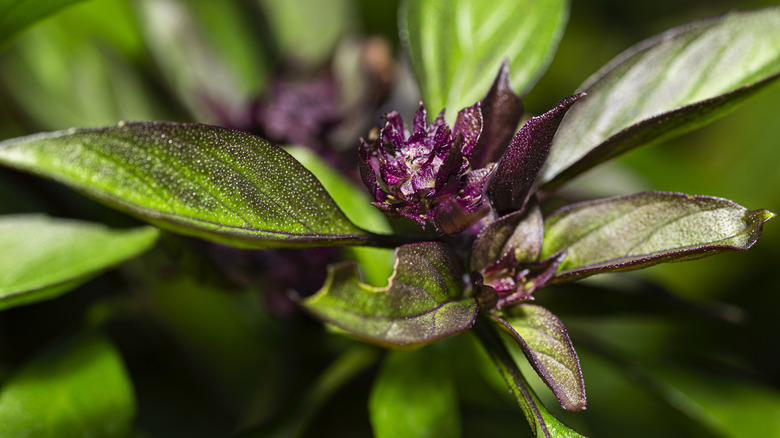
An ingredient diners are likely to see on a Thai restaurant's menu is horapa, otherwise known as Thai basil. Thai basil is different from holy basil, known as krapao. Both Thai basil and holy basil are commonly used in Thai cuisine — for the latter, think of pad kra pao, a stir-fried pork dish. Nick Chang explains that Thai basil is frequently used in stir-fried beef dishes to contribute an aroma that helps to balance the proteins in the dish. "[Thai basil] is a defining ingredient in many classic Thai preparations," he says.
Thai basil has long, narrow leaves, smooth edges, and purple stems, while holy basil leaves are fuzzy with ragged edges. This is how you can tell them apart, in addition to the taste and smell. Thai basil is sweeter than holy basil, with a flavor akin to licorice or anise. Thai basil hails from Southeast Asia and can be incorporated in many of the aforementioned dishes. For example, with larb, or Thai meat salad, restaurants may add in a bit of Thai basil toward the end of the cooking process to add a last-minute freshness to the dish.