

The Staggering Amount Of Olives Required To Make A Bottle Of Olive Oil
We may receive a commission on purchases made from links.
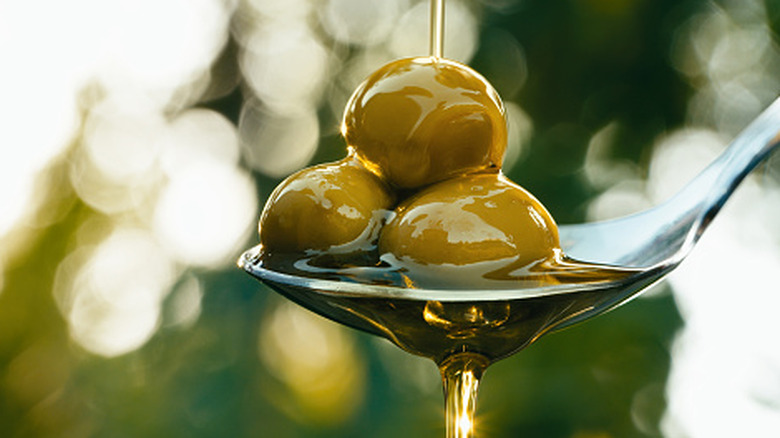
When you reach for that bottle of olive oil in your kitchen, it's easy to forget exactly how much went on behind the scenes to get it to you. We all know that it was bottled in a factory, and the olives were grown on a farm and harvested by workers (sometimes by hand but often using tree-shaking machines). But an even more basic thing you may not know is that each bottle probably contains the oil from more than 1,000 olives.
That might sound like a lot until you think about it in more detail. One liter of olive oil takes around 4-5 kilograms of olives to make, and a single olive weighs in at just 3-5 grams, with only 20% of each olive being that precious oil. When you crunch the numbers, that means each liter needs around 800-1,600 olives, with the average being around 1,200. The number is even higher if you're going for extra virgin olive oil, the highest grade available, which needs 8-10 kilograms of olives per liter. That means that, on average, a large bottle of extra virgin olive oil took almost 2,500 olives to produce.
Of course, the exact number of olives also depends on the size of the bottle. One bottle of Partanna Sicilian Extra Virgin Olive oil holds 25.5 fluid ounces, which works out at just under 1,900 olives. On the other hand, Whole Foods Market 365 Mediterranean Extra Virgin Olive Oil comes in a 67.7-fluid-ounce can, meaning that each one contains the oil from almost 5,000 pressed olives.
The world's insatiable appetite for olives
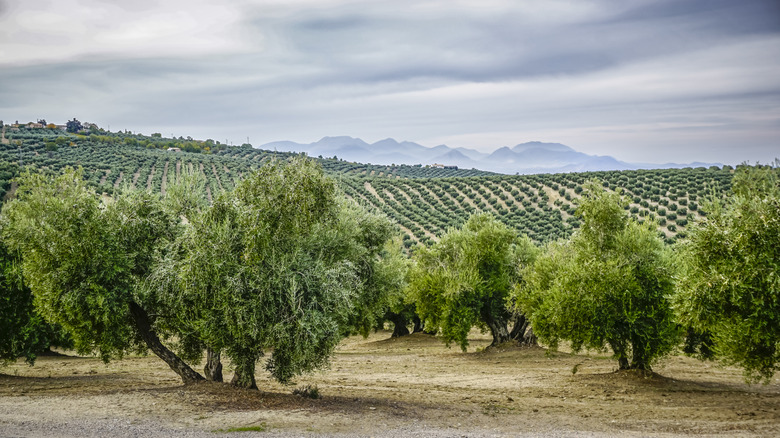
When you think about how many olives it takes to make olive oil, you might start to wonder how many bottles one tree can produce. It turns out, it's fewer than you might think. A typical olive tree will only give around 2-4 bottles of olive oil from each year's harvest — although the exact number can vary wildly.
Some trees are able to produce up to 100 kilograms of olives each year, but that still means that even the largest olive trees can only produce around 10 large bottles of extra virgin oil. To feed the global appetite for olive oil, though, 10 million metric tons of olives are harvested every year, around 60% of which are used to make oil. Those produce the 3 million tons of olive oil that we collectively get through every year, and needless to say, that takes a huge number of trees. In fact, olive farms cover 11.5 million hectares of the planet's surface — slightly more than the entire state of Arizona.
In the 2020s, the popularity of olive oil is at an all-time high, and the U.S. is one of the world's top importers. People enjoy it in all kinds of culinary contexts, from the classic style of dipping bread into olive oil to more unusual things like the controversial Starbucks Oleato. Knowing how many olives that takes means that the next time you're drizzling a little olive oil onto your pizza, you can spare a moment to think about how impressive that bottle is.