

Don't Let Your Asparagus Rot — Store It Like This For Maximum Crispness And Freshness
We may receive a commission on purchases made from links.
Every vegetable degrades over time in storage, but asparagus can be one of the worst. While lettuce leaves or crispy celery can wilt over time, and make for a less-than-pleasant eating experience, asparagus seems to be turbocharged in this regard, and the result is even more depressing. Unappealing, wilted stalks start mushy and get even more so when you cook them. So we reached out to Lacey Baier, the author of "Cleanish Meal Prep," for her advice on the best way to store asparagus to avoid this fate. And she tells us that the reason your asparagus wilts so quickly is because you are storing it wrong to begin with. What you should be doing is using some water.
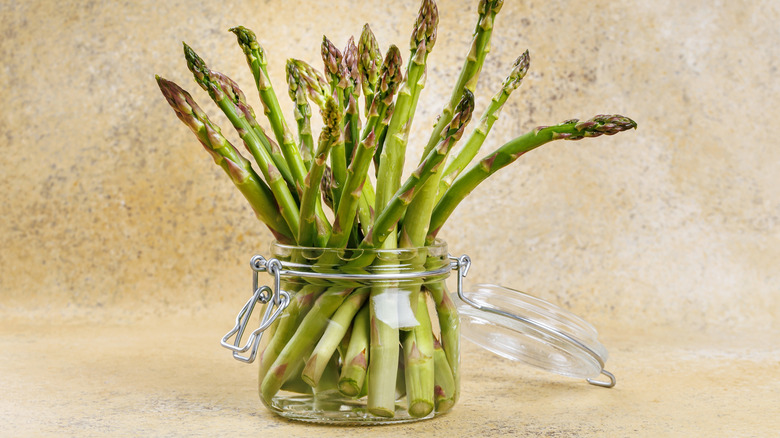
Baier says that for the best short-term asparagus storage, "Treat asparagus like fresh-cut flowers. Trim about an inch off the bottom of the stems, stand them upright in a 1-qt mason jar with an inch or two of water, loosely cover the tops with a plastic bag, and refrigerate." She explains that, like flowers, the water will feed the stalk from the bottom, which helps keep your spears crunchy, adding, "Laying them flat in a crisper drawer is the fastest way to end up with limp, sad spears." That trim of the asparagus ends helps absorb the water, and you should also discard any that are already starting to turn, as they can infect the rest. Finally, Baier tells us, "Change the water every day or two if you're not using it right away," and that stored this way, asparagus stays fresh for about 3-5 days."
Store your asparagus upright in a jar with water to help it stay fresh and crispy for days
The jar of water method is pretty simple and accessible, but what if you don't have room in your fridge? Well, there is another good option that uses paper towels in a similar way to help preserve the moisture in your asparagus. First, dampen a few paper towels so they are wet, but not soaking. Then wrap them around your bunch of asparagus and seal them in a plastic bag. Then just store the bag anywhere in your fridge where you have space. The moist paper towels will work like the water in the jar, being absorbed by the stalks and helping to preserve their texture for a week or more.
Honestly, though, the best thing to do for your asparagus is eat it as soon as possible, and maybe even avoid asparagus when it's out of season. Obviously, that isn't always an option, which is why these preservation methods are good to know, but the flavor and texture of asparagus degrades quickly after it's picked, as the natural sugars turn to starches, even when stored properly. And frozen asparagus is even less ideal. The best way to freeze it is to blanch it before sealing it in a bag, but even done that way, it will turn to mush after you defrost it. So definitely use water or paper towels to make sure asparagus stays as good as it can, but time your purchase of it to be as close to cooking it as possible. You'll waste less, and your asparagus recipes will taste even better than they normally do.