

Ribeye Can Be Expensive — Here's A Cheaper Alternative With Marbling That Measures Up
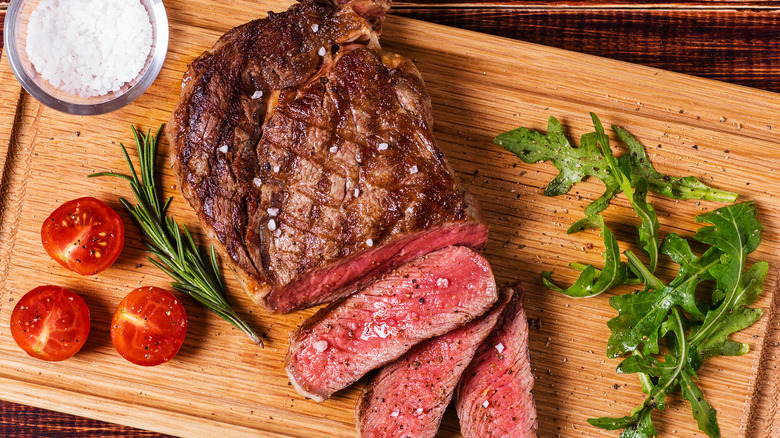
The sheer pleasure of enjoying a perfectly-marbled ribeye steak can only be brought down by the sight of your bill. Even at chain grocery stores, this king of steaks can cost $20 to $30 per piece, or $15 to $20 per pound, while higher-quality ribeyes from specialty sellers may fetch well over $60. Before you resign yourself to cheap, inferior cuts, consider the Denver steak, a flavorful alternative that delivers ribeye-level marbling at lower prices.
There are several differences between Denver and ribeye steaks, though value is a huge one. Denver steak comes from the chuck primal of the cow underneath the shoulder blade (the ribeye, as you can guess, comes from the rib section). Many butchers consider it one of the most underrated steaks, as it packs all the tenderness and fatty flavor of premium cuts like ribeye into a thriftier package. Steak lovers have found gorgeously-marbled Denver cuts for as little as $9 to $13.80 per pound at shops. This piece of beef can cost $10 to $11 per piece online, with the priciest Denver steaks from specialty brands usually topping out at $40.
Some sources claim that Denver steaks are just as tender and flavorful as ribeyes, while others point out that the cheaper cut has less fat, so it doesn't offer the exact same ultra-soft and rich taste. But for a luxurious dinner that won't destroy your budget, a Denver cut can't be beat. The only caveat is that you're unlikely to get your hands on one at a local grocery store.
How to buy and cook Denver steak
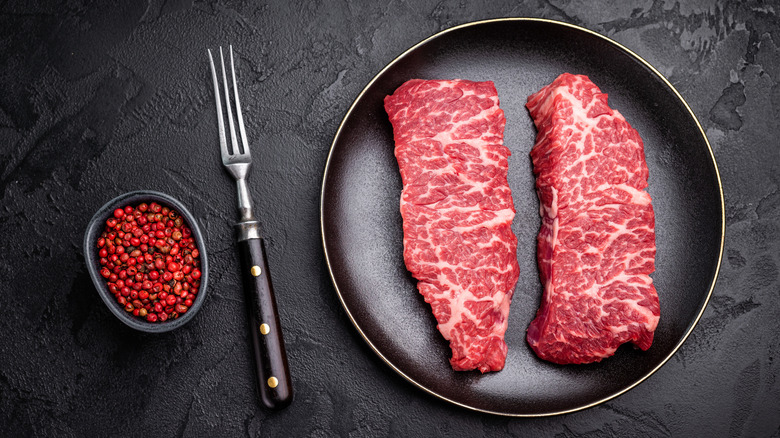
The Denver cut is tricky to extract from the cow, requiring skill, time, and attention to detail, so major meat processing companies don't usually go through the effort. This is why you're unlikely to find Denver steak in grocery stores, save for some upscale grocers if you're lucky.
To nab a great Denver steak, turn to independent butcher shops, which are more likely to stock the cut or allow you to put in a request. Plenty of online meat shops also sell this steak, often in economical multi-piece packs that help you save even more cash. Basic steak shopping rules still apply here: Look for cuts with a deep red color and visible white marbling throughout the muscle. Thickness is another important factor when buying steak – aim for 1 to 1½ inch to keep the beef juicy in the center while it gets a good sear.
Once you have your Denver steak, the tricky part is over, as it can be prepared in much the same way as a ribeye. A quick sear over high heat in a pan or on the grill is the best way to cook Denver steak, allowing the beef's plentiful fat to brown and create a crisp crust while the interior remains pink. Cut it against the grain and serve with your favorite steakhouse sides, and you definitely won't regret saving money by leaving the ribeye in the cold case.