

The Cooking Mistake That Makes Your French Toast Fall Flat
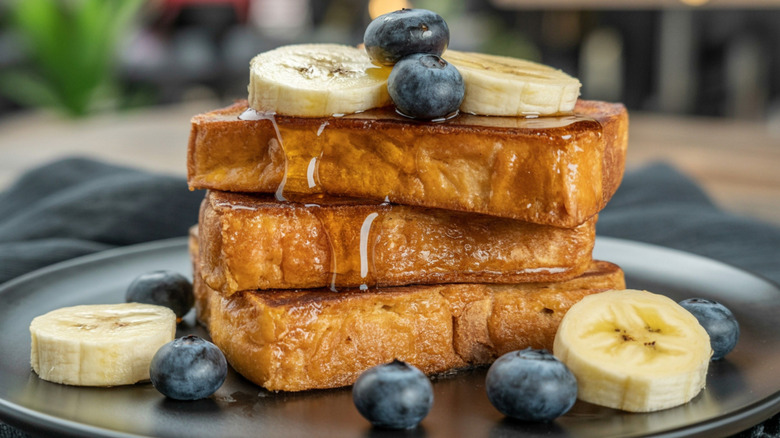
French toast is a breakfast favorite with countless customizations, especially considering how many French toast recipes are out there. However, the foundation of custard-soaked bread remains the same. And so does the ideal texture of a crisp exterior and creamy, fluffy interior. In order to achieve the textural contrast that we love so much about French toast, the cooking mistake to avoid at all costs is flipping your custard-soaked bread more than once.
French toast needs two to four minutes on each side over medium-high heat to develop that crisp exterior while also giving it time to cook and fluff up the interior. Constantly flipping disrupts the cooking process, resulting in flat, tough, and chewy French toast that's completely devoid of a crunchy "toasted" exterior. Not only does bread need time to form a crust, but the eggs need time and constant heat to fluff up the interior to ensure that the custard doesn't weigh it down or make it too soggy. Also, since you've soaked or at least saturated the bread with custard, you're dealing with structurally compromised toast. So, if you're constantly flipping it, you're running the risk of it tearing or falling apart.
For a pro move, you can create the crunchy French toast crust in an oven-safe skillet, flipping it just once, and then move the skillet to a 350-degree Fahrenheit oven for 10 to 12 minutes to finish cooking the interior. The fry and bake method is similar to cooking fine cuts of steak.
More French toast cooking tips
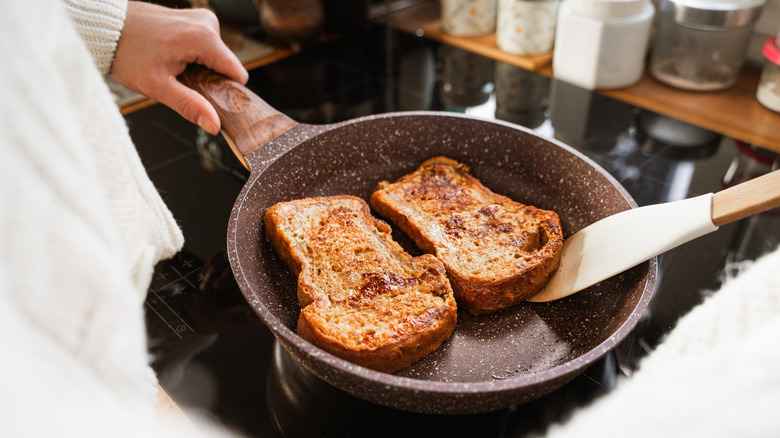
Before you get to frying and flipping, preparing and soaking the bread are key to your recipe's success. No matter which type of bread you use for French toast, there's an ideal thickness to ensure structural integrity and the perfect consistency; inch-thick slices are ideal, as anything less runs the risk of being too soggy. While some recipes recommend stale bread for maximum custard absorption, you can also lightly toast bread to dry it out before submerging it in custard. If you want extra-thick slices of bread, you'll need to soak them longer in the custard. Whereas an inch-thick slice needs a few quick dips, a thicker cut of bread or a type of bread with a tough crust will need a minute or two on each side to soak up all the custard. Of course, the thickness of the bread dictates how long you fry it on each side.
To achieve the crispiest crust on your French toast, you need to be careful with the heat of your stove. Medium heat is the ideal flame intensity to both brown the crust and cook the inside simultaneously. If you're worried about achieving the fluffiest interior, flour is the kitchen staple you should add to your custard to bind and thicken it. Once you've dipped the bread, make sure it has absorbed the custard and won't drip excess into the frying pan. A non-stick frying pan is ideal for guaranteeing an easy, clean flip every time.