

The Food Poisoning Myth Everyone Needs To Stop Believing
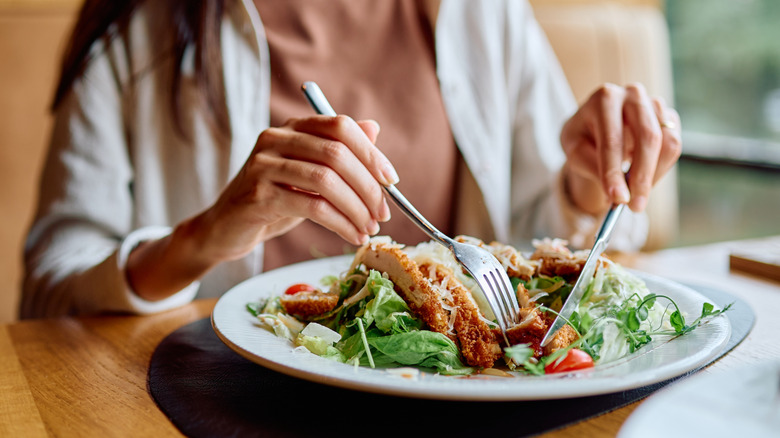
We wouldn't wish food poisoning on our worst enemy. Days of agonizing cramps, chills, nausea, and camping out in the bathroom? Yeah, no thanks. While most of us assume that whatever got us sick was likely whatever we last ate, the truth is that certain types of food poisoning can take days to weeks to appear, depending on the germ. This means that it's not always the breakfast burrito you ate this morning or the frothy latte you drank a few hours ago that turned your stomach.
The most common type of food poisoning in the U.S. is norovirus, which typically appears within 12 to 48 hours. It stems from eating contaminated foods like shellfish, vegetables, or fresh fruit, but it's also highly contagious, so you can contract it from others as well. According to the U.S. Center for Disease Control (CDC), it can also survive on surfaces like utensils and dinnerware. Of course, not every germ is built this way, nor stems from the same culprits.
Many germs incubate for days before they make you sick. Salmonella, for instance, can take up to six days to appear, and often comes from uncooked eggs, poultry, and dairy products. E. coli is another one that can take several days (up to 10) to cause symptoms, and often stems from improperly cooked meat, unpasteurized milk or juice, and unclean produce. Even Campylobacter, a common pathogen in raw meat, milk, and unclean water, incubates for up to five days before causing illness.
So, how can you keep yourself safe from food poisoning?
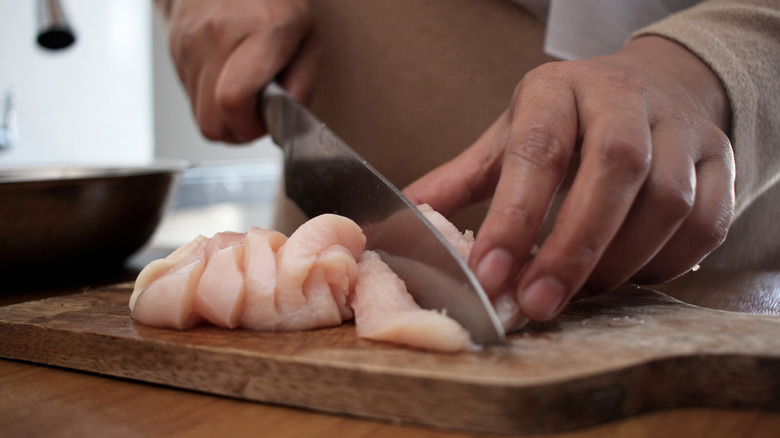
Sometimes, food poisoning is beyond our control. However, busting a few food safety myths can help you stay healthy and safe. For example, washing all your fruit, even ones with inedible skin like melons, can remove harmful germs. Likewise, using a meat thermometer on poultry products like chicken and turkey can help ensure that it's fully cooked — don't just eyeball it. And whatever you do, don't wash your poultry before cooking it, as this is a surefire way to spread bacteria and cause unwanted cross contamination.
Another big, iconic food myth? Assuming all leftovers are safe. Even if it smells and looks fine, food that's been sitting in the back of the fridge for too long can grow bacteria like C. botulinum, salmonella, listeria, and E. coli, all of which are typically odorless and don't have a specific appearance. Ultimately, it's important to remember that not all food poisoning is created equal.
While some types come from unwashed veggies you ate a week ago, others come from improperly cooked meat you made last night. No matter the germ, you'll usually get the same symptoms, like vomiting and diarrhea, which often subside on their own. In the meantime, get plenty of rest, drink fluids to stay hydrated, and seek medical care if your symptoms are severe or if you aren't feeling better after a few days.