

What's The Difference Between An IPA And Other Types Of Beer?
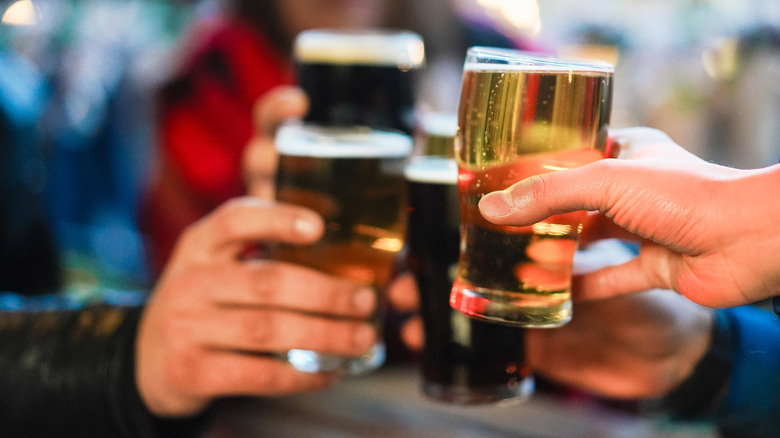
If you have any interest in craft beer, chances are you've run into more than your fair share of IPAs. They're the best-selling style in the craft beer market. But IPA is just one of many types of beer to explore. That said, IPA is also its own little world of varying substyles. Lagers, stouts, sours, ales like blondes and ambers — all have their own set of defining characteristics. But the IPA is hoppier and often more bitter than the others.
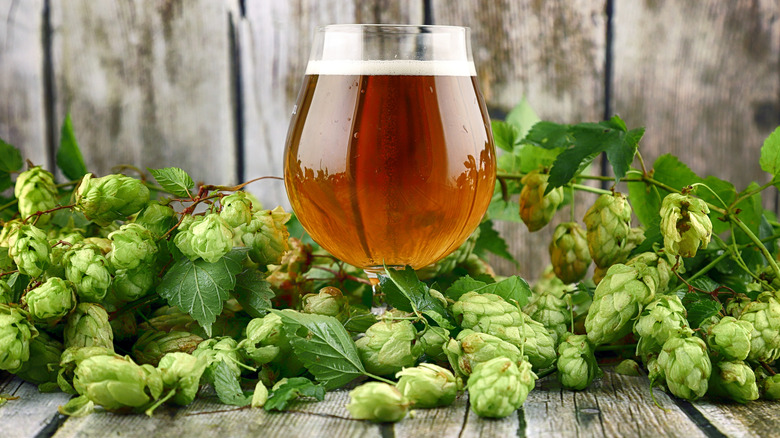
Almost all beer includes some amount of hops, which are flowers with compounds called alpha acids. When boiled with the grain and water of brewing beer, those alpha acids contribute bitterness necessary to balance the subtle sweetness and richness of the malt. IPAs, though, lean into hops for more than balance.
Hops added toward the beginning of the boil add bitterness, but those added toward the end are prized more for their aroma. Hops are grown around the world and can impart notes ranging from citrus, tropical, stone, and pome fruits to herbs, flowers, spices, wood, earth, and resin. IPAs lean into complex hop profiles with aromatic additions. They're often "dry-hopped," meaning more hops are added during stages like fermentation, so the beer can get even more hop character without the extra bitterness. Brewers then choose different hops in different combinations and amounts based on what IPA substyle they're creating.
How types of IPAs differ
IPA is short for India Pale Ale. People long believed English brewers invented an extra-hopped brew to send to imperialist settlers in India. In reality, brewers were upping their hop amounts across beer styles by the mid-1700s because hops have natural preservative qualities.
The English-style IPA is bitter but more malt-balanced than the American versions that emerged in the 1980s, when brewers began adapting the style using domestic ingredients such as American hops. American IPAs set themselves apart with bolder bitterness and notes of pine, resin, and citrus. American drinkers were instantly hooked, and the IPA quickly began its journey to being the most popular style in craft beer in the U.S.
The early West Coast IPA helped establish what would become the more malt-balanced American IPA style. Then in the early 2010s, New England IPAs began their rise after years of aggressive bitterness, as brewers focused more on hops' aromatic qualities. Hazy IPAs became all the rage with their luscious mouthfeel and tropical, juicy profile. These days, there are dozens of unique IPA substyles, from roasty black IPAs made with dark malt to red IPAs with caramelized malt character, citrus-forward Belgian IPAs fermented with fruity yeast strains, and sour IPAs brewed with mixed cultures. To choose the right IPA, start by deciding whether you prefer bitter or sweeter flavors — West Coast and cold IPAs lean more bitter, while hazy IPAs tend to be softer and fruitier. From there, you can narrow your choice: black IPAs suit stout drinkers, sour IPAs appeal to fans of tart beers, and milkshake IPAs for those who like to drink their dessert.